

Focus on the black dot on the left side of this image. But wait, hold on a second, you have to finish reading the instructions first. While staring at the black dot on the left, try to answer this question:
Which direction do you see the object on the right moving?
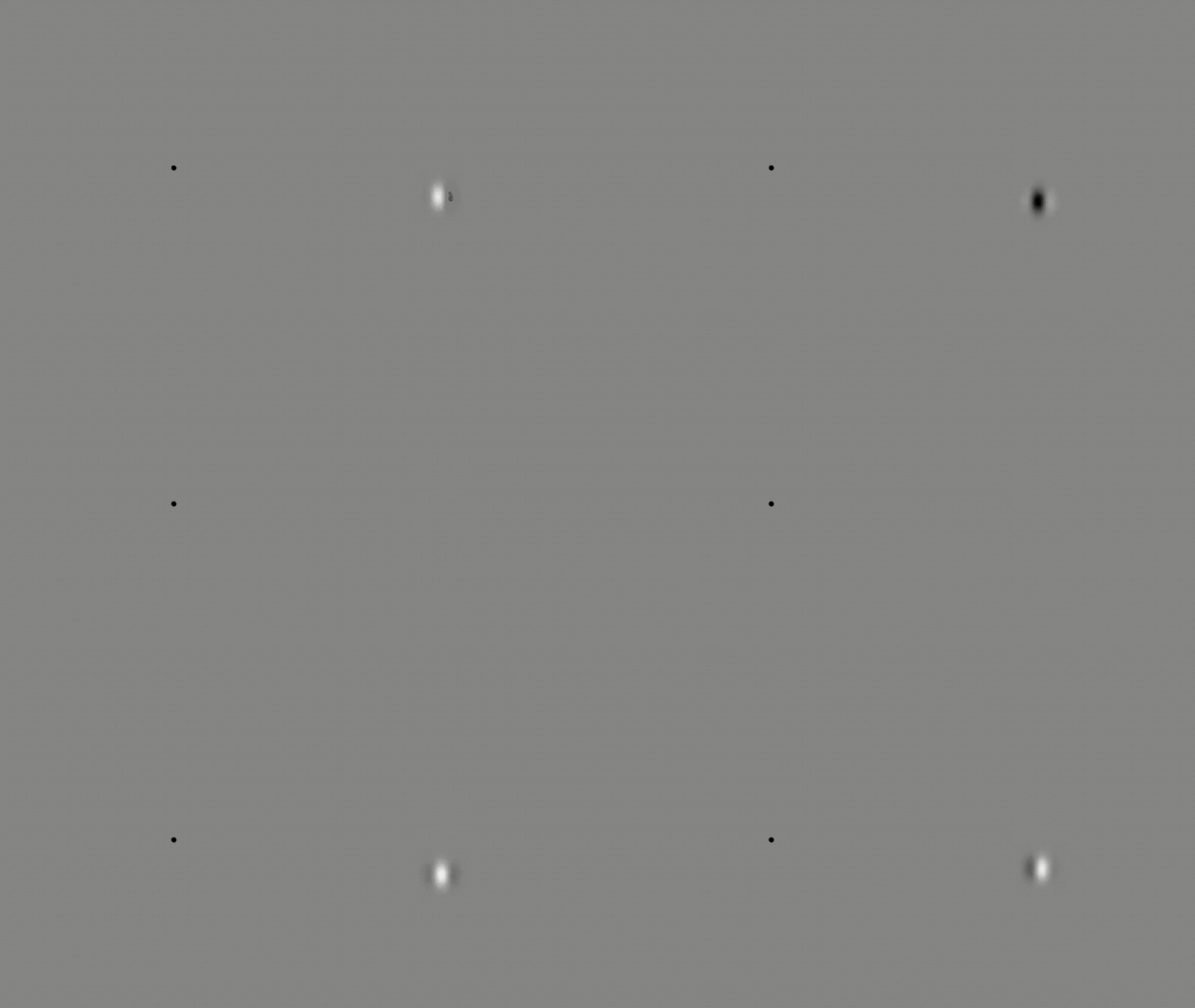
Alright, you probably saw it. The object on the right seems to be moving diagonally, right? You see it rolling diagonally up to the right, then diagonally down to the bottom left?
Almost everyone answers the same way. But the truth is, we’re all wrong! The object on the right is actually just moving straight up and down along a vertical line. It’s not rolling diagonally at all.
If you don’t believe it, try tracing it with your finger on the screen.
This visual illusion happens because the object moves up and down, but the black and white patches inside it move horizontally. Together, they confuse our vision and create the perception of diagonal movement.
This simple image teaches us that experience isn’t always reliable. Never fully trust what you see or think you understand about something’s true nature. But is there something deeper going on?
In fact, when scientists dug into the truth behind this illusion, they nearly touched on what’s believed to be the essence of human consciousness. There are philosophical questions there, and the answers could reshape everything we think about the world we live in.
Is this world real or not? And if it is real, how real is it?
Patrick Cavanagh, a neuroscience professor at Dartmouth College in Canada, said, “The important thing to understand is that we’re not seeing reality. We’re only seeing a story created for us.”
Most of the time, the story our brain creates matches the real world, but not always. Our brain unconsciously bends our perception toward a reality it wants to see.
Similarly, the brain often invents “realities” to fill in gaps it doesn’t see or recognize.
For example, based on experience, a man might guess a woman’s beauty from behind. Of course, those guesses aren’t always right. But if she never turns around, he might turn that imagination into his lifelong reality.
Where are the brain’s blind spots?
Visual illusions are the best examples showing us the brain’s blind spots. They’re also the best tools to find those blind spots. Where are they in the brain? When we misperceive an illusion, where exactly does the brain go wrong?
In 2019, Professor Cavanagh and colleagues used the very moving diagonal object image to study how our brain creates this illusory motion. They used functional MRI (fMRI) to scan volunteers’ visual cortex while showing them two images of diagonal motion.
The first image is the illusion you saw at the start of this article, where diagonal movement is fake. The second image below shows real diagonal movement:
The surprising result: the visual cortex, which processes visual signals, didn’t seem fooled by the illusion. Different signals lit up between the two images, showing the visual cortex can tell vertical and diagonal movements apart.
This means when light from the computer screen hits your retina and is processed by the visual cortex, the signal is still accurate. The illusion hasn’t formed yet.
Scientists say the brain’s signal patterns only start to overlap when reaching the frontal lobe, the higher-level thinking area responsible for prediction and decision-making. The frontal cortex is where the two movements are combined to create the illusion.
“The frontal lobe is a whole territory where visual analysis, calculation, and prediction happen. And these occur outside the visual system,” Professor Cavanagh explained. That’s where the brain made up a story different from reality, at least in this example.
To be clear: vision is a complex system involving about 30 brain regions. Some illusions seem to trick the visual cortex immediately, without involving the frontal lobe.
But no matter what, once a part of your brain is fooled by an illusion, it’s hard to override that “truth.” Even if you know the image is an illusion, when you look again, you still see that diagonal movement.
Here’s a similar example:
Squares A and B next to each other are exactly the same color. But when placed in context, with square B shaded by a shadow, it instantly looks lighter than square A.
“So even knowing the truth, you still see a reality as an illusion,” said Justin Gardner, a neuroscientist at Stanford University. You can’t override your false perception once your brain creates it. It’s like a knife that can never sharpen its own handle.
We don’t see reality. Our visual perception lags about 100 milliseconds behind the real world.
Why do we see a story about the world, a story created for us, instead of objective reality? Often, it’s not a flaw but a feature.
Our brain doesn’t have enough resources to process all the information we constantly receive through our senses, especially vision, said Susana Martinez-Conde, a researcher on neuroscience and illusions at SUNY Medical Center.
Think about the illusion you saw earlier. When objects move on the screen, light from them hits the retina at the back of our eyeballs.
The retina converts light signals into electrical signals, then sends them to the visual cortex, which then passes them to the frontal lobe for processing. This whole process takes some time, creating a slight delay.
Our brain’s perception lags about 50 milliseconds, and for vision, the delay can be over 100 milliseconds. So what you see now might actually be something that happened more than 100 milliseconds ago, explained Adam Hantman, a neuroscientist at the Howard Hughes Medical Institute’s Janelia Research Campus.
But here’s the interesting part. If we only relied on this delayed info to move in the real world, things would get messy. You wouldn’t be able to swat a mosquito or catch a falling ball.
Yet we do those things, right? That’s because the brain paints a “reality” ahead of time, compensating for the lag in motion you see.
Here’s an example called the “flash-lag” illusion.
The reality here is a red dot moving across the screen and a green dot flashing in place. The green dot lights up exactly when the red dot passes vertically aligned with it.
But it’s hard to see the dots lined up, right? The red dot always looks a bit ahead.
That’s the “reality” your brain painted. It predicts the red dot’s path and pulls it forward by the distance it travels in 100 milliseconds, matching the visual delay.
“We always see moving objects slightly ahead of their actual position on their path,” Professor Cavanagh explained. This illusion is actually a function, not a flaw. It helps us compensate for the brain’s processing lag behind the real world.
Here’s another similar illusion:
You always see the red square as smaller than the blue square. But try dragging your mouse over them, and you’ll find they’re actually the same size. The background’s motion creates the illusion.
The stories our brain tells are shaped by life experience.
Your brain tells you a story about object movement the moment you move your mouse or swipe your phone to read this. But that’s not the only story it can tell.
The brain is also great at telling stories about more complex aspects of our visual world, like color.
Check out this color illusion designed by Japanese psychologist and artist Akiyoshi Kitaoka:
The color of the moving square here doesn’t actually change. But on different backgrounds, it appears to have very different colors. Clearly, our brain’s perception of color is relative, not absolute.
So what’s going on?
We can accept this by seeing color as a brain inference. Our eyes act like precise photon catchers, capturing exact wavelengths that produce distinct colors.
But part of our brain refuses to accept that. Based on experience, the brain knows a red object won’t look red if bathed in blue light.
The brain’s goal is to identify the object’s color, not just measure incoming wavelengths. So it applies a color filter that removes blue light from the object, turning it back to red.
In short, smells and colors are illusions created by our brain, said Sam Schwarzkopf, a vision scientist at the University of Auckland.
Remember the dress illusion?
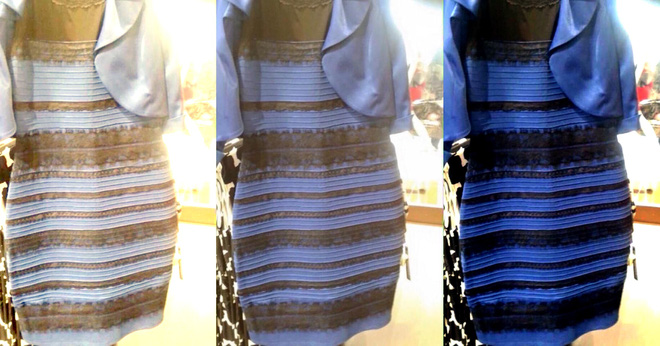
In 2015, this illusion divided the internet worldwide. Half saw it as white and gold, the other half as blue and black. It’s just the result of different color filters each brain applies.
Half thought the dress was lit by daylight from the front, so their brain filtered out blue light, making it appear white and gold. The other half thought it was taken at night under artificial light, so their brain filtered out bright light, making it look blue and black.
Interestingly, an online study of 13,000 people showed night owls who stay up late tend to see the dress as blue and black. Early risers are more likely to see it as white and gold.
In short, when faced with ambiguity, like the strange lighting in this dress photo, our brain fills in the gaps with whatever it’s most familiar with.
Sometimes unconscious brain inferences become “truths” so skillfully that you no longer realize they’re guesses or illusions.
Try looking at this triangle illusion below.

Unconsciously, you imagine a triangle between the Pac-Man-like circles. But that triangle doesn’t actually exist. It’s just a brain inference created because you’ve seen so many triangles growing up.
In 2003, the journal Nature Neuroscience published a case about a man (called Patient MM) who lost his sight at age 3 but regained it after surgery at 40.
When shown this illusion, he didn’t see any triangle at all. He only saw the incomplete circles and sharp shapes.
But two years later, he told scientists he now saw the triangles. Rebuilding visual experience from scratch at 40 eventually put him in a lifelong illusion starting at 42.
Can we still trust our eyes?
That question will surely frustrate perfectionists obsessed with truth who refuse to live in an illusionary world like The Matrix.
After all, if everything we see is just an illusion, just stories built by our brain, how do we escape it?
Some will choose the blue pill to keep living in a programmed system, in a world of relative truths. But if you take the red pill, you’ll constantly seek new info and seriously question the nature of things around you.
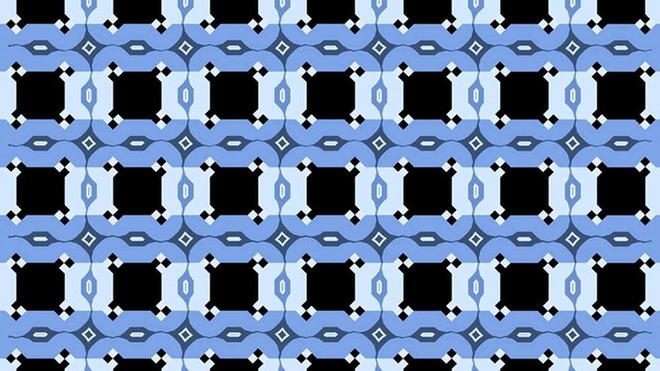
Visual illusions are just some of the tiny realities warped to fit past experience, emotions, and an unconscious world you want to live in. Illusions can also happen with more complex processes like political thinking, pandemics, or climate change realities.
Scientists call these social illusions. For example, racial bias in the U.S. is like an illusion. Sociological studies show many Americans think Black men are usually bigger than white men (so more threatening).
Similarly, darker skin is linked to criminal traits. Police might mistake a Black man pulling out a wallet for pulling out a gun, imagining an illusion.
In short, if you want to take the red pill in any situation, you must be aware that your first impression doesn’t always reflect the true nature of things.
And an illusion can look so real that even knowing it’s an illusion, it still appears real before your eyes.
Source: Vox

