

Recently, social media has been buzzing about “Jonathan Galindo”, a supposedly dangerous figure who forces you to join the “blue whale challenge” or threatens your family.
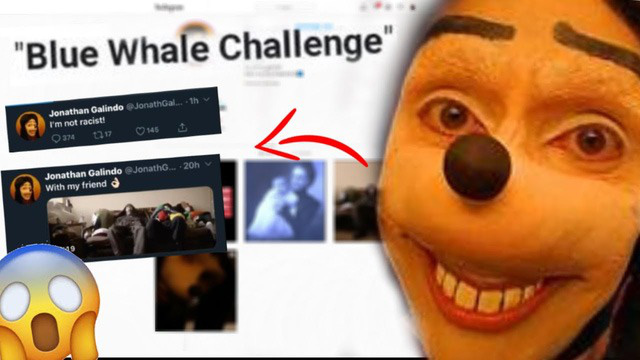
The Mexican online community is going wild over the Jonathan Galindo account. If you haven’t logged into Instagram, TikTok, Twitter, Facebook, or Discord for a while, you might find “this guy” adding you. He sends a link that, if clicked, can track your home IP address. Then you’re given two choices: take on the blue whale challenge (a dangerous dare that can lead to death) or your family gets harmed.

Two years ago, the world faced the Momo challenge, and even earlier, the blue whale challenge, extremely dangerous “games” targeting young people. Many got caught up in these challenges, starting with simple tasks like saying certain phrases to parents or friends, spreading rumors, self-harm, and even suicide. Around ten teenagers died after taking on these challenges, including a 13-year-old boy in Belgium.
The “blue whale challenge” first appeared around 2016 or earlier. Participants had to complete assigned “tasks,” which led to over 130 deaths in Russia. The challenge eventually spread to other countries, causing even more tragedies.
While the global online community panicked over Jonathan Galindo, on June 3, a Twitter user named Dusky Sam spoke up, admitting that the avatar photo used by Jonathan Galindo was actually theirs:
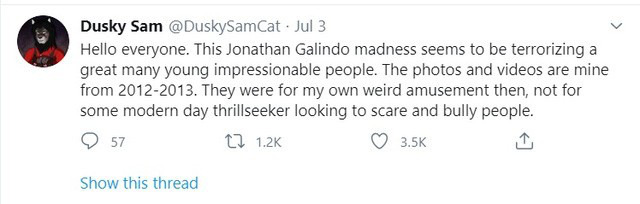
Dusky Sam makes masks. In a recent Twitter post, they confirmed that the Jonathan Galindo image is their creation. The photo and video of Jonathan Galindo were made back in 2012-2013 purely for fun, not to scare or bully anyone.

Now that this character has gained attention, many copycat accounts have popped up like mushrooms, hundreds of Jonathan Galindo profiles on Twitter, Instagram, TikTok, including many from Vietnamese users.
Of course, Jonathan Galindo is not a real person but just a mask creation. However, some have used this character for harmful purposes, so staying cautious is key.
When using social media, you can protect yourself by using features like fake IPs or VPNs to keep your information safe. Avoid clicking on suspicious links or accepting friend requests from strangers to prevent bad situations.

