


In the age of booming short video platforms like TikTok and Reels, many small businesses create their own content to promote their brand. But the line between creative marketing and tasteless stunts is razor-thin.
Recently, a popular hair salon on social media ignited a massive wave of outrage, especially on Threads. The controversy started with ads that awkwardly and crudely harassed female customers. This quickly turned the salon into the center of harsh criticism, with many calling for a boycott and urging people to avoid it.
From camera tricks to openly harassing female clients
The situation escalated when multiple social media accounts exposed the salon’s dirty marketing tactics. Instead of focusing on hairstyling skills or service quality, the salon’s short videos repeatedly zoomed in on sensitive body parts of female customers.

In salons, clients usually sit on low chairs while hairdressers stand above them. Taking advantage of this, the salon deliberately positioned cameras from a high angle looking down. One frustrated user shared: “Ladies don’t need to dress fully covered for hair appointments, but wear something with a tight neckline. I sat low while the stylist stood above, so everything was visible. Better to be careful.”

The peak of outrage came from clips showing male stylists intentionally pointing and even touching near female clients’ chests to “demonstrate” hair color. These actions crossed the line from careless to outright sexual harassment disguised as hair consultations.

Although the clips featured trendy, upbeat music, viewers could easily spot the discomfort and forced expressions of the female clients who repeatedly covered their chests in front of the camera.
Marketing irony: Serving women but making content for men’s crude tastes
This scandal exposed a ridiculous and ironic flaw in some salon owners’ marketing mindset.
“Their main customers are women, but they make crude content for men to watch.” This sharp comment from a netizen hit the core problem in the salon’s business strategy. The paying customers who use the hair services and bring in 90% of the revenue are women. They come to salons seeking pampering, beauty, and a safe, relaxing space.
Instead of building a professional, trustworthy image to earn women’s loyalty, this salon chose a crude approach: exploiting women’s bodies as bait to attract views from curious and mocking male audiences online. Turning a beauty care space into a factory for cheap, inappropriate content not only devalues the brand but deeply insults the very customers supporting the business.

Loud backlash: Netizens launch a “avoid immediately” campaign
Once these shady practices were exposed, an unprecedented boycott movement exploded. Across forums, especially Threads, thousands of angry comments poured in expressing outrage.
Many condemned the “dirty content” mindset as tasteless and polluting the online space. Comments like “So tacky, dirty content thinking it’s clever,” and “Is this a hair salon or what?” were common. Some even called the crude camera angles and filming behavior outright harassment and perversion. To protect themselves and women, the online community united in a widespread boycott campaign. The call “Respect women’s bodies. Let’s all avoid this salon” received overwhelming support. Many admitted they had blocked the salon’s account long ago due to its toxic content.
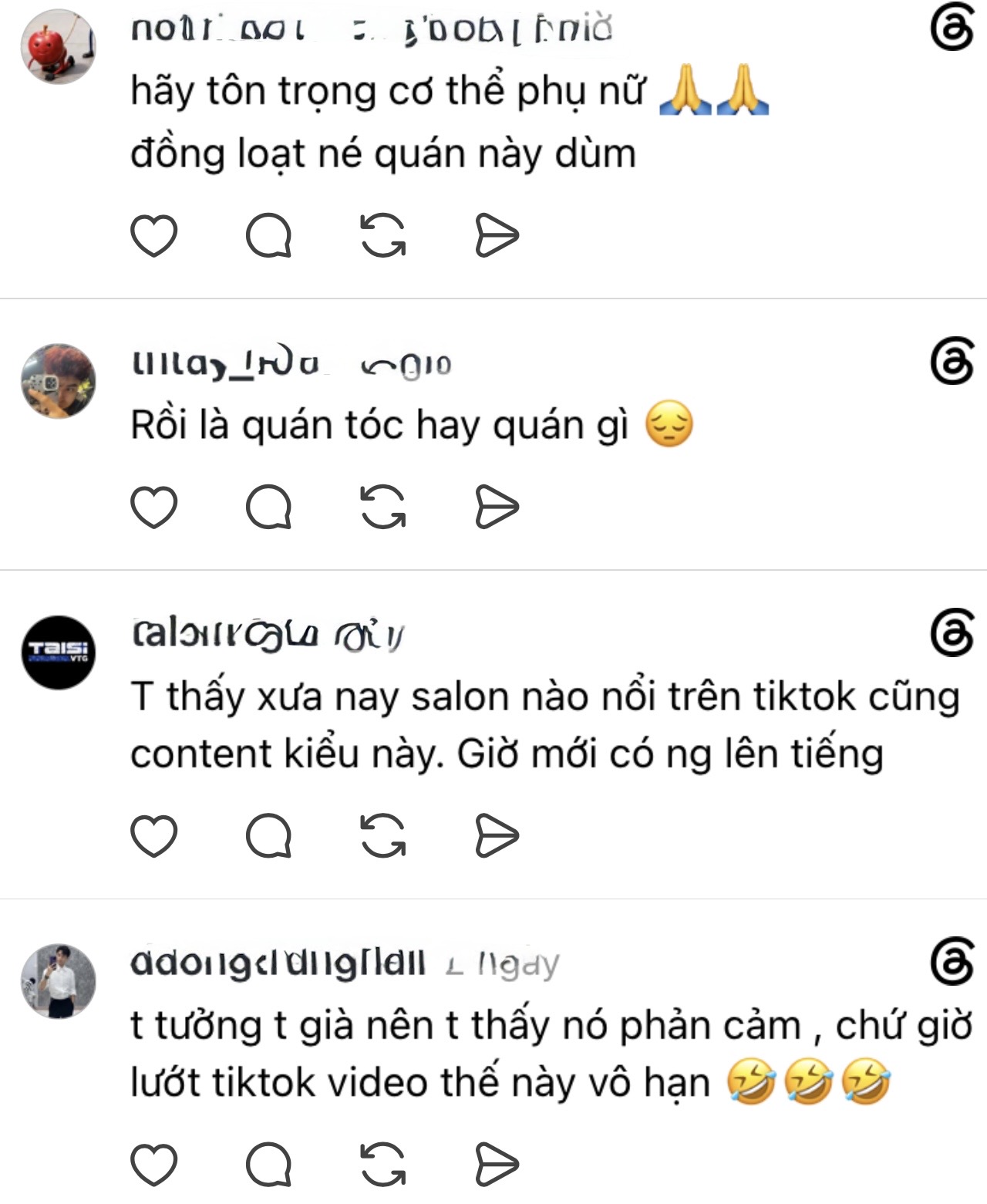

Under intense pressure and public backlash, the salon quietly deleted the controversial videos across platforms to avoid further attacks. However, this late attempt to cover up did nothing to calm public anger as screenshots and evidence spread rapidly.
A costly lesson on chasing fame at any cost
This hair salon fiasco serves as a serious warning for anyone in business and digital content creation. Algorithms may favor sensational, provocative content that racks up millions of views overnight. But those views are often “fake” and won’t convert into loyal customers if built on outrage and disrespect.
For service industries, especially beauty services for women, safety, respect, and privacy must always come first. When a brand tramples on core ethical values and uses customers’ bodies as cheap clickbait, the inevitable result is a harsh market backlash. Dirty content tricks might bring short-term fame, but they will ultimately burn down the reputation and business built over years.