

Unlike previous World Cup balls, Al Rihla, the official ball for the 2022 World Cup, is truly unique. Besides being inflated with air, this Adidas ball must be fully charged before every match. Images of the Al Rihla ball plugged into a power outlet outside the stadium quickly caught the attention of online communities.
This makes perfect sense since the Al Rihla ball is packed with the latest technology.
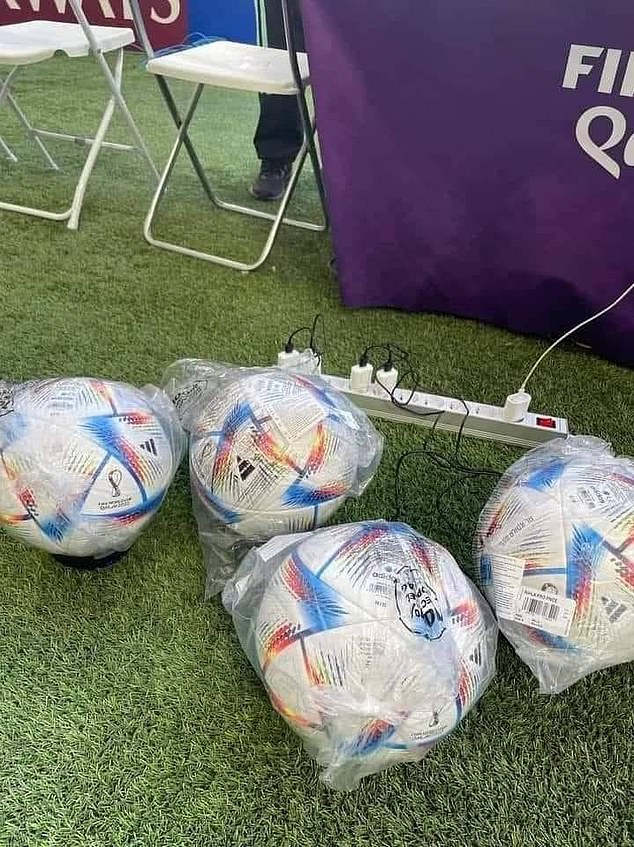
At the heart of Al Rihla is a special sensor cluster developed by KINEXON, a world leader in sports performance tracking.
The first device is an ultra-wideband (UWB) sensor that delivers location data with unprecedented accuracy, far surpassing Bluetooth or GPS. This data is transmitted in real time to continuously track the ball’s position during matches.
The second device is an inertial measurement unit (IMU) sensor, which detects subtle movements of the ball in space.
Notably, the sensor system inside Al Rihla processes data at 500Hz, allowing extremely fast and precise data handling with minimal error or delay.
So whenever the Al Rihla ball is kicked, headed, thrown, or even touched, the sensors instantly capture and process the data. This information is then sent in real time to a local positioning system (LPS), which includes a network of antennas installed around the stadium to receive and store the data immediately.
When a ball goes out of play and a new one is brought in, KINEXON’s system automatically switches to the new ball’s data without human intervention.
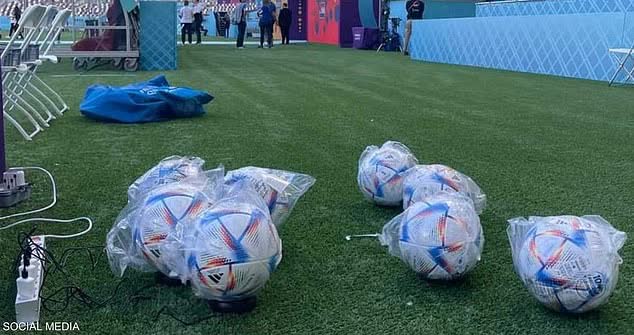
The sensor cluster inside Al Rihla is powered by a small battery. According to Adidas, this battery lasts six hours of continuous use or up to 18 days if idle. Before each match, every ball must be fully charged to be ready for play. If the ball’s battery system malfunctions, an immediate alert is sent to the operations team. A replacement ball is then used so referees can continue tracking and making decisions during the game.

