

When the GPU craze hit, gamers immediately blamed crypto miners: Bitcoin’s skyrocketing price revived the mining frenzy. But in a better scenario, NVIDIA and AMD could have ramped up production to supply both gamers and miners.
Meanwhile, Xbox Series S/X and PlayStation 5 shortages are hitting hard worldwide. Even carmakers like Tesla, Ford, and GM complain about revenue drops due to chip shortages. So what’s really going on? Why is the world suddenly facing a chip crisis?
The “Joy” Called Covid-19
The first answer you might think of is “Covid.” But what you might not realize is that after factories reopened, Covid-19 actually became a boon for high-tech manufacturers.

Because many countries enforced social distancing, demand for communication, entertainment, and remote work devices surged. The PC industry, after years of decline, suddenly grew 4.8%, its highest in a decade (Gartner data). Tablets, once considered obsolete, bounced back with a 13.6% increase (IDC data), a number no one expected pre-Covid.
Even smartphones, hit hardest by Covid, only saw a 6% drop (IDC). With most consumers stuck at home reducing mobile needs, this decline isn’t bad considering smartphones had already saturated the market with just a 1% drop in 2019.
In short, demand for electronic devices surged last year thanks to Covid. Surprisingly, even if you only bought a smartphone or tablet, you might have contributed to today’s GPU crisis.
An Industry Split in Two

Because chip manufacturing requires huge capital and carries big risks, the silicon industry split into two halves. One half focuses on design and selling finished products, including familiar names like AMD, NVIDIA, Qualcomm, and Apple (which designs its own A-series chips for iPhones and iPads, and M-series for Macs). The other half owns the chip factories, like TSMC, Samsung, UMC, SMIC, and GlobalFoundries (originally AMD’s manufacturing arm before spinning off in 2009).
This split means electronic devices end up competing for supply. For example, Apple contracts TSMC to produce the A13 chip for iPhone 11 on TSMC’s 7nm process. But that same 7nm process is used for Ryzen CPUs, Radeon GPUs, PlayStation 5 and Xbox Series X/S chips (all AMD designs based on Zen 2 architecture), and many mobile chips. If TSMC prioritizes Apple (iPhone 11 was the best-selling smartphone in 2020), its capacity for CPUs, GPUs, or APUs naturally shrinks.
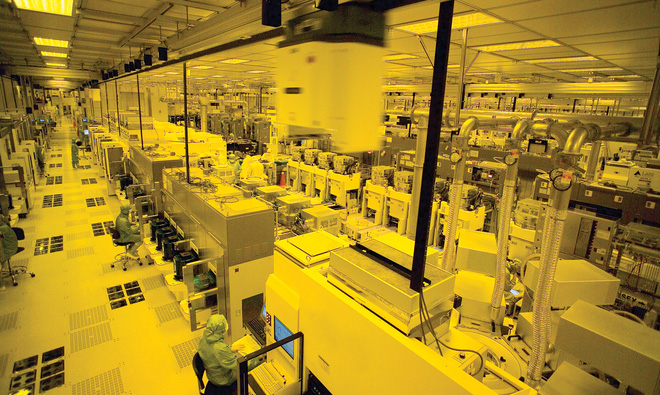
Across the market, Intel and Samsung are among the few companies that both design and manufacture chips. Still, Intel is considering outsourcing production, and Samsung uses only a small fraction of its capacity for its own designs. The inevitable trend in the chip industry is sharing a few key manufacturers, so any spike in chip demand, no matter the type, can contribute to crises like the one we’re seeing now.
Why No Growth?
The question is, why don’t chip foundries increase production to meet the Covid-driven demand surge? The answer: they want to, but can’t. Only TSMC and Samsung have the capital, workforce, and experience to push the final limits of Moore’s Law. In 2018, both GlobalFoundries and UMC announced they wouldn’t develop 7nm processes. China’s SMIC just started trial production on 7nm, but it’s likely to fail after being blacklisted by the US.
This leaves TSMC and Samsung dominating chip manufacturing. According to TrendForce data last year, TSMC holds 50% market share, Samsung 17.4%, far ahead of competitors. Even if others could catch up, it would cost billions and take years to reach 7nm, a milestone TSMC hit three years ago.
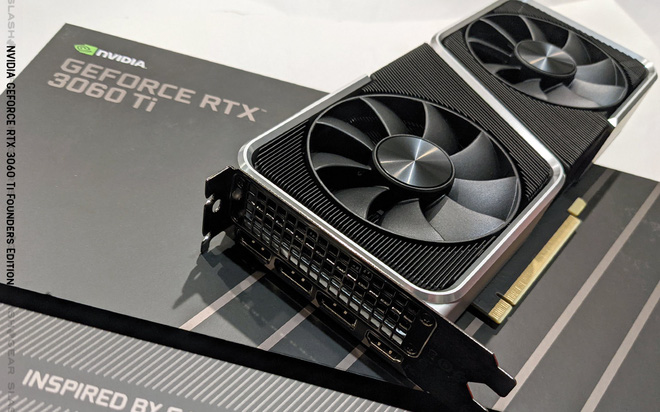
As a result, manufacturers rely heavily on TSMC and Samsung, and when Covid sparked a consumption boom, both they and consumers became victims. The clearest example is NVIDIA: originally, NVIDIA designed RTX 30 series on Samsung’s somewhat outdated 8nm process to avoid competing with others for TSMC’s 7nm capacity. But reports in December revealed Samsung’s 8nm production also faced issues. So even without competing with Apple or Microsoft, NVIDIA still struggled to get enough GPUs to sell.
Shortages Will Only Get Worse
The chip supply battle is no longer just about high-tech manufacturers. In the 4.0 revolution, devices that never needed chips before now require them. For example, Tesla’s onboard computer is so advanced it can run Cyberpunk 2077!
Other competitors aren’t far behind. Chips are so critical that GM and Ford had to cut production, losing $4.5 billion in this crisis. Cars have become massive chip consumers.
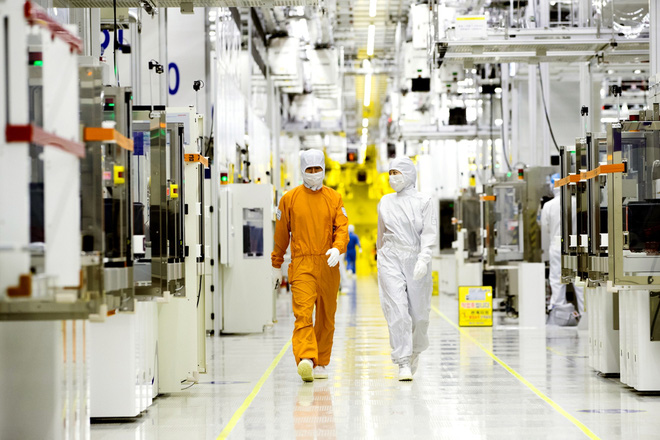
Refrigerators, washing machines, rice cookers, doorbells, TVs, all need chips now. Demand will keep rising, but supply remains severely limited. Each new factory costs billions and takes years to build. GPUs, smartphones, cars, doorbells, they’ll keep competing for limited supply, and sooner or later, the world will face more serious chip crises like today’s.

