

It was an autumn afternoon in August when Jane Pearson, her husband, and their 5-year-old son were enjoying a camping trip in a California forest. Since they had set up their tent before sunset, Jane decided to take a quick nap.
Like many who lose track of time while sleeping, Jane had no idea how long she had been out. When she woke up on the hammock outside the tent, her husband and son were gone.
At first, Jane thought they had gone exploring in the forest. But when neither returned by dinnertime, she realized something was wrong. She waited and searched in vain before deciding to head down the mountain to seek help.
It was at that moment Jane stepped back into the world and uncovered a terrifying truth: not only her husband and son but every man with a Y chromosome on Earth had vanished, including unborn male fetuses and transgender men.
All of this happened in the blink of an eye while Jane napped on her hammock.
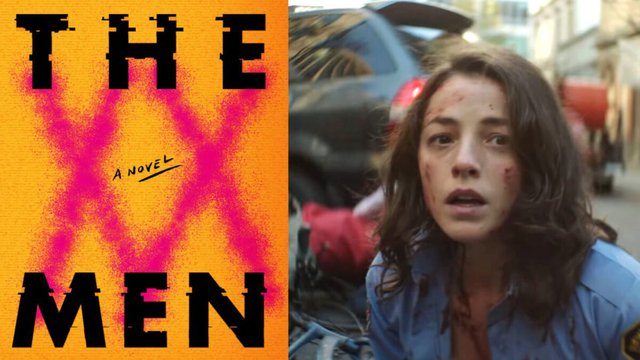
This is the opening of The Men, a new novel by American author Sandra Newman. The story follows Jane Pearson as she navigates a world suddenly without men.
Chaos naturally ensues. Women must learn to take over all the jobs left behind by men, from electricians, sanitation workers, firefighters, and pilots to business leaders and political figures.
The pain of losing loved ones haunts the women left behind, but over time, it doesn’t stop them from moving toward a brighter future.
“For a moment, I was overwhelmed by the thought of a world without men. It felt sweet and magical: a world full of lambs with no wolves,” Jane reflects.
From now on, women like her won’t need to carry pepper spray at night or fear abusive husbands at home. Violence and war disappear along with the aggressive genes linked to the Y chromosome.
A world without men would be peaceful and prosperous. Women could develop reproductive technologies allowing them to have children on their own.
So, the disappearance of all men doesn’t mean the end of humanity. But would such a world really be better, as Jane imagines?

A single-sex, virgin birth world is theoretically possible
In the summer of 1962, in Hillston, Australia, renowned British geneticist and evolutionary biologist Michael White was camping with his young son.
His son Nicholas caught a swarm of grasshoppers. At first, White didn’t pay much attention, but when Nicholas asked, “Are these grasshoppers male or female?” White was surprised to find they were all female.
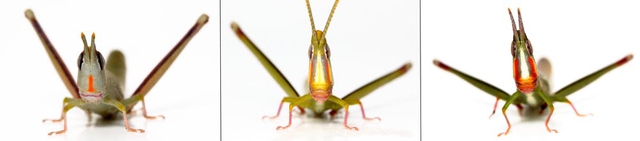
He stepped outside his tent and conducted a small survey, discovering the entire Hillston field was populated only by female grasshoppers. These green grasshoppers belong to the species Warramaba virgo, a hybrid between Warramaba whitei and Warramaba flavolineata, existing for at least 250,000 years.
W. virgo lives in the dry deserts of southern Australia, feeding on mulberry trees and various shrubs during summer. Both parent species reproduce sexually, meaning they have males and females.
But W. virgo reproduces through parthenogenesis, meaning only females exist with no males.
As its name suggests, parthenogenesis is a form of asexual reproduction where embryos develop without fertilization by sperm.
To reproduce this way, females copy their chromosomes fourfold, then shuffle genetic material among these chromosomes through recombination to create genetic diversity.
This genetic reshuffling ensures offspring differ from their mothers rather than being exact clones. However, since no new genetic material from males is introduced, chromosome pairs remain identical.
Scientists once thought parthenogenesis was an evolutionary dead-end because lack of recombination reduces genetic diversity by about one-third, similar to inbreeding.
This would mean after a few generations, offspring would be too weak to survive, leading to extinction.
But recent evidence shows parthenogenetic species can evolve ways to overcome this problem.
For example, a study last year at the University of Sydney found a South African honeybee species with a mutation allowing it to lay genetically diverse eggs, preserving genetic variation across generations.
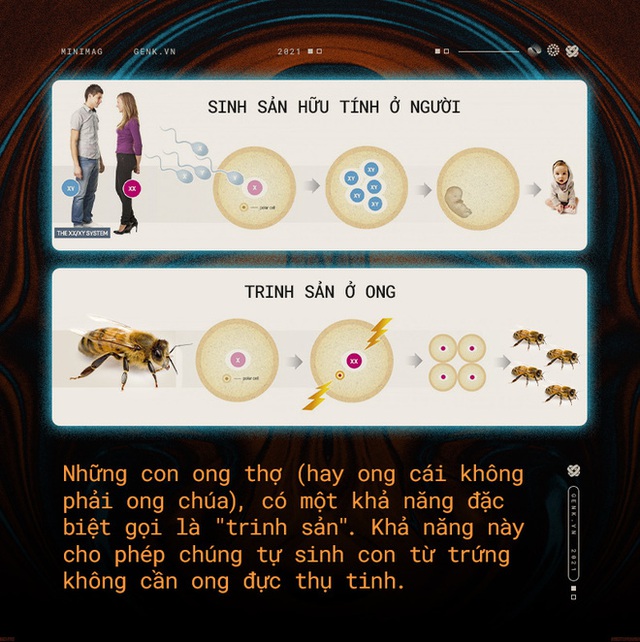
Similarly, the Australian green grasshoppers have survived at least 250,000 years thanks to repeated hybridization between parent species, creating a diverse army of asexual lineages in a phenomenon called “hybrid vigor.”
It’s like how mules, hybrids between horses and donkeys, have greater strength and endurance than their parents. Unlike sterile mules, W. virgo can reproduce parthenogenetically.
Many roundworms, tardigrades, bees, some fish, amphibians, and reptiles also reproduce this way. Last year, scientists discovered female vultures in San Diego Zoo reproducing without males.
The human Y chromosome is shrinking
Back to the disappearance of all men in The Men, it’s like a snap from Thanos or a wish from a betrayed woman who found a magic lamp wanting a world without men.
In reality, such a scenario is unlikely if science holds strong. But it doesn’t mean men can’t disappear eventually. Evolution could perform its own snap, though it would take millions of years.
Scientists have observed the human Y chromosome shrinking over time.
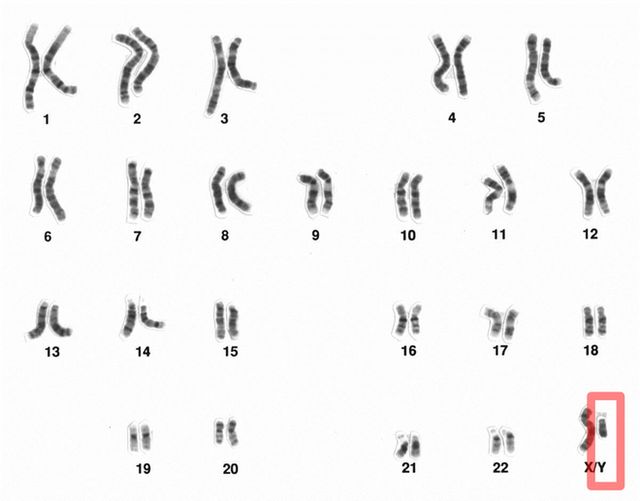
About 166 million years ago, when the first mammals appeared, they had a “primitive” Y chromosome similar in size to the X chromosome, sharing identical genes.
But the Y chromosome has a fundamental flaw. Unlike other chromosomes that come in pairs, the Y chromosome exists as a single copy passed from father to son.
This means genes on the Y can’t recombine, a process that shuffles genes each generation to eliminate harmful mutations. Without recombination, Y chromosome genes degrade over time, shrinking its size.
Today, when you compare XY chromosomes in men to XX in women, the Y is noticeably smaller. Scientists predict that at the current rate of gene loss, the human Y chromosome could disappear entirely in about 4.6 million years.
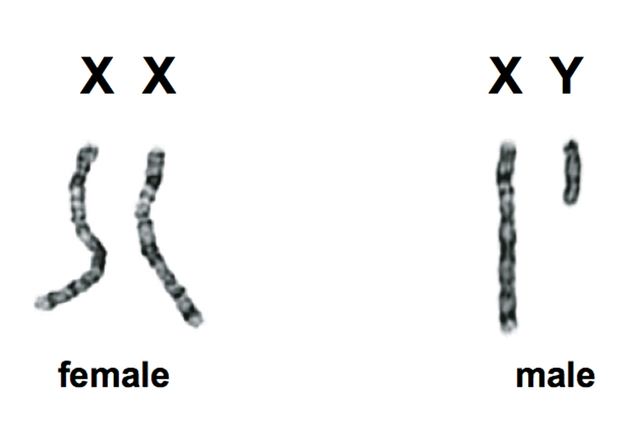
The good news is that while the Y chromosome is essential for normal reproduction, many of its genes don’t perform critical functions and could be replaced using reproductive technologies in women.
This means genetic engineering could substitute Y chromosome functions, allowing women to reproduce without men. Science could enable parthenogenesis or even recombine X chromosomes.
In Japan, scientists successfully converted stem cells from a female mouse into sperm cells, which then fertilized another female mouse, resulting in pregnancy.
If perfected for humans, children could be born from two mothers. Traditional family models could continue using this method, which might even offer evolutionary advantages.
Sex-independent reproduction would eliminate what scientists call “evolutionary waste,” where only 50% of individuals (females) can reproduce in sexual species, compared to 100% in parthenogenetic species.
Parthenogenesis also removes the energy and time costs of finding mates and sexual activity, known as the “two-fold cost of sex.”
In fact, during mating, animals often face higher risks of predator attacks.
So scientists aren’t surprised some species may evolve to eliminate sex and gender for reproduction. They just wonder why more species, including humans, haven’t done so yet.
But would a world without men really be better?
The idea that a world without men would be more peaceful and prosperous ties to a hypothesis called “The Bonobo Thesis.”
Bonobos are pygmy chimpanzees living in Congo, sharing 99% of their DNA with humans and are among our closest living relatives.
The key difference is bonobos organize their society matriarchally. Female leadership reduces violence, with fewer wars over power, food, offspring, and territory compared to typical chimpanzee groups.
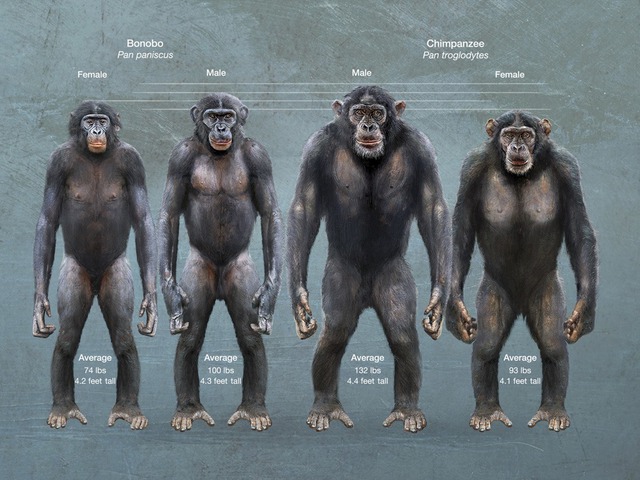
So, if the Bonobo hypothesis holds, a planet of only women might be calmer and more peaceful. There would be no wars with women leading the world. Most countries’ armies would shrink to a tenth of their size without men (except North Korea, where 40% of soldiers are female).
However, this only works if aggression is genetically tied to males. If violence is cultural and environmental, losing males wouldn’t change much.
Scientists observe bonobos rarely attack members of their own group, but fierce fights still happen between different groups.
In The Men, Sandra Newman anticipates this. Women in her world aren’t always peaceful lambs. When food runs out, they raid and resort to violence.
So it’s unlikely women in their own world would just be gentle homemakers without the toughness or political ambition to start conflicts.

Finally, remember it’s not just about swapping black presidential chairs for pink ones. In a world with only women, they’d have to fill all the roles men left behind.
What happens when only 4 out of every 100 firefighters are women? Fire seasons would worsen. Only 5.2% of pilots and aerospace engineers worldwide are female, so flights would become rarer and more expensive.
In operating rooms, only 4 out of 10 doctors are women, meaning longer waits for surgeries. The good news is there would be more nurses and caregivers, which benefits post-surgery recovery.
The biggest challenge would be farming. Only 1 in 4 farmers worldwide is female. Food would become scarcer and pricier.
This leads back to the food raids in Newman’s novel, where groups of women block trucks delivering supplies.

In short, a world without men is theoretically possible, whether by evolution’s snap or Thanos’s. In both cases, women could survive and reproduce in a single-sex world.
They might shift from sexual reproduction to parthenogenesis over millions of years or use reproductive technologies to have children without sperm or men.
But saying that world would be better without men is far from certain.
Compiled

