

The COVID-19 pandemic has taught us some interesting new facts. For example, most people now know what “aerosol” means. These are tiny water droplets that can float in the air.
When you sneeze or cough, you release a cloud of aerosols into the environment. This cloud can carry flu viruses or even the SARS-CoV-2 virus that caused the COVID-19 pandemic. But aerosols can also be useful, like nasal sprays that deliver medicine deep into your sinuses, or insect sprays that release chemicals to kill mosquitoes or cockroaches.
Can you guess what else produces aerosols?
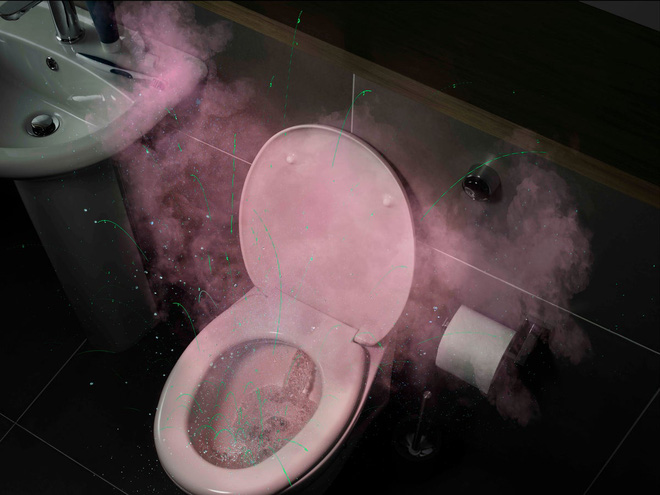
A new study published in the journal Physics of Fluids reveals that a toilet can release over 10,000 aerosol particles after flushing.
You probably already know what these aerosols carry: your waste, possibly from previous users too, along with bacteria and countless germs!
So here’s a quick tip: wait at least 20 seconds if someone just flushed before you enter the bathroom. When you flush, close the toilet lid if there is one. For automatic urinals in men’s restrooms, they should be programmed with a delay to avoid spraying aerosols on anyone still standing there.
One flush can release over 10,000 aerosol particles
That’s what researchers at Florida Atlantic University found after spending 3 hours and performing over 100 flushes in various scenarios inside a university public restroom.
The restroom was medium-sized with 6 standing urinals and 3 standard toilet stalls. Each urinal flush used 3.8 liters of water, and each toilet flush used 4.8 liters.
Before the experiment, the restroom was deeply cleaned 24 hours prior, ventilation was kept on 24/7, and the door was temporarily closed to remove any lingering aerosols. The next day, an aerosol counter was placed in front of a urinal and a toilet stall to measure particle changes before and after flushing.
“After about 3 hours and over 100 flushes, we recorded a significant increase in aerosol concentration in the surrounding air. Each flush released tens of thousands of droplets,” said Professor Siddhartha Verma from the Mechanical Engineering Department at Florida Atlantic University.
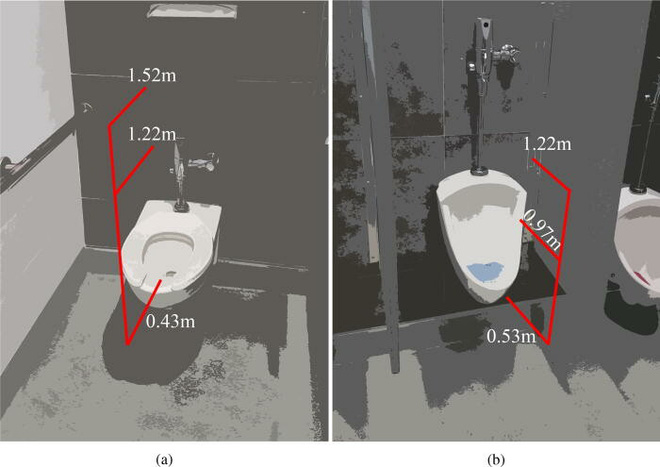
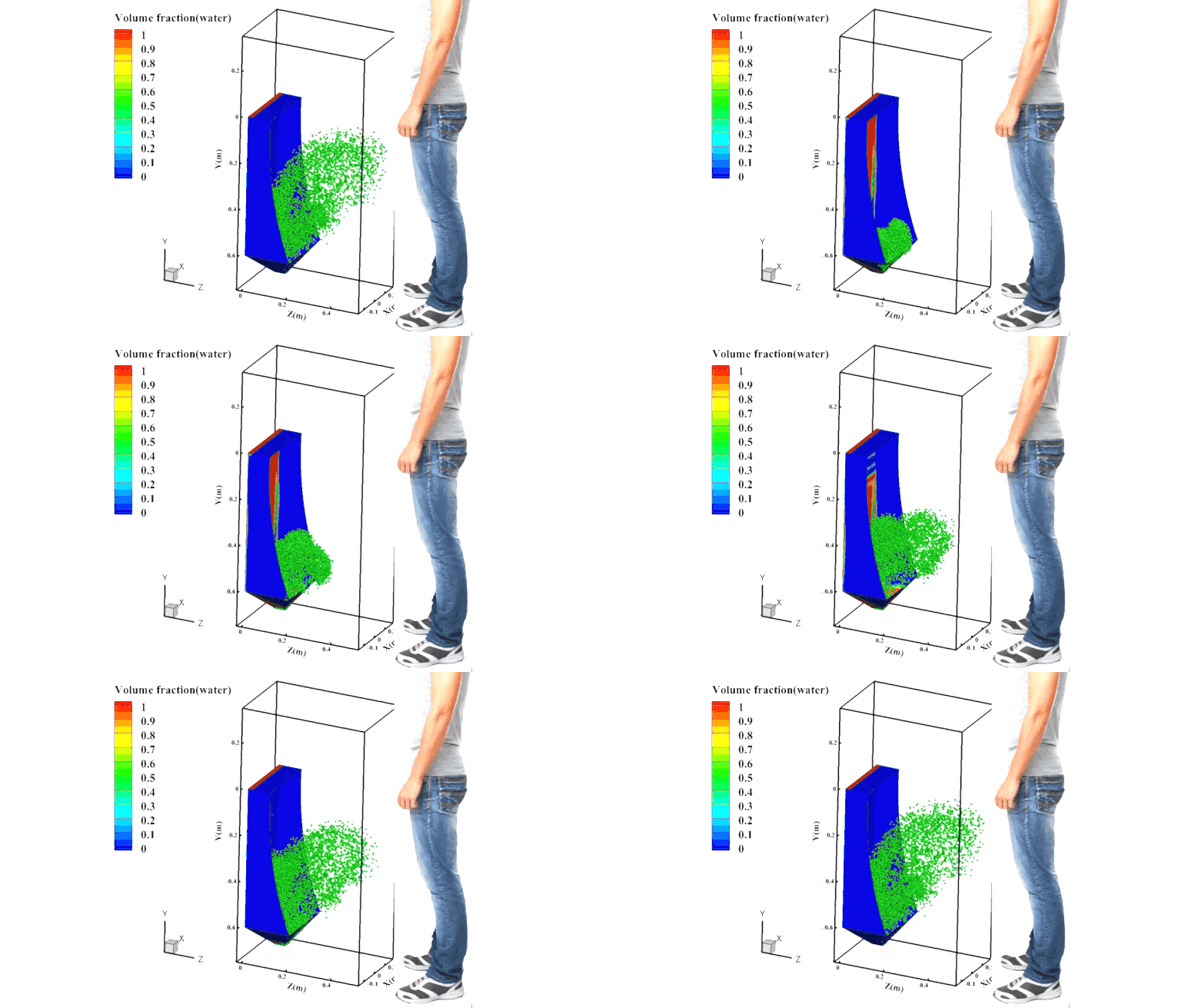
The spray height from standing urinals reached up to 69 cm, while standard toilets with seats sprayed up to 109 cm. The most dispersed particles ranged from 0.5 to 1 micrometer, which is 100 times smaller than a human hair. Their density increased by over 200% after flushing. Particles sized 0.3-0.5 micrometers rose nearly 70%, and the largest particles (1-3 micrometers) increased by 50%.
The measurements also showed that most aerosol droplets in the restroom take about 20 seconds to settle. So this is likely the safe waiting time before entering a bathroom after someone flushes.
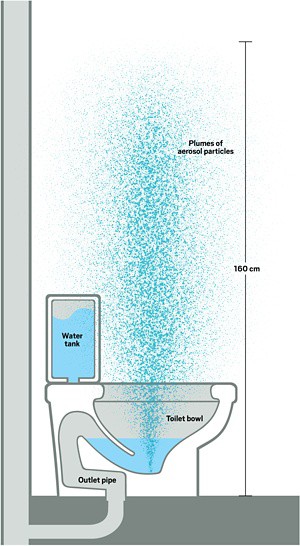
Additionally, researchers noted that closing the toilet lid (if available) helps reduce aerosol spread. This polite habit can lower aerosol density, though some droplets may still escape through gaps.
So waiting remains the safest strategy before entering a restroom that someone just used.
Risk of spreading many germs, including COVID-19
“Both toilets and standing urinals produce large amounts of droplets smaller than 3 micrometers. These pose a significant risk of disease transmission if they contain infectious microbes,” Professor Verma explained. “Due to their small size, these droplets can remain airborne for a long time.”
We know that pathogens hide in stagnant water, urine, feces, and vomit. Studies show SARS-CoV-2 can survive longer in feces than in nasal secretions.
Previously, Ebola virus was found in toilet waste, and outbreaks of norovirus causing food poisoning, stomach flu, and Legionnaire’s disease linked to public restrooms are not uncommon.
Earlier mathematical models also showed that toilet flushes can spread germs several meters away, reaching heights that can enter human airways.
During the COVID-19 pandemic, this issue is even more concerning. The Florida Atlantic research team pointed out that most public restrooms today are small and poorly ventilated.
High daily usage and infrequent cleaning increase the risk of COVID-19 transmission.
Therefore, building owners are advised to improve restroom ventilation and clean at least twice daily.
For users, scientists recommend waiting at least 20 seconds before entering a restroom where someone just flushed. Then, close the toilet lid, flush, and leave as quickly as possible.
Source: ScienceAlert

