

In 2016, to prove to her husband that lottery tickets were a waste of money, a woman named Glenda Blackwell bought a $10 Carolina Millions scratch-off ticket. She ended up winning a million dollars.
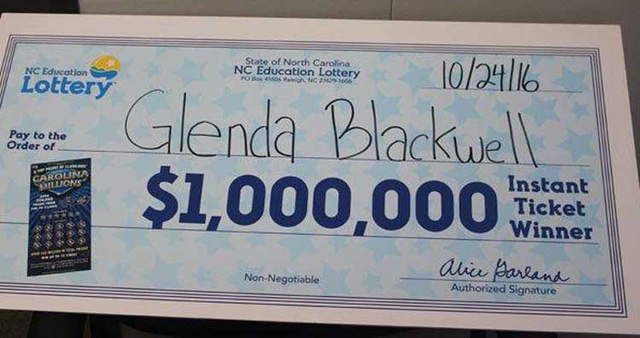
After getting annoyed with her husband Buddy for asking her to buy a Powerball ticket for him, 57-year-old Blackwell from Leicester, North Carolina, decided to prove to him that buying lottery tickets was pointless. But she shocked everyone by winning big. She later used her winnings to buy a house and some land to help her daughter and cover college tuition for her two granddaughters.
A seven-year-old boy who watched tons of toy videos on YouTube decided to start his own toy vlog. He eventually made $22 million a year from his videos and toy line sold at Walmart.
Ryan’s YouTube channel changed the toy world much like PewDiePie, the Swedish comedian and gaming commentator, influenced video games. By February 2019, one of Ryan’s videos titled “Surprise Toy Challenge with Giant Eggs” had over 1.7 billion views. From being the eighth highest-paid YouTuber in 2016-2017 with $11 million, he became the top earner with $22 million in 2018.

After watching toy review channels, Ryan asked his mom, “Why don’t I make videos on YouTube for other kids to watch?” He started vlogging in March 2015, and his mom quit her high school chemistry teaching job to help him make toy review videos. In 2017, his parents signed with a kids media startup called Pocket.watch to market and sell merchandise. In 2018, Ryan’s channel launched an app called “Tag with Ryan” for iOS and Android. That same year, they released a new toy line called “Ryan’s World,” exclusive to Walmart, Target, and later Amazon.
In 1992, while searching for a lost hammer with a metal detector, a retired man found a huge Roman treasure containing 15,234 coins. The UK government later paid him and the landowner 1.75 million pounds to acquire the artifacts.
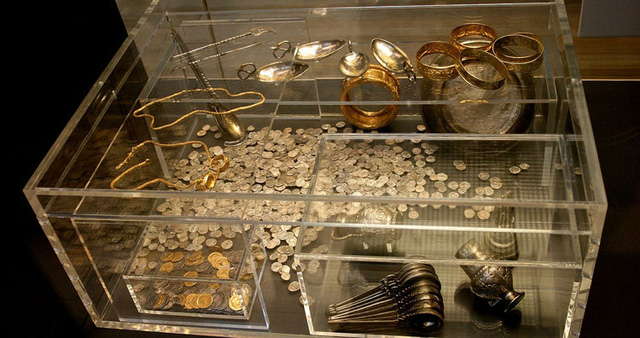
When farmer Peter Whatling lost his hammer, he asked his friend Eric Lawes for help. Lawes had received a metal detector as a retirement gift. On November 16, Lawes was searching Whatling’s farmland in Hoxne, Suffolk, England, when he unexpectedly found the treasure. It included gold and silver items, 15,234 Roman coins, some silver spoons, and 200 gold objects. Archaeologists dated the items to 410 AD, when Britain separated from the Roman Empire.
A woman named Ailin Graef, also known as Anshe Chung, became a millionaire by selling virtual real estate in the online world Second Life.

Living in Los Gatos, California, Gary Dahl was hanging out with friends at Bonny Doon bar listening to them complain about their pets. He joked that he had the perfect pet, a rock, that didn’t need baths, walks, feeding, or grooming. Plus, it wouldn’t get sick, disobey, or die.
Dahl bought rocks for a penny each and sold these “pets” at a very low price. His biggest expenses were making boxes and an “Official Training Manual”, a 32-page booklet called “Caring for and Training Your Pet Rock.”
Though sales were slow in February 1976, Dahl sold 1.5 million Pet Rocks at $4 each, making him a millionaire.
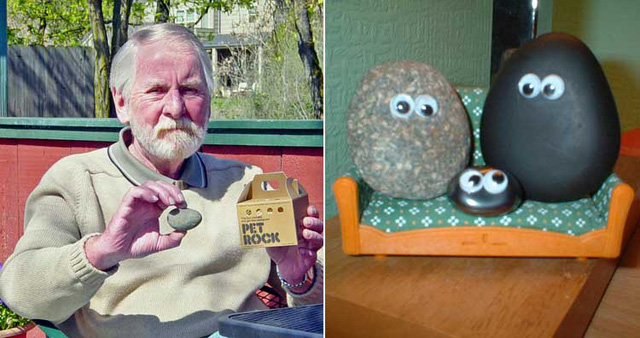
In 1975, Gary Dahl became a millionaire by selling smooth rocks from Mexico’s Rosarito beach for $4 each.
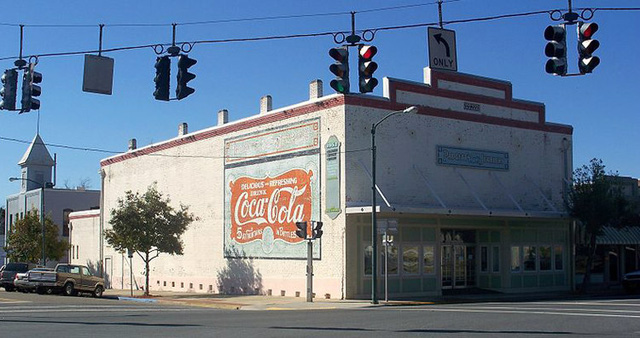
During the Great Depression, a banker convinced a struggling small town in Florida to buy Coca-Cola stock. The town became the richest per capita in the US and now has at least 67 millionaires.
In the 1920s and 30s, the farming town of Quincy was struggling to survive. But Pat Munroe noticed locals were spending their last money on Coca-Cola bottles. At the time, the stock was cheap at $19 per share. Munroe invested and, as a trusted banker, many followed his advice despite the market downturn.
Munroe’s instincts paid off, and the stock helped the town get through the worst of the Depression. Dividends reportedly saved residents during later recessions and bad harvests. Many built huge fortunes, earning the nickname “Coca-Cola millionaires,” passing wealth down through generations.

