

The UK government has officially recognized octopuses, crabs, and lobsters as sentient beings capable of feeling emotions, leading to new laws protecting these creatures from suffering.
Until now, crustaceans with ten legs (including crabs, lobsters, and various shrimp) and cephalopods (like squid and octopuses) were not included in the Animal Welfare (Sentience) Bill.
But a report from the London School of Economics presented strong scientific evidence showing these animals are sentient and can experience both physical and mental pain, prompting the UK government to change its stance.
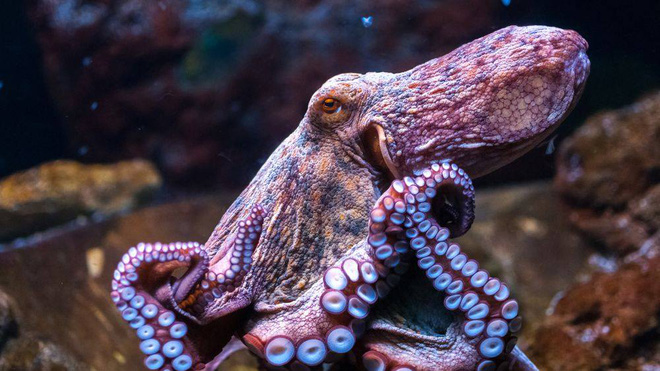
Jonathan Birch, a specialist from the Centre for Philosophy of Natural and Social Science and lead author of the report, said: “After reviewing over 300 scientific studies, we concluded that ten-legged crustaceans and cephalopods must be classified as sentient and included in animal welfare laws.
“This new law also resolves a major contradiction: octopuses and many other cephalopods have been protected by science for years, yet until now they lacked legal protection. The UK can lead the way in animal welfare by protecting these often-overlooked invertebrates that humans have long disregarded.”
The London School of Economics report also advises against certain common practices with crustaceans, such as clipping claws, stabbing their bodies with sharp knives, removing eyes, or selling them to inexperienced cooks. They also recommend banning the practice of boiling these animals alive without stunning them first.
Recognizing that these animals can feel pain means that torturing them before consumption, whether intentional or accidental, can be considered inhumane. The UK’s move has received widespread support from animal rights organizations.

