

Professor Scott Galloway from New York University recently shared a story about his close friend’s 11-year-old son after visiting their home.
“The boy was lying sideways on the couch, phone in hand, watching TikTok. About an hour later, his face looked hypnotized, eyes wide open, and his fingers kept swiping the screen,” Galloway described. “It reminded me of someone addicted to opioids.”
Galloway elevated TikTok’s addictive nature to a new level, calling it a form of “digital cocaine.” This view is supported by Forbes journalist John Koetsier, who said he found TikTok terrifyingly addictive after trying it himself.
“I downloaded the app, explored it, and started watching 15-second videos. An hour later, I was shocked at how fast my afternoon disappeared,” Koetsier said. “Somehow, I was hooked from the very first try.”
THE “ADDICTIVE SUBSTANCE”
According to Bloomberg, TikTok was the most downloaded app in 2021 and now boasts over one billion users worldwide. With nearly $4 billion in revenue last year, mostly from ads, and projections to hit $12 billion this year, TikTok’s growth rivals the combined scale of Twitter and Snap just three years after ramping up advertising.
“This will definitely become a major threat to Google and Facebook. TikTok is starting to adjust media budgets to better match its user base,” said Pieter Jan de Kroon, CEO of online ad company Entravision Media Donuts.
While TikTok’s monthly active users lag behind Facebook’s 2.9 billion and Instagram’s 2 billion, its short videos have huge appeal, especially among younger generations.
Data from Omni Core Agency in March shows TikTok’s audience is mostly young, with 43% aged 18 to 24, only 3.4% over 55, and 57% female. On average, users spend 11 minutes per session watching 26 TikTok videos, each about 15 seconds long. Galloway says 26 is the perfect number for TikTok to gather more user data than other companies.
“If data is the new oil, TikTok is definitely supplying the highest quality oil in the world,” The Guardian noted.
Bloomberg reports that U.S. users spend about 29 hours a month on TikTok, more than Facebook (16 hours) and Instagram (8 hours) combined, according to mobile research firm Data.ai. Galloway compared TikTok’s addictive power to a form of “opium,” helped by its diverse content including music production and gaming.
In fact, TikTok is expanding into e-commerce, blurring the lines between social media and online shopping. The platform now lets sellers set up digital stores in the UK, Indonesia, and Thailand, allowing millions of users to buy products directly within the app without relying on traditional e-commerce sites.
“TikTok is the TV for Generation Z,” said Jo Cronk, president of marketing company Whalar.
THE SECRET ALGORITHM
Beyond being addictive for young users, TikTok has become essential for marketing campaigns. Ryan Detert, CEO of a major marketing firm, said, “Two years ago, TikTok was still in testing. Now it’s way beyond that.”
Richard Henne, co-founder of clothing brand Ivory Ella, said his company often uses TikTok to reach young women and Gen Z. He used to spend a quarter of his marketing budget on Facebook and Instagram but is now “cutting that share as fast as possible because those platforms are clearly losing ground.”
Instead of tracking users like Facebook does, TikTok uses AI to identify and select user interests, then applies algorithms to deliver targeted ads and content. This approach is helping TikTok grow its popularity.
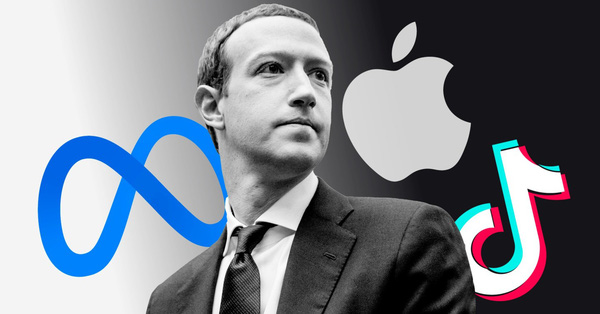
TikTok’s rise worries Mark Zuckerberg, who says congressional roadblocks to innovation in the U.S. only help Chinese companies like TikTok avoid antitrust scrutiny. Meta has announced heavy investments in AI, which is expected to boost its massive ad revenue.
“Right now, we suggest content on Facebook and Instagram based on your friends and follows. Over time, more content will come from AI recommendations. And as AI gets better, you’ll see everything, not just what your friends post, but the entire universe,” Zuckerberg said.
TikTok’s parent company ByteDance used this method to reach 1 billion monthly users. The blatant copying prompted TikTok’s Global Business Solutions head Blake Chandlee to warn Meta that continuing to label itself as the original will cause big problems.
Still, TikTok leads the pack in attracting users, even if it’s being copied. The secret lies in its hidden algorithms.
Experts say no AI algorithm is more comprehensive than TikTok’s short-video platform. While Facebook requires users to build detailed profiles and share personal info, TikTok relies solely on its algorithm.
TikTok’s billion-dollar machine is expanding its advertising reach, growing bigger than Twitter and Snap combined, and aiming to challenge Facebook and Google’s dominance.

