

Promising to revolutionize many scientific fields, one of the biggest long-standing issues in quantum computing has been system stability. But that might be about to change forever thanks to the work of a young student at the University of Sydney, Pablo Bonilla.
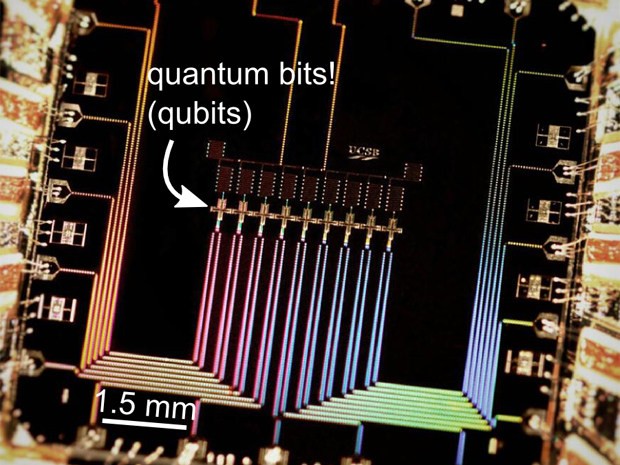
The core components of quantum computers are qubits, which act like switches. They’re similar to transistors in today’s computers. However, qubits are extremely sensitive to outside disturbances. Even tiny changes in temperature, sound, gravity, or magnetic fields can cause errors in qubits and the algorithms running on them.
To improve quantum computer stability, scientists developed an algorithm called Quantum Error Correction. This algorithm detects and fixes errors in quantum computers.
The algorithm spreads quantum information stored on a single qubit across multiple supporting qubits. In other words, the information is encoded into a logical quantum bit. This approach has been used for about two decades. While it protects data integrity, it requires many qubits to store information. The more noise there is, the more qubits are needed. Depending on hardware and algorithm type, it can take up to 1,000 physical qubits to create just one logical qubit.

One of Bonilla’s homework assignments was to find a way to improve this algorithm’s efficiency. It turns out the decades-old quantum computing problem was solved by a “simple but brilliant” tweak Bonilla made to the error correction algorithm. After applying his change, the quantum computers’ self-correction ability doubled.
Bonilla said, “By flipping half of the quantum switches, or qubits, in my design, we saw a twofold increase in error correction efficiency.”
His discovery quickly caught the attention of top quantum computing researchers. Amazon Web Services’ Quantum Computing Research Center, along with Yale and Duke Universities, showed strong interest in this breakthrough.
Professor Shruti Puri from Yale’s Quantum Research Program said, “What amazed me most about this new line of code is its magical subtlety.”
Ben Brown, Bonilla’s mentor and co-author of the research, admitted he was stunned that no one had noticed this for two decades. Bonilla’s research is now published in the journal Nature Communications.
Source: The Mandarin

