

People are constantly exploring new housing solutions for the future, especially if climate change reaches extreme levels and land becomes uninhabitable.
Climate change, melting ice caps, and the thermal expansion of warming seas could cause sea levels to rise dramatically, threatening human civilization. Since 1880, the global average sea level has risen about 21 to 24 centimeters and continues to climb at an alarming rate.
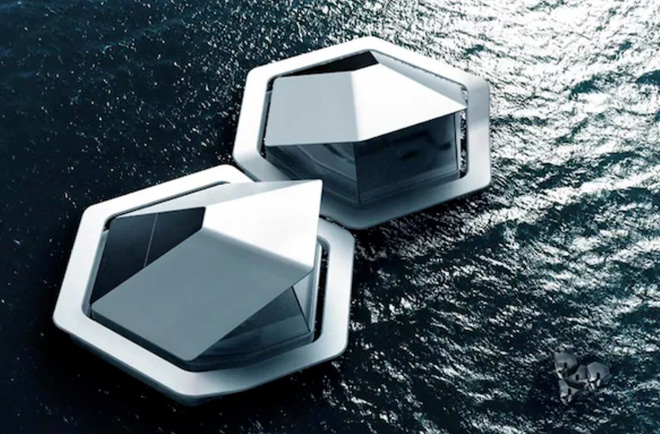
Sony’s new project called “One Day, 2050” imagines what life in Tokyo might look like in 2050. One highlight is a model of floating homes designed in collaboration with science fiction experts.
The company explains that the project revolves around themes like “2050,” “Tokyo,” and “romance.” Sony’s designers and sci-fi writers held workshops to explore future lifestyles, environments, senses, and happiness in 2050. Their creative efforts produced a series of design prototypes and short sci-fi stories.
Each prototype presents ideas for services or products tied to these themes.
Under the theme “Living Environment,” the concept features nomadic communities living at sea in harmony with nature. It envisions a near future where coastal cities are replaced by floating shell homes for climate refugees and those displaced by rising waters. With no land left to live on, people would resettle in these shell-like houses drifting across the ocean, searching for food and safe shelter.
According to Sony, these floating shell homes have a dual-structure design that stays stable even during storms. The outer shell is built to block waves and reduce shaking, while the interior is where people live.
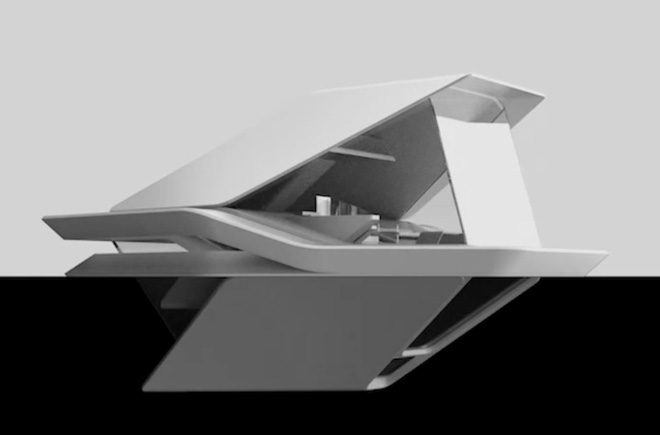
The spacious pods have three levels for living both above and below water, all connected by stairs. Since this is still a concept, detailed amenities aren’t described, but we can imagine interiors resembling bunkers from sci-fi films.
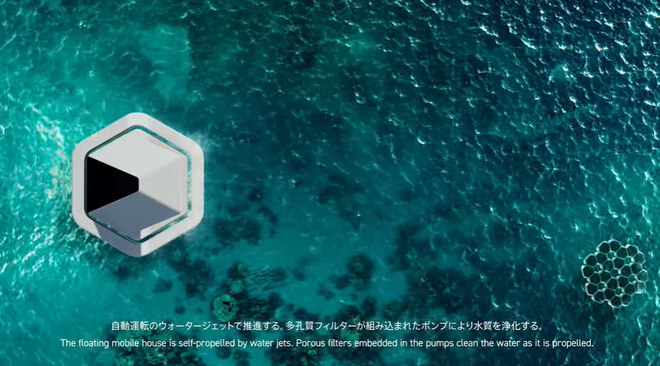
For movement in water, these homes use water jet propulsion. They have batteries at the base and energy storage tanks, plus solar panels on the roof to capture sunlight. The homes also purify water using onboard filtration systems as they drift across the ocean.
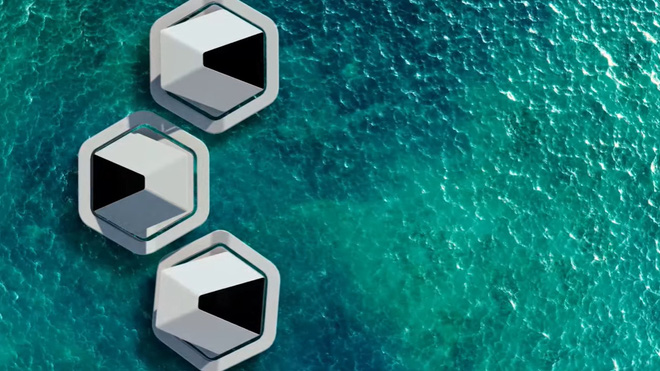
When two or more homes meet, they can connect to form honeycomb-like structures or even entire “sea cities.” Connected homes can share energy between their tanks anytime, creating a shared power system.
Source: InterestingEngineering

