

“An unprecedented increase. Earth is warming faster than expected,” said Norman Loeb, a NASA scientist and lead author of the study published this week in Geophysical Research Letters.
Using satellite data, researchers from NASA and the National Oceanic and Atmospheric Administration (NOAA) measured what’s called Earth’s energy imbalance. This is the difference between the energy Earth absorbs from the sun and the heat it can radiate back into space. The scientists found that Earth is currently absorbing more heat than it loses, which is the first step toward global warming.
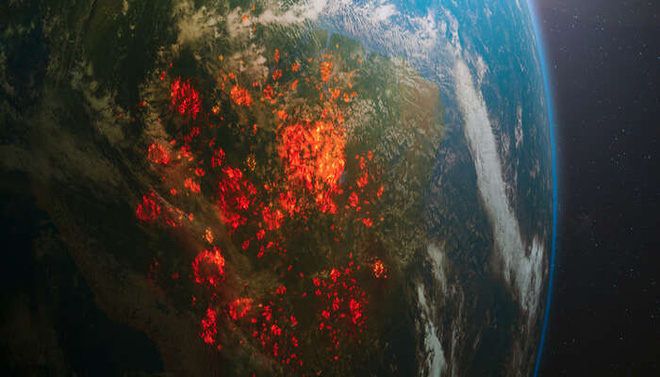
The study shows this energy imbalance nearly doubled from 2005 to 2019. The amount of energy Earth is “holding onto” is so huge, it’s like every person on the planet running 20 electric kettles at once.
Scientists estimate Earth absorbs about 240 watts per square meter of energy from the sun. The oceans soak up most of this heat, about 90%.
At the start of the study period in 2005, Earth radiated about 239.5 watts back into space, creating a gap of roughly half a watt. By 2019, this gap nearly doubled to about 1 watt per square meter.
The big question is what’s driving this excess heat buildup.
The research points to a decline in cloud cover and sea ice, which normally reflect sunlight back into space. With less reflection, Earth traps more heat. At the same time, rising human-made greenhouse gases like methane and carbon dioxide, along with water vapor, make this effect worse.
The study period also overlaps with climate events that likely sped up heat retention. This includes a strong El Niño from 2014 to 2016, which caused unusually warm ocean waters worldwide. This extra heat, especially in the oceans, means more intense storms and marine heatwaves.
“This is not good news,” warned Norman Loeb, the study’s lead author.
Source: Washington Post

