

It wasn’t “virus,” “pandemic,” or “COVID” that I heard most in 2020 when COVID-19 started hitting Vietnam. The phrase I heard the most was “catching the bottom.” Exactly one year ago today, the stock market opened with a blood-red session right after patient N-17 was confirmed.
Since then, in almost every group chat I’m in, at least one person would type “catching the bottom.” Stocks are falling, so this is a chance for everyone to invest. The market’s long-term recovery is inevitable.
“Just give me the money, leave it for a few months, and when it profits, you give me 30%. I promise it will profit,” a friend confidently said. One person joined, then two, and by the fourth nod, I decided to invest too.
That’s how I got into the stock market without knowing how to read financial reports, without tracking stock prices, and without even opening a trading account.

But that’s not the strangest story. Exactly one year later, Bitcoin’s price surged past $50,000, sparking a rise in all cryptocurrencies. Then came a new social media craze even crazier than catching the bottom: mining Pi cryptocurrency on your phone.
Someone across the Pacific created an app anyone with a smartphone in Vietnam could download. The provider promised that by just uploading a photo of your passport or driver’s license and opening the Pi app once a day, your phone would automatically mine cryptocurrency.
What’s more, this daily check-in method doesn’t drain your phone’s battery or heat it up while the crypto keeps flowing into your account. “Nothing to lose,” was the next phrase bombarding every newsfeed and comment section I read about Pi.
A friend of mine installed Pi, then two friends, then dozens started showing off the Pi app on their phones. But this time, I decided not to join.
Unlike “catching the bottom,” Pi Network is clearly pure FOMO investment, a fear of missing out when everyone’s given a chance to chase infinite returns from zero capital. That means everyone can join and probably already has. If you don’t, everyone else becomes millionaires except you.
Fear, not opportunity, is driving some people to invest in Pi. They’re not really investing anything, and any rational person can see Pi Network’s promises will never come true.
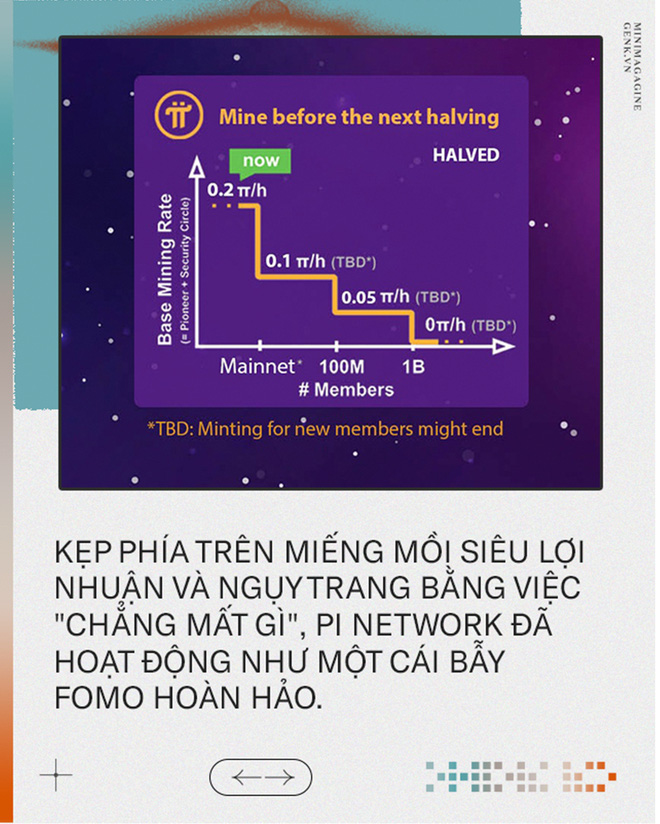
But what if it could? What if this coin, thanks to a never-before-seen mechanism, could rise like Bitcoin?
If after all your research you still think so, welcome to the world of FOMO investors.

FOMO (Fear Of Missing Out) was first defined in 2004 by American venture capitalist Patrick James McGinnis. It’s a social anxiety where someone believes others are making their lives better while they’re missing out, pushing them to follow suit.
“Making life better” covers many actions, from watching a movie, attending an event, exploring a famous travel spot, to jumping into a new profitable investment channel.
To understand better, imagine this common scenario: a new movie hits theaters and everyone talks about it on social media, from news outlets and celebrities to reviewers and your friends. FOMO makes you wonder: should I go see it? It sounds good from what everyone says.

The FOMO effect in investing works the same way. Suppose you’re a new investor entering the market. Naturally, you join groups of other investors to get information and find opportunities.
Everything’s normal until the market has a big move, like a stock or crypto price surge. Then everyone in the group talks nonstop about it. As a newbie, you just hear the info without deep analysis.
What matters most to you are profits and the promises made. The catch is those promises usually come with invitations to buy in, making you afraid of missing out on what others seem to be grabbing.
This FOMO mindset makes you check prices daily, even hourly. After seeing prices rise steadily, you decide to invest because it feels safe and profitable.

At its core, FOMO is an internal feeling tied to fear, greed, and comparison. But these feelings are triggered by outside influences. For FOMO investors, the main trigger is strong market volatility.
Strong market swings spark regret and fear of missing out. Think back to the first time someone invited you to invest in Bitcoin. What was its price then and what is it now? How much could you have made if you invested back then?
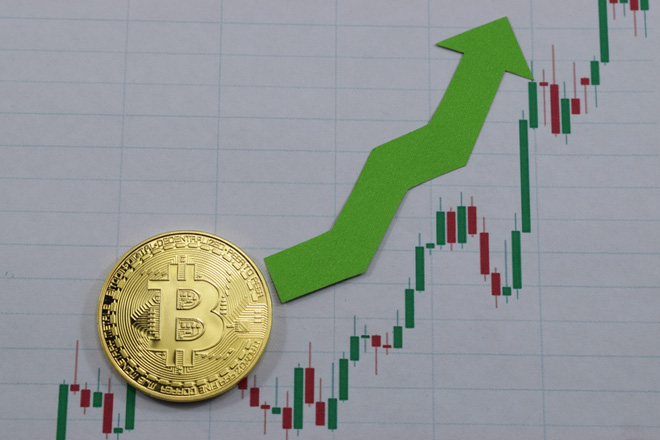
2017 was Bitcoin’s breakout IPO year when its price first passed $1,000 early in the year and then soared 17 times in 12 months. Many millionaires emerged, leaving those who ignored early invites feeling regret.
Bitcoin’s price swings were even crazier back in 2010 when a man made history buying two pizzas from Papa John’s for 10,000 Bitcoins. Back then, Bitcoin was worthless. Today, those pizzas would cost $100 million.
Winning or losing streaks are the second factor fueling FOMO in investing and trading. Recent wins excite you to jump on new opportunities quickly and emotionally.
Conversely, losing streaks push you to chase losses and grab every chance you think the market offers. When emotions drive your investment decisions, FOMO sneaks in to manipulate you.
Interestingly, FOMO hits those already in the market faster than those who haven’t entered. People who’ve bought crypto or joined multiple investments are more drawn to crypto FOMO waves than those who’ve never made or lost money there.
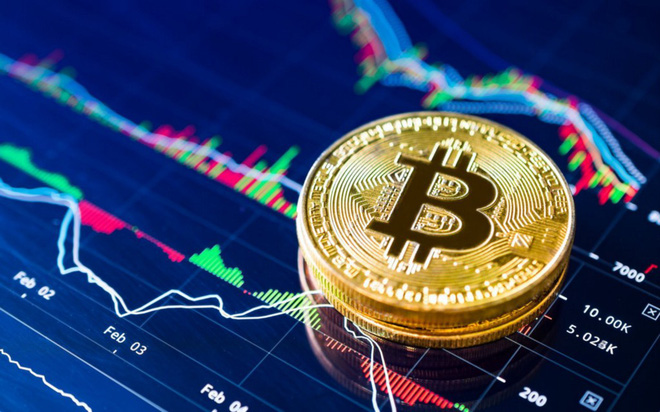
News and rumors are the third factor. Take Pi Network as an example. This crypto is currently worth zero USD, and even at its most volatile, one Pi was only worth $0.007. So what triggered Pi Network’s intense FOMO?
Nothing but rumors and promises. The Pi founders outlined a development plan with three stages: beta, testnet, and mainnet, promising that in the final stage Pi would hit exchanges and have real trading value.
Currently in the testnet phase, Pi is nearly worthless, but rumors claim someone traded 500 Pi for a Triumph 900 cc motorcycle worth about 100 million VND.
The dream of Pi’s value even got hyped with claims it could reach Bitcoin’s worth. But blockchain and crypto experts warn there’s no basis for Pi having any real value.
Pi mining on phones is just a daily check-in, it doesn’t validate transactions like Bitcoin mining. The only “work” creating value on Pi Network is providing your personal info and inviting others to do the same.

This lets Pi Network collect massive user data, over 10 million users so far. Experts say they could sell ads and then launch the mainnet from that.
But even if that happens, investors expect a sell-off when Pi hits exchanges, driving its price back to zero. That might explain why the Pi founders haven’t and probably never will launch the mainnet phase.

You might lose some personal data with Pi Network, but many FOMO investors and traders on exchanges like Bitcoin or stocks lose real money, and often a lot.
Look at the chart below showing the typical FOMO investor’s cycle. It’s typical because most emotional investors follow this pattern. They start on the upward slope of an investment, of course, since FOMO only kicks in during strong market moves.
For example, a FOMO investor buys 1 Bitcoin at $10,000 at the end of 2017. Expecting Bitcoin to hit $100,000 based on rumors, they hold long-term until the peak at $17,000. If the price drops, they reassure themselves it’s just a market correction and keep holding.
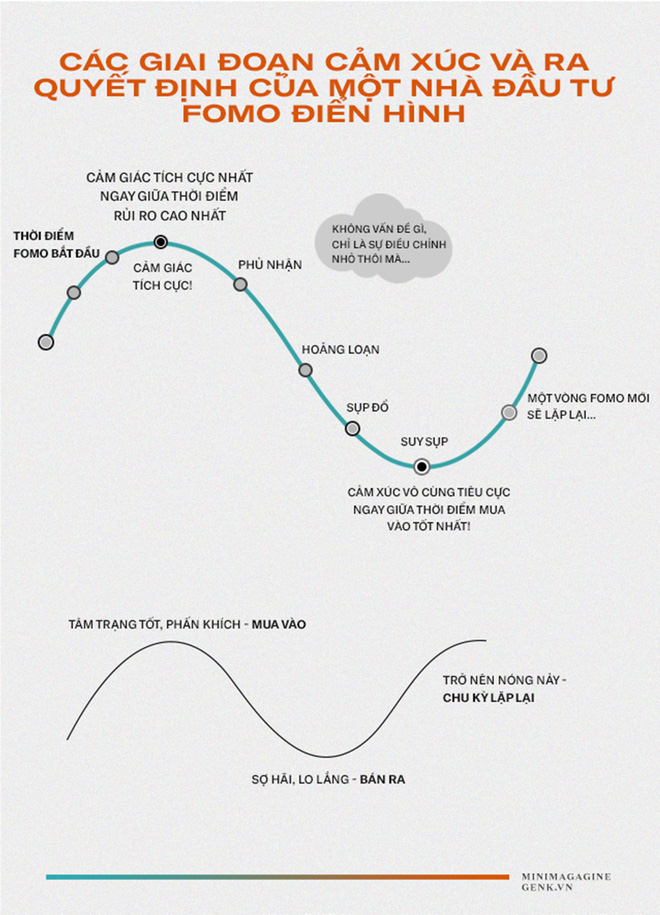
But when Bitcoin’s price plunges, panic sets in. A reverse FOMO cycle appears as bad rumors replace good ones. Anxiety and fear replace excitement and anticipation. People sell off instead of buying.
The FOMO investor then sells their Bitcoin at $7,000 to cut losses, losing $3,000 before Bitcoin rebounds and starts a new FOMO cycle.
Sure, you might say if the FOMO investor sold at the peak, they’d profit. But the real problem is that as a FOMO investor, you never know when the peak is.
You rely only on emotions influenced by others and outside factors. Then the FOMO wave swallows you whole, and all the info around you is just a halo of FOMO effect.
“In this cycle, FOMO investors battle between psychology and information. These two always compete for the attention of a curious and vulnerable investor who relies on others’ opinions to make decisions.
Ironically, in the crypto world, others’ opinions can harm you more than help you profit,” explained Bobby Azaryan, a PhD in philosophy and cognitive neuroscience.

For these reasons, FOMO attracts amateur investors into overheated markets. That’s an opportunity for professional investors, the market whales who hold most assets and can manipulate the market with their cool heads to profit.
So if you notice your investment decisions are driven by fear of missing out, greed, risky impulses, or impatience, it’s time to watch out for FOMO.

If you study FOMO in life generally, you’ll see it impacts Gen Z and Millennials most. Early exposure to new tech like the internet and social media means about 62-67% of Gen Z (born 1997-2002) are affected by FOMO and compare their lives to others.
The number’s even higher for Gen Y or Millennials (born 1980-1996), who grew up using the internet and Facebook. Around 7 in 10 (69%) Millennials feel FOMO.
A 2019 Charles Schwab survey showed Gen Z and Millennials’ spending decisions are heavily influenced by FOMO:
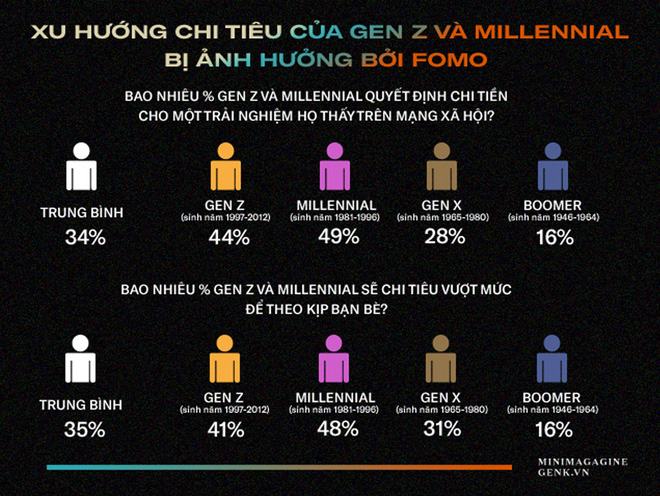
But when it comes to emotional investors, Millennials dominate Gen Z. At ages 24 to 41, they’re the largest group in the market. FOMO affects Gen X and older generations less, and Gen Z is mostly too young or financially unprepared to invest.
So when we talk about a generation of FOMO investors now, we’re mostly talking about early 80s and 90s generations. A CB Insight estimate says this group is set to inherit up to $30 trillion, and FOMO is devouring their money.
Fabrizio Campelli, global asset management director at Deutsche Bank AG, says social media drives Millennials’ investment decisions. They fear missing out because they’re more connected than other investor generations.
This weakness is exploited by some investment platforms like eToro, a trading site that lets you literally “copy” others’ investment moves with a few clicks, fully satisfying your FOMO.
Stock, crypto, and even MLM investment trends all exploit Millennials’ FOMO to lure them in. So how do you avoid it?

If you’re a Millennial using social media and all your friends are jumping on some investment trend, crypto or stocks, it’s hard not to be influenced by FOMO. But as investor Warren Buffett said, “Only when you combine intelligence with emotional discipline can you make the right decisions.”
So before investing, really learn and research the field and the “playing field” you’re entering. Ask yourself if you’re deciding too fast just because of FOMO. Are you truly investing or just gambling?

Learning and researching takes time, and you might fear missing the investment window. That’s FOMO’s nature, the fear of missing out. But don’t worry, knowledge, not price spikes, is what you need most when entering a new market.
Opportunities always come like buses, many thought Bitcoin’s 2018 surge was its last, but in 2021 it broke records again. If you don’t research crypto carefully, you could lose money before learning a lesson. Even if you win, it’s just luck like gambling.
Remember those winning and losing streaks? FOMO keeps affecting you in future investments or trades after you enter the market. That means being a seasoned investor doesn’t guarantee escaping FOMO.
It can still cause “overtrading,” buying and selling too much in a short time, taking profits or cutting losses too early, investing beyond limits, chasing rumors, and most importantly, acting on emotions instead of market analysis.
So how do you control it? Here are some tips that might help:

Also, you can overcome FOMO by distracting yourself from the urge to act, especially investment invites. Turn off your computer, disconnect from social media, practice mindfulness, and step back to evaluate clearly.
Focus on gratitude, what you have, and your own plans instead of pressure to follow social trends, a small group, or anyone else. Whatever your decision, don’t beat yourself up over missing out.
FOMO can turn into JOMO (Joy Of Missing Out) depending on your mindset. If you feel you missed an opportunity, remind yourself there will always be other chances better suited to your investment or life plans. Just write it down in a journal and relax!
Summary

