

The explosion of social media has boosted the popularity of short-form content, especially short films. Alongside quality works with meaningful messages, a wave of “dirty” content has emerged, stirring strong anger and frustration within the community.
A recent short film stands out with its highly controversial content but has racked up a massive 6.4 million views, raising a tough question: Why do viewers get angry and insult it, yet keep watching nonstop?

Offensive Content
This controversial short film revolves around a story that flips basic moral values upside down. It follows a young woman who deliberately dresses provocatively. The plot escalates as she seduces her paralyzed brother-in-law.
At first glance, the script is full of illogical and unethical elements. The raw, nonsensical storytelling only makes viewers more upset, uncomfortable, and outraged the more they watch. Over-the-top, unrealistic details are included solely to create drama and push viewers’ emotions to the limit.



Clickbait, Outrage Storm, and Engagement Success
Despite receiving a storm of negative comments, harsh criticism, and even insults, this outrage actually became the most effective bait. The creators tapped into the crowd’s psychology perfectly. People watch out of curiosity, to find proof to criticize, or simply to see just how “dirty” the content is. The real winners are the content creators. In a short time, the video gained over 31,000 interactions, 6.4 million views, and hundreds of comments. Notably, the video is still trending with no signs of cooling down.
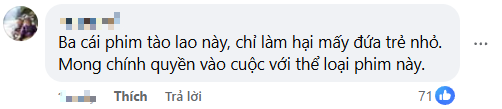


Explaining the Phenomenon: Key Reasons
Curiosity and fascination: Viewers are naturally curious about unusual things and stories that go against common sense. When content is labeled “shocking” or “offensive,” people are drawn in to satisfy their curiosity.
Crowd effect: When content goes viral, whether positive or negative, people want to join the discussion. They want to express opinions and be part of the ongoing controversy.
“Accidental” engagement: Every view and comment, whether praise or criticism, counts as engagement on social platforms. Algorithms see this as “interesting” and “popular” content, pushing it to more users.
So, the viewers’ outrage and critical comments unintentionally helped this film spread widely. Each view isn’t support but a reaction, and these reactions became a goldmine for creators willing to cross ethical lines.
This means we are unknowingly supporting harmful content and letting “dirty” short films dominate the market. It’s time to realize that every view is not just a number but an unspoken vote deciding what kind of content thrives on social media.
The problem of “dirty” short films pulling millions of views reflects a worrying reality
When “dirty” content easily makes money, genuine creators who produce valuable work get overshadowed and lose motivation to continue. This causes the overall quality of content on social platforms to decline.
Moreover, distorted content that twists moral values can affect young people’s perceptions, especially those lacking life experience and knowledge. There’s no simple fix here. Content moderation on social platforms is tricky because the line between “shocking” and “offensive” is often very thin. More importantly, we need to raise awareness among viewers themselves.

