

Fashion always reflects culture, personality, and social change. From modest traditional wear to daring trends, every choice tells a story. But when a trend crosses the line of general acceptance, it can spark heated debates, especially online.
The recent photos of a beautiful woman wearing a see-through dress while checking in at Hoi An are a prime example.

Sexy or Tacky?
Beauty is in the eye of the beholder, but in fashion, the line between sexy and tacky is razor-thin. A “sexy” outfit usually highlights curves tastefully, showing off the body with restraint and confidence without making others uncomfortable. On the other hand, “tacky” often means overexposure, inappropriate for the setting, shocking, or clashing with widely accepted cultural and moral values.

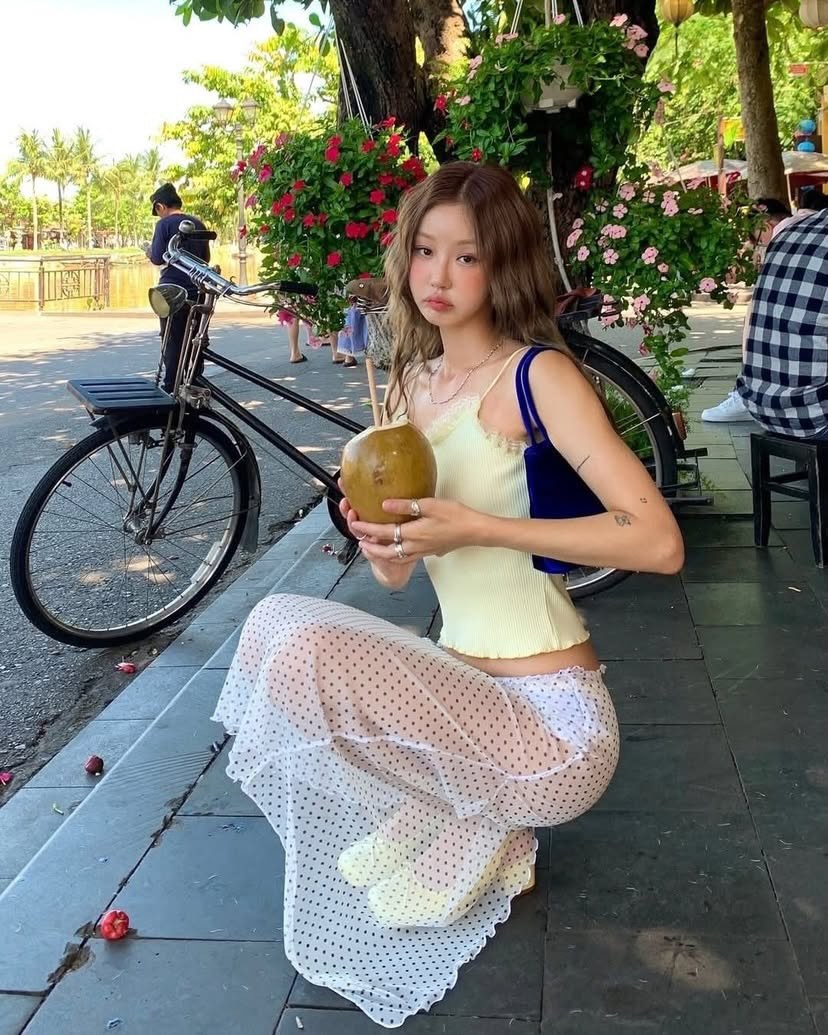
At a cultural landmark like Hoi An, known for preserving traditional values, the woman’s bold outfit naturally drew backlash. Hoi An is not just a tourist spot but a UNESCO World Heritage site with a distinct elegant and ancient atmosphere. She paired a cool spaghetti strap top with a see-through skirt that revealed her underwear underneath. Many saw this look as too daring, out of place, and even “clashing” with the setting.
“Tacky dressing. Pretty but lacking culture. If you wear this at the beach, no one would care.”
“Even Ngân 98 wouldn’t dare show this much in Hoi An.”
“I sell lingerie but honestly, wearing this in the old town feels disrespectful.”


Bystander Reactions
From embarrassment to questioning modesty standards, reactions varied. An outfit might look great on a runway or at a party but feel out of place at a temple, school, or a traditional neighborhood. It’s the wearer’s responsibility to respect the space, culture, and feelings of the community around them.
Initially thought to be a foreign tourist, the photos quickly went viral. However, the account posting them turned out to be fake, deliberately stirring controversy to get views. This shifted the conversation from fashion to personal attacks and misinformation spreading.

The recent surge of clickbait posts on platforms like Threads raises questions about user responsibility. Many share and comment on shocking content without verifying its source or truth, unintentionally helping spread fake news.
Ultimately, how do we balance preserving cultural values with the openness and freedom of an international tourist spot? The answer isn’t just banning or criticizing. It requires understanding from both sides. Visitors should learn and respect local customs and traditions. Meanwhile, local communities can promote awareness and education in a polite, civilized way. For example, instead of strict rules, encouraging visitors to dress appropriately for the setting, like some temples already do, could be a better approach.

