

A nursing home in northern China has become the center of heated controversy after posting a video claimed to be “entertainment for the elderly,” which instead sparked public outrage for being offensive and disrespectful.
In the viral clip, a senior female staff member at the nursing home wears a short skirt and knee-high socks while performing provocative moves right in front of an elderly man, apparently to “encourage him to take medicine.”
The incident took place at a nursing home in Anyang city, Henan province. On September 24, the facility’s official social media account posted the video with the caption: “Our director is doing everything possible to encourage elderly residents to take their medicine.” In the video, the woman, dressed in an outfit reminiscent of a school uniform, wiggles and shakes her hips in front of the silent seated man while another staff member approaches to hand him the medication.
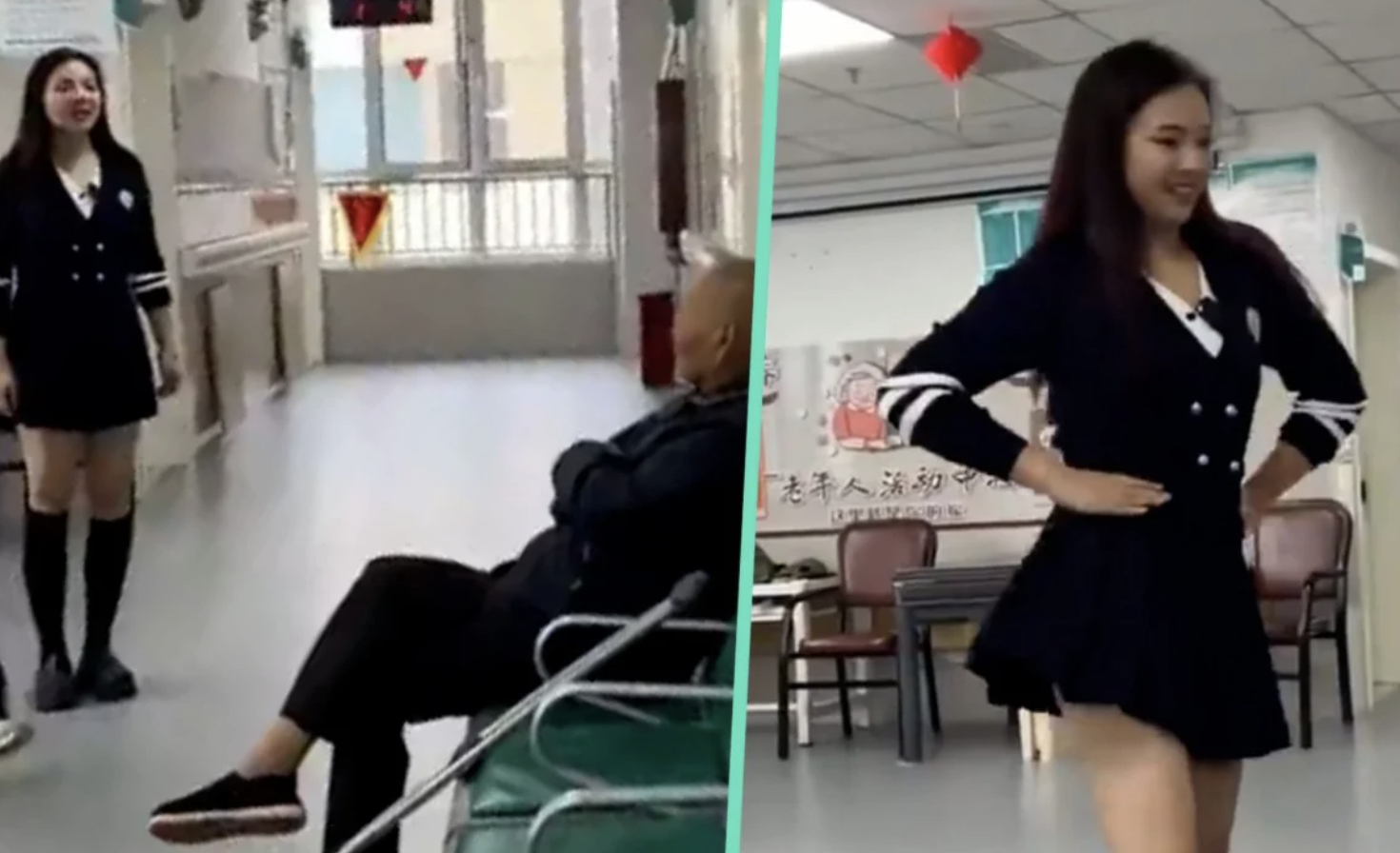
Notably, the nursing home’s online profile describes itself as “a happy place run by a young director born after 1990, with a mission to bring joy and energy to old age.” They proudly claim that “improving quality of life in old age” is their guiding principle. However, the video shows a type of “energy” that made netizens cringe.
Once posted, the video quickly went viral with hundreds of thousands of views and thousands of angry comments. One user bitterly asked, “Since when did sexy dancing become a health care activity for the elderly?” The nursing home’s account responded bluntly, “Everything can be related to sexy dancing.” That short reply only fueled the fire, sparking even more criticism.
Under public pressure, on September 25, the nursing home director spoke to Nanguo Metropolis Daily, admitting the video was “inappropriate” and clarifying that the woman in the clip is a senior caregiver, not a professional dancer. He insisted their goal was not to shock but to “spread positive energy” and break the stereotype that nursing homes are dull and depressing.
“We want to show that nursing homes can be fun and seniors can be lively. But now we realize this approach has both pros and cons,” another staff member added.
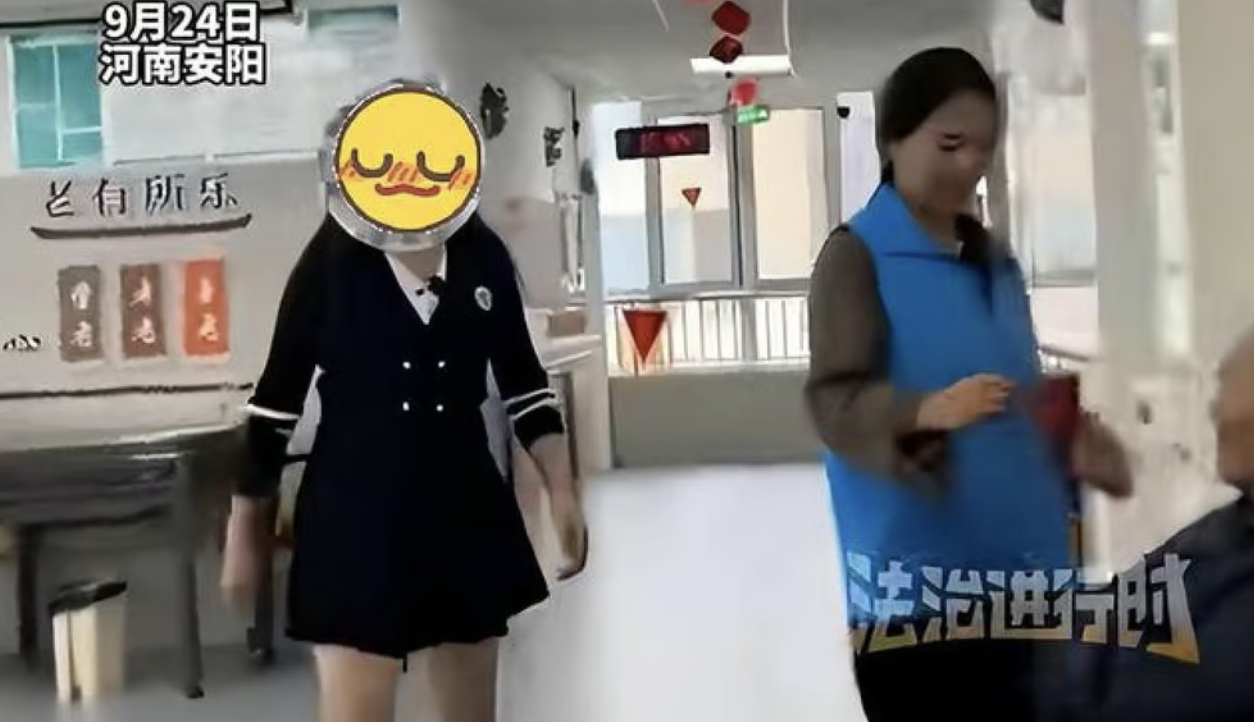
Still, these explanations failed to calm the outrage. Many felt the nursing home crossed ethical lines by turning elderly care into cheap entertainment aimed at grabbing views and promoting their name. One angry netizen wrote, “Are nursing homes now competing by resorting to stunts like this? Innovation is good, but there has to be a limit.” Another was harsher: “This isn’t encouraging medicine intake, it’s insulting the dignity of the elderly!”
In response to the backlash, the nursing home removed over 100 related videos from their social media accounts. A representative from the Elderly Services Department of Anyang Civil Affairs Bureau said authorities are investigating and will release the findings soon.
This incident comes as China faces a rapidly aging population. According to the National Bureau of Statistics, by the end of 2024, over 310 million people in China will be aged 60 and above, making up 22% of the total population. This means the demand for respectful and quality elderly care is one of modern society’s biggest challenges.
Instead of showing understanding and compassion, the Henan case reveals a sad glimpse of how some facilities are commercializing the image of the elderly, turning them into entertainment tools or marketing props.
A widely shared comment summed up the feelings of millions: “Are they dancing to encourage medicine or to make people open their wallets? Elderly people deserve care with respect, not cheap performances.”
This is not just a story about a controversial video. It reflects a worrying reality: when ethics are traded for views and respect is replaced by gimmicks, a society ages not only in numbers but also in spirit.
