

Recently, Xiaomi spent the equivalent of 7 billion VND to redesign its logo. The catch? The new logo looks almost identical to the old one, just with rounded corners. This move sparked a lot of buzz, with many surprised that such a simple logo could cost so much.
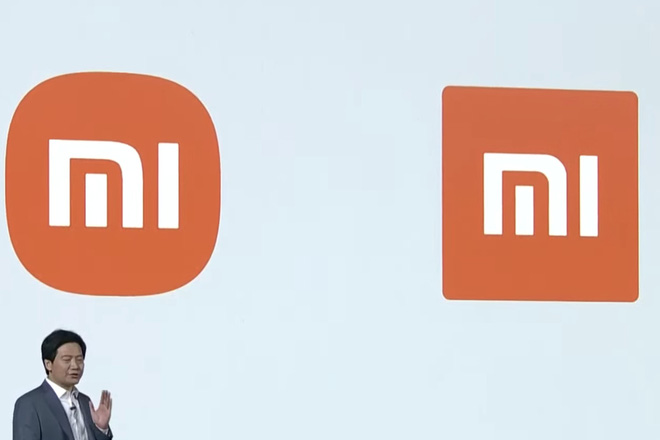
Now, BKAV CEO Nguyễn Tử Quảng has weighed in, not just on logos, but specifically on the icons of Bphone. He says the icons are backed by a “core technology” that lets BKAV create rounded corners that are much trickier than the Superellipse shape used by designer Kenya Hara for Xiaomi’s costly logo.
To prove Bphone’s icon superiority, Quảng compared it to another phone brand’s icon. While he didn’t name it directly, it’s clear he’s referring to the icon used by Vsmart on their VOS system.
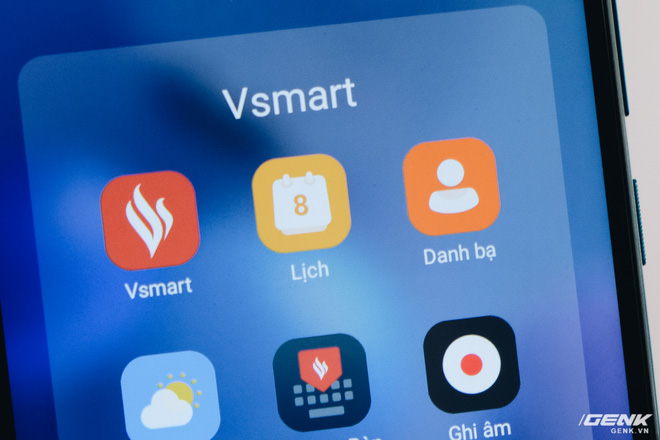
“Below is a zoomed-in view of the Bphone icon and one from another brand. Notice the rounded corners and especially the junction where the curve meets the straight edge. You’ll see the difference.One side has jagged edges and a clear junction point, while the other has seamless curves where the transition to straight lines is so smooth you can barely spot the joint.

Achieving this wasn’t easy. It involved extensive R&D by BKAV’s graphic design team. I’m proud to have been directly involved, guiding us to own this CORE TECHNOLOGY for designing such smooth rounded corners!
Don’t believe me? Anyone in graphic design will know how tough this is and how likely you are to fail. Honestly, this kind of rounded corner is even harder than the Superellipse shape that’s been talked about recently, the one behind Xiaomi’s 7 billion VND logo.
The reason it’s tougher is that the Superellipse is defined by a clear mathematical formula, created by French mathematician Gabriel Lamé. Intuitively, you know it doesn’t have the challenging junction point between curve and straight edge.”
Quảng admits the icons on early Bphone versions “weren’t quite perfect.” He asked the design team to improve them, but they eventually gave up, saying, “We’ve done our best already,” according to him.
That’s when Quảng stepped in himself. Zooming in on the icons, he spotted jagged edges and rough junctions that “create an uncomfortable effect, even if it’s hard to define.” After checking icons from other smartphone brands, BKAV concluded that all of them had this issue, except for one “brand A.”
Even after studying brand A’s design, BKAV’s team couldn’t crack the code. Quảng says this is a “major headache for designers worldwide,” not just for BKAV.
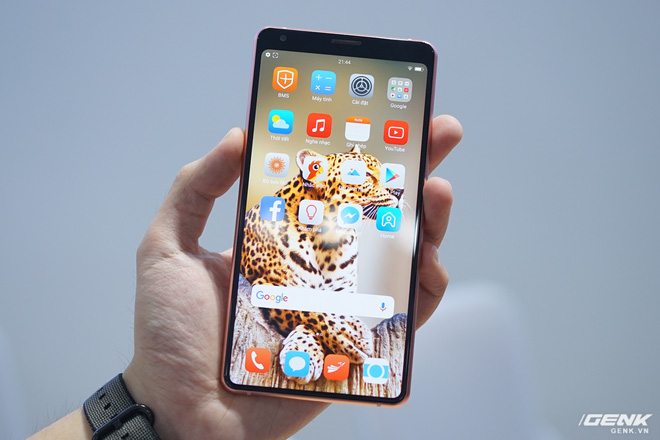
“After weeks of reports and exploring how brand A handles their rounded corners, we still couldn’t find the answer. It turns out this is a BIG CHALLENGE FOR DESIGNERS GLOBALLY, not just our team. Our design team found forums discussing this issue, some even went as far as deriving a complex mathematical function for brand A’s corners.
But sticking to the principle of ‘not just scratching the surface,’ I rejected that solution. Our team tried those formulas but failed. The corners improved, but still weren’t truly smooth.”
Somehow, Quảng managed to find a method to create icons with the smooth rounded corners like brand A, solving what he previously called a “major headache for designers worldwide.”
“Once again, I had to step in, analyze directly, and guide the design team. The results speak for themselves. We now own the CORE TECHNOLOGY for designing these magical rounded corners that only a few companies have.”
Unfortunately, BKAV’s CEO didn’t reveal how they achieved these “magical rounded corners.” From what he described, it sounds like designers worldwide will still be scratching their heads until his solution becomes public.
Quảng also emphasized the importance of “core technology,” saying companies must invest to create unique value that stands out among countless products.
“That’s how R&D works. It’s in every field, including smartphones, and it’s fascinating. Developing a process, technology, or even a small secret requires effort and money. But the payoff is DIFFERENTIATION from the sea of other products. Bfans can feel Bphone’s difference from hundreds or thousands of things we’ve done.
To have great technology, you either R&D it yourself to own it at the CORE, which is costly but reusable, or you buy it, which is expensive but still not truly yours. But if you can’t R&D, you have to buy it.”

