

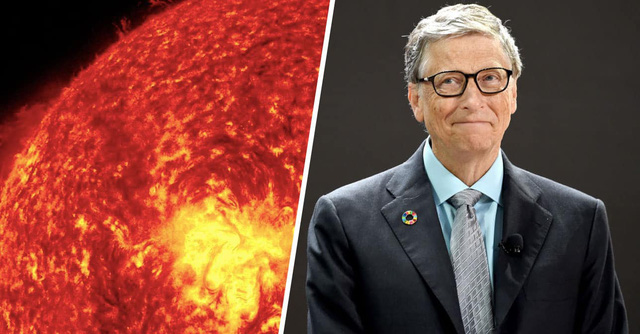
According to Popular Mechanics, billionaire Bill Gates has set his sights on a new “enemy”… the Sun. Specifically, he and several private donors are supporting a Harvard University solar energy research project designed to block sunlight from reaching Earth’s surface.
Last week, the U.S. National Academies of Sciences, Engineering, and Medicine (NASEM) released a new report calling on the government to invest at least $100 million in researching Earth engineering, a highly controversial technology.
Earth engineering is a broad term for technologies that use physics, biology, or chemistry to create more favorable weather conditions for humans on the largest possible scale. Two well-known examples include cloud seeding to induce rain and collecting and isolating CO2.
Regarding the project to dim sunlight, scientists have proposed various methods collectively called “solar geoengineering.” The most common and studied approach involves reflecting sunlight away from Earth by releasing aerosol particles into the atmosphere.
However, this idea is still considered risky because it could block much of the sunlight reaching Earth and might trigger disasters similar to the frozen world depicted in the movie Snowpiercer.
Aerosol particles like chlorofluorocarbons (CFCs) act like sprays that can damage the ozone layer, which contributes to climate change.
Scientists warn that the worst-case scenario is facing a severe climate emergency without knowing how to respond. This is why they are pushing for major investments in solar geoengineering research.
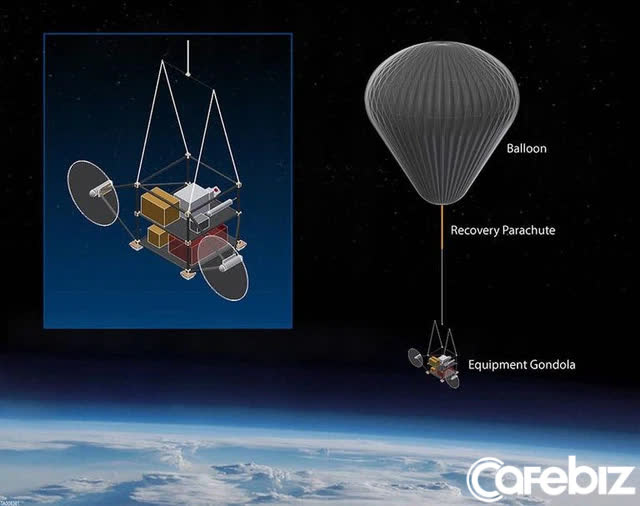
The Gates-funded research aims to conduct small-scale atmospheric experiments. One scientist explained, “We plan to use a balloon to carry spraying equipment into the atmosphere. Once in position, a small amount of material will be released to create a disturbed air mass. The same balloon will then be used to monitor the experiment’s effects.”
Recently, NASEM formed a committee of 16 international scientific organizations to advance solar geoengineering research. Researcher Chris Field said, “This committee addresses the urgent need to fully understand methods for tackling the climate crisis. If we don’t study solar geoengineering, it will be too late to have it as an option when we need it most.” He also highlighted the role of philanthropists like Bill Gates in fighting climate change.
So far, it’s still unclear whether Gates’ project is a good idea. Currently, all scientists and funders are only proposing small-scale research.

