

Recent discoveries suggest that advanced ancient civilizations may have called Earth home far earlier than previously thought. Why mainstream researchers often overlook clues pointing to civilizations much older than accepted remains a mystery to many.
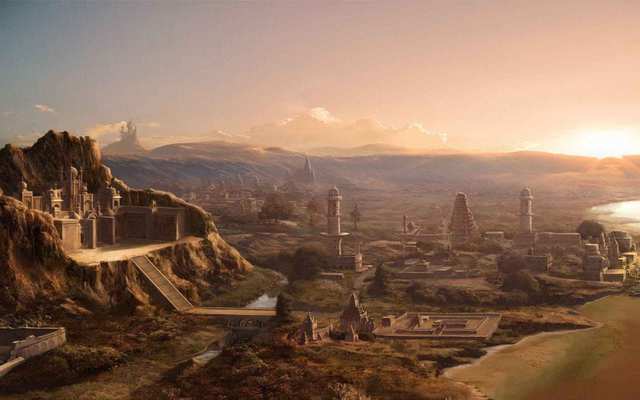
Evidence of civilizations living on our planet before recorded history can be found worldwide. In ancient Egypt, Mesoamerica, and Sumer, texts describe great civilizations from a distant past, legendary rulers, and golden ages lasting thousands of years.
One striking example of these “100,000-year-old civilizations” comes from Africa. This incredible discovery was made in South Africa, about 150 km west of Maputo port. Archaeologists uncovered ruins of an ancient metropolis spanning roughly 1,500 square kilometers, almost the size of Hai Phong city.
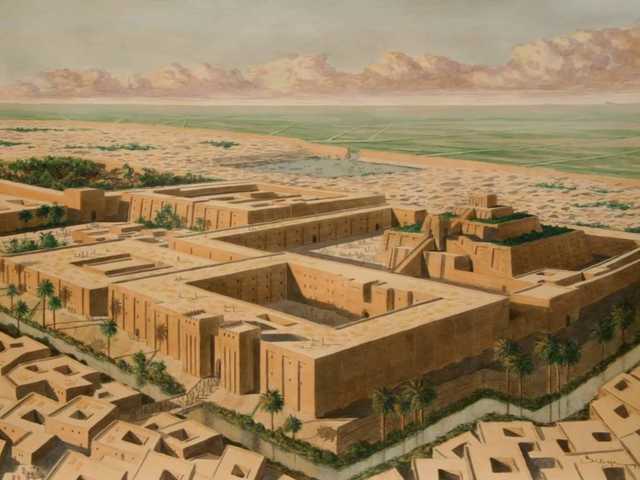
Researchers believe this ancient city was just part of a much larger mysterious community covering about 10,000 square kilometers, built between 160,000 and 200,000 BCE. The area’s geology is unusual, with many gold deposits nearby.
Some scholars suggest these ruins might be linked to the ancient Anunnaki civilization, thought to have vanished long ago but once settled here to mine gold.
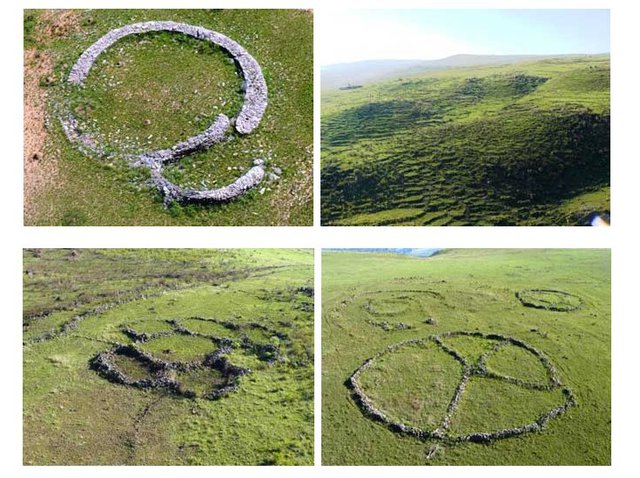
In the Amazon, researchers have uncovered civilizations that may predate the Incas and could be their ancestors. Few expected a lost civilization to exist deep in the Amazon wilderness.
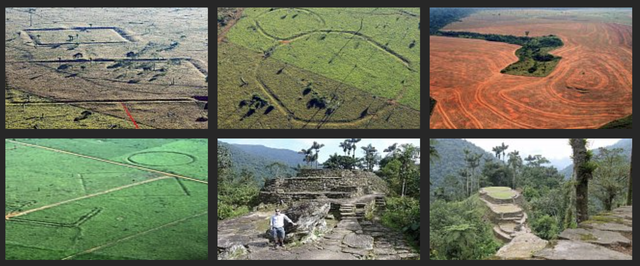
So far, about 450 geoglyphs, mostly simple geometric shapes like squares, circles, and polygons, have been found across 13,000 square kilometers.
Rapid deforestation combined with Google Earth technology has revealed hundreds of these giant ground drawings at 200 different sites, spanning a 250 km by 10 km strip in the Amazon. Like the Nazca lines, these mysterious geometric designs can only be fully appreciated from the air.
Many of these remnants clearly belong to an unknown ancient civilization now emerging from the Amazon jungle canopy. Researchers speculate these strange shapes might have been ancient irrigation channels and livestock fences.
However, for some reason, no excavations have been carried out in the area, and all connections to indigenous tribes remain speculative. We still know nothing about the creators of these mysterious geoglyphs.
Additionally, a discovery near the Bolivia-Brazil border uncovered mysterious pyramids in the Amazon, traces of a prehistoric civilization. Some researchers think these pyramids might be natural formations, but many believe they are man-made structures built by an unknown ancient civilization.
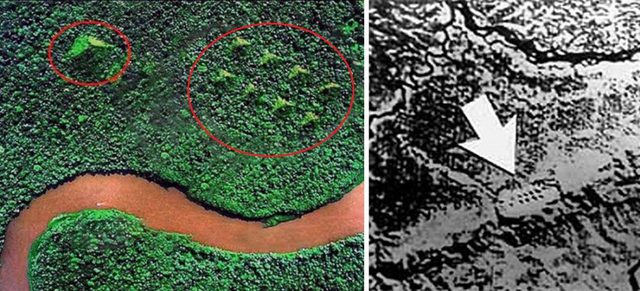
The mysterious pyramid structures were first identified in NASA’s satellite image C-S11-32W071-03, released in 1976, showing pyramids hidden in primeval forests. The Machiguenga people call this sacred area Paratoari. Are these natural formations or man-made? Is this a sacred ritual site or a lost Inca city?
These images have driven many investigators into Manu, a dense rainforest in southeastern Peru, hoping to determine if these structures were truly built by a lost ancient civilization.
While mainstream researchers dismiss the idea that these pyramids were human-made, others argue the symmetrical spacing and uniform shapes suggest they are not natural rock formations.
Similar debates surround the Visoko pyramids in Bosnia, with some claiming they are man-made and others insisting they are natural.
Regardless, one undeniable fact remains: deep in the dense, tangled Amazon rainforest lie countless mysteries that could reveal how ancient civilizations lived long ago.

