

Recently, the phrase “Vietnamese Fat Cat version” quickly became a top search term, showing how much attention this case has drawn. Netizens have been buzzing nonstop, sympathizing with the devoted young man who tried to please his girlfriend’s material needs. His tragic ending has many recalling the shocking original “Fat Cat” story from China.

The story has drawn huge public interest.
Recently, a social media account claiming to be the female lead in the case appeared. This account posted messages, photos, and comments showing a readiness to push back against the harsh words from the online community.
Specifically, the woman wrote:
“Hello everyone, I’m N.L. I’m posting this to clarify the recent controversy.
First, I and D (he has passed away, so I prefer not to mention his full name) had been together for a few years. He willingly gave me gifts, and it was always happy and voluntary.
Second, I never exploited or took advantage of D as some netizens have edited videos and images to harm my reputation and my family’s.
Third, the person who passed cannot come back. I still have a future ahead. I ask everyone not to push anyone too hard because these past days have been really exhausting for me. I don’t know what else to do.
Fourth, some Facebook and TikTok pages posted my home address and school details, which affected me deeply. I have reported this, and those responsible will face consequences for offending me.
PLEASE DON’T JUDGE WHEN YOU’RE NOT PART OF THE STORY – N.L, born 2005.”

In her latest post, she revealed her emotional struggles and self-harm. She complained, “During the months we dated, when he didn’t have a job, I asked my parents to support him to pay rent. When we went out to eat or watch movies, I was the one who paid. So why are people editing videos and images to twist the truth? They’re so cruel, trying to trap me and not let me find peace…”
The appearance of this account sparked mixed reactions.
Some expressed suspicion and anger, believing this is a fake account trying to gain views and profit from the trending event. They felt outraged because this behavior only hurts the family and those mourning the young man.
Alongside the criticism, some were curious about what this account might reveal. They said every story has multiple sides and wanted to hear the “defense” from the female lead, even if they didn’t fully trust her. However, some comments condemned her actions. She quickly fired back without hesitation:
“If you don’t know, stay silent, don’t judge.”
“Don’t throw harsh words when you’re not involved.”
“If you can’t speak kindly, then be quiet…”
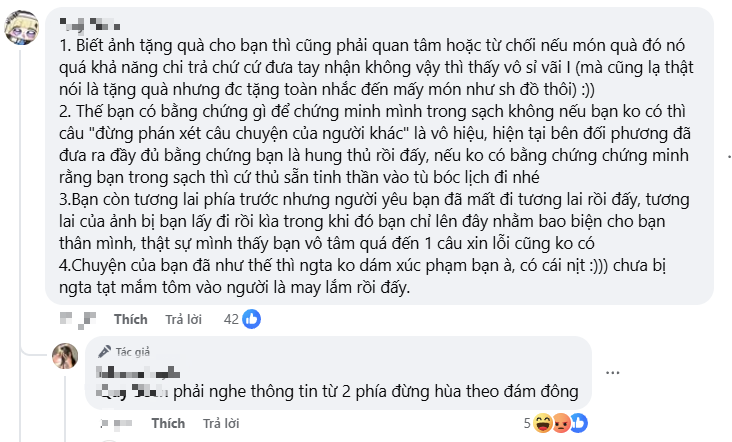



So far, there is no official confirmation whether this account truly belongs to the female lead in the “Vietnamese Fat Cat” case.
Signs suggest this might be a fake account, as the posts lack solid proof. The account only offers vague rebuttals without any concrete evidence or verified information related to the original incident. This defensive stance instead of clear explanations has led many to question the real motive behind creating this account.
Whether real or fake, this case highlights the complex consequences of social media: The risk of impersonation is high, as hot topics attract those looking to exploit the situation by pretending to be involved, causing public confusion. Uncontrolled online attacks and criticism can cause serious psychological harm to everyone involved, whether they are central figures or not. Many social media users too easily believe unverified information, fueling unnecessary controversies.
The “Fat Cat” case remains a hot topic, and the emergence of this self-proclaimed female lead account in Vietnam only adds complexity. Social media users should stay alert and verify facts before making judgments or sharing to avoid spreading false information and harming the community.

