

The rise of social media platforms like Facebook, Instagram, and TikTok has turned the online world into a perfect space for users, especially young people, to freely share everyday moments and build their personal brands. But this openness also leaves them vulnerable to exploitation by bad actors. The misuse of personal images without consent for harmful commercial purposes is becoming increasingly sophisticated.

Recently, the online community was shaken by a heartfelt “help” post from a beautiful young woman. She discovered she had become an unwilling victim of AI misuse. A TikTok account had taken her image and used AI to create fashion sales videos featuring her likeness.
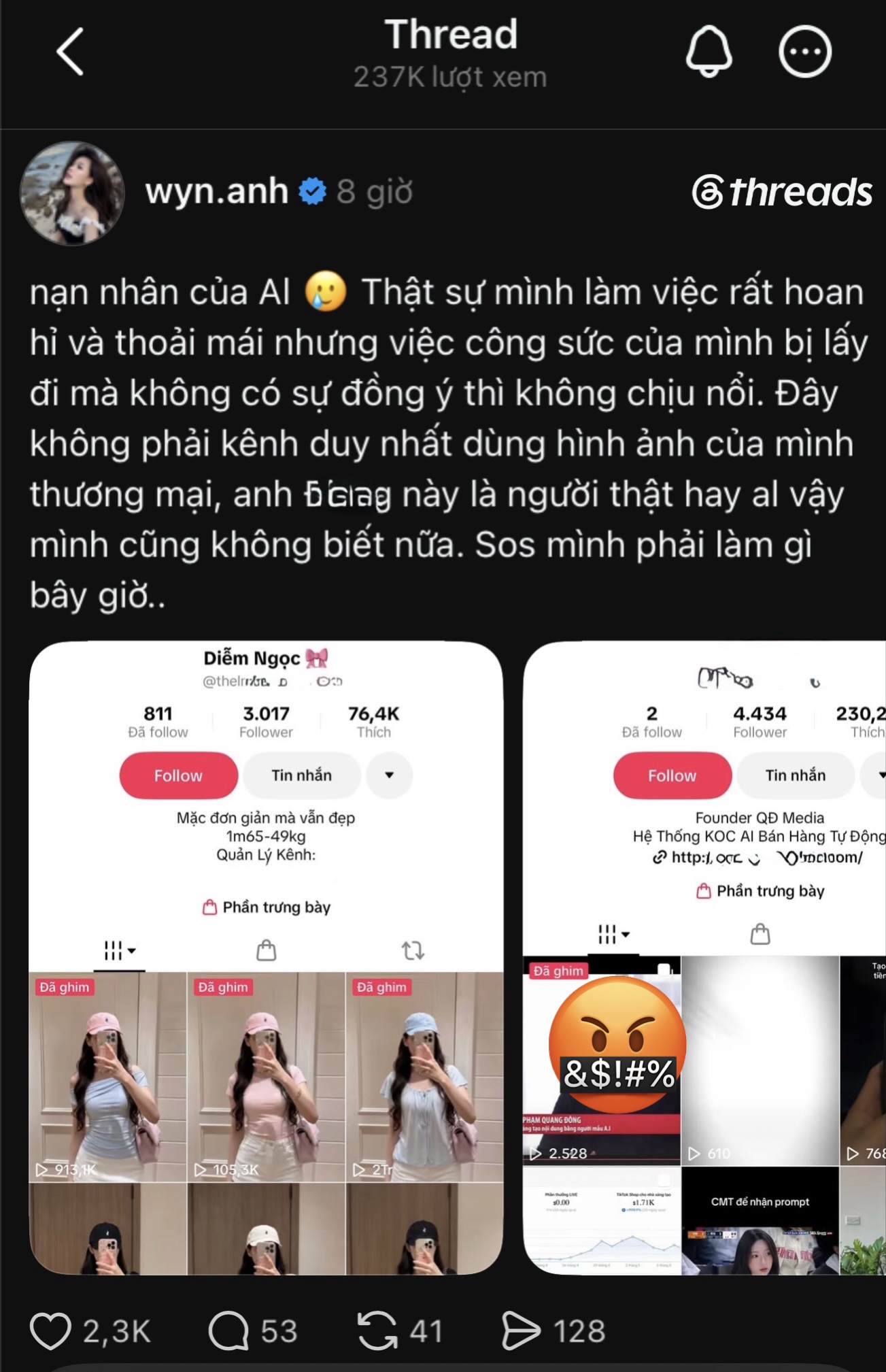
Outraged by the serious invasion of her privacy and the cheap exploitation of her image, she publicly called out this unethical behavior. Her post quickly gained sympathy and engagement from netizens, putting major pressure on those misusing her photos.
Signs of Resolution and Content Removal
After her plea and exposé caught widespread attention, the party using her images realized the gravity of the situation. They promptly reached out to apologize sincerely and expressed a willingness to make amends.
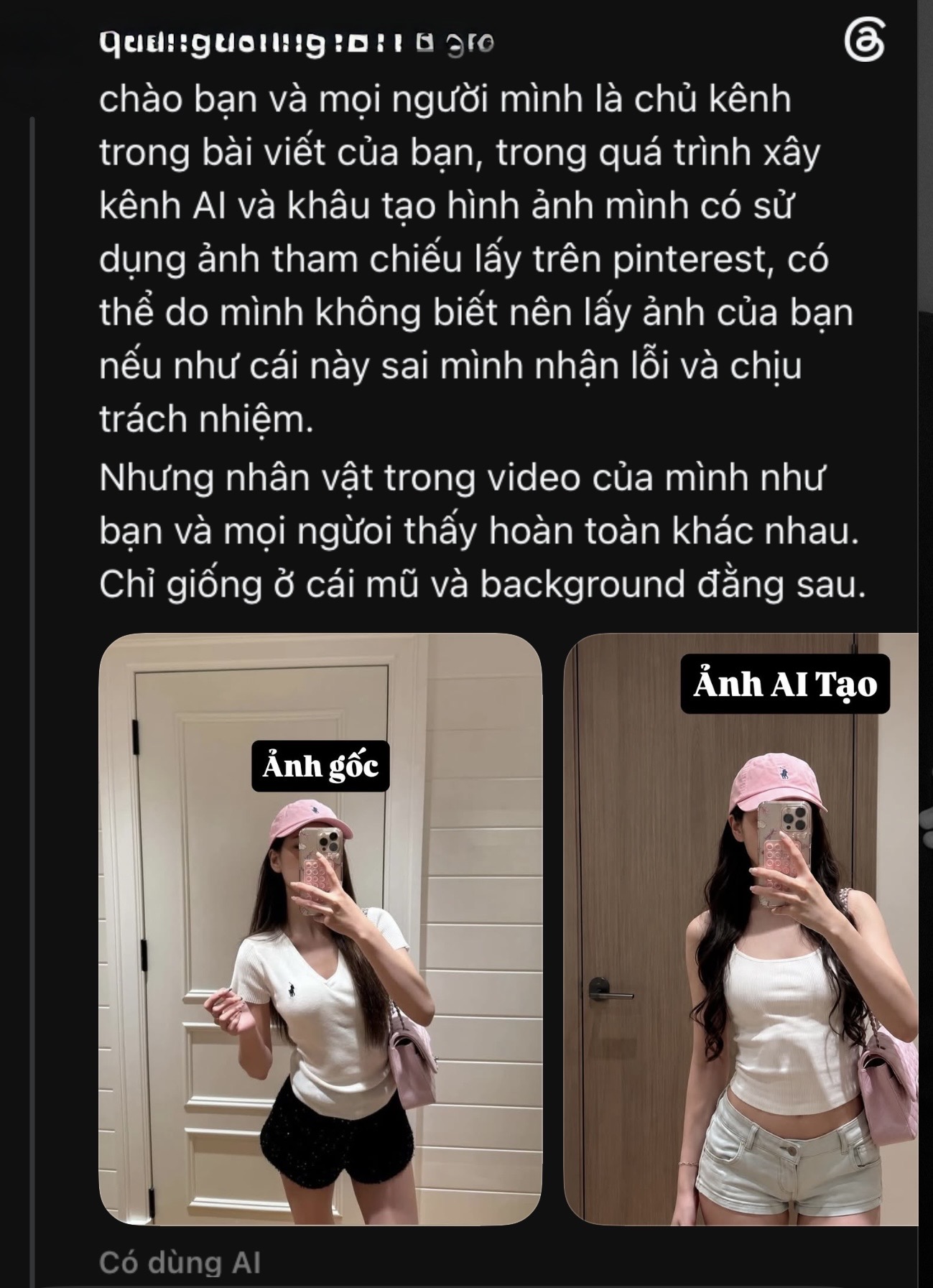
The young woman, wanting to resolve the matter peacefully without letting it disrupt her daily life, accepted the apology. She also took down her warning post after both sides reached an agreement.
Although this case ended smoothly through reconciliation, it sparked a heated debate online. Many wondered if someone without her influence and public support would get the same justice, or if exploiters would just ignore victims’ rights.
A Troubling Issue: The Nightmare of Intellectual Property and Image Theft
This young woman’s story is not rare. It’s just the tip of the iceberg in the ongoing problem of image copyright violations happening every day online. Any user, whether a famous influencer or an ordinary account, can fall prey to these tactics.

Many online shops, especially those selling fashion and cosmetics, casually “borrow” images. They scroll through Instagram, spot attractive girls with great figures wearing flattering clothes, then download and post those photos on their sales pages, falsely implying the girls use their products. This deceives consumers and seriously harms the reputation of the women pictured if the products are fake or low quality.

While we wait for stricter laws and better tech protections from major companies, social media users, especially women, need to learn how to protect their digital assets. Be smart online, know how to defend yourself, and respect others’ creative work to help build a healthier digital space.

