

In the ever-changing online world where the line between real and fake is getting thinner, an old trick that never goes out of style keeps working: impersonating hot girls and celebrities to make money.
Recently, “Trần Hà Linh” became the latest victim. Already linked to personal scandals, scammers exploited the public’s interest in this hot girl by digging deeper into drama to profit with a clever online scheme. The team behind it created a fake fanpage. Their goal wasn’t fame, but cash.
It all starts with gathering info and photos
These scammers look for girls with some online fame, attractive looks, and especially those who have been involved in past controversies. Then they create a fanpage with a similar name, sometimes adding tags like “official” or “authentic” to build trust.

The first move is to stir up attention by posting eye-catching content. At first, it might be normal photos or videos from real sources. Then, to create viral buzz, they post “sensitive” videos or manipulate images to cause misunderstandings. These clips usually come with sensational stories hinting at personal life, complicated relationships, or love scandals.
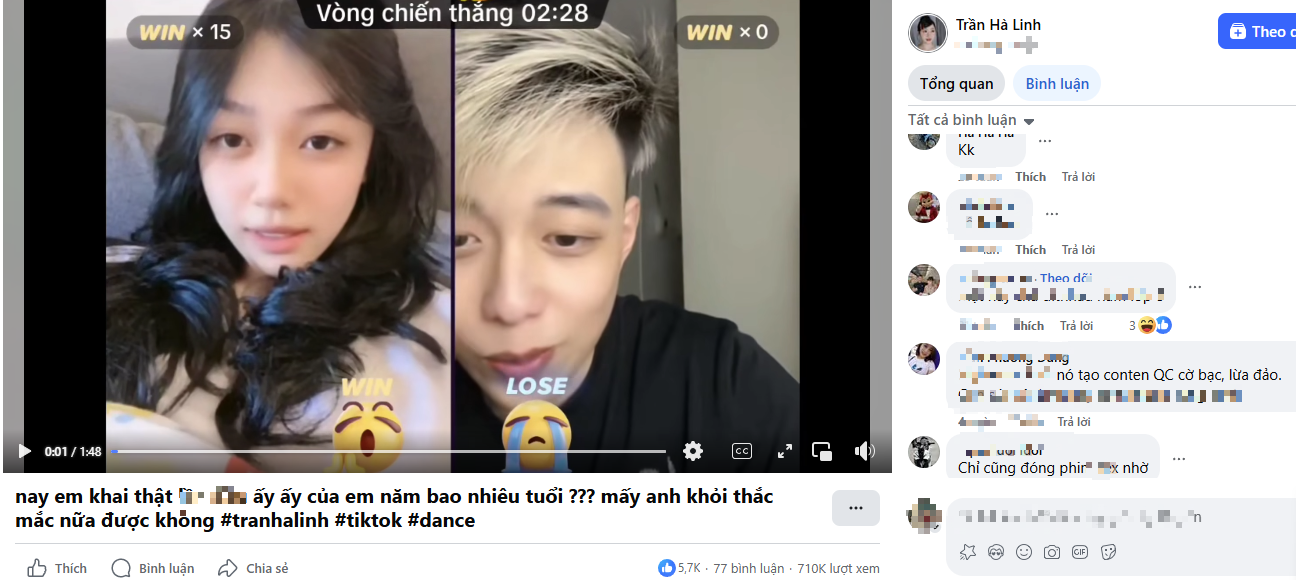
In one case, a fake Trần Hà Linh page with 55,000 followers posted a sensitive video where she livestreamed confiding in a fan boy about an unfortunate leak of a private clip from when she was 15. The video pulled hundreds of thousands of views and thousands of comments and interactions, showing no signs of dying down.

Notably, this post resurfaced at a sensitive time when the girl had just called out another hot TikToker online for “playing dirty,” bringing up her past even though she had been trying to improve herself: “Have you ever told yourself you’re proud? It’s a two-year-old story, just normal TikTok stuff, things were calming down but then someone deliberately posted the clip and everyone flooded me with hate…”

From fake fanpages to real profits
Posting “sensitive” content isn’t just about grabbing views, it’s about creating a tidal wave of interaction. These fake fanpages quickly attract huge numbers of followers, comments, and shares. Curiosity, criticism, or even sympathy from the online community become the wave that pushes the page into the spotlight.
Once the fanpage has massive engagement, the people behind it start posting business-related content, selling products, or running ads. These posts usually have catchy titles. At this point, the fanpage is no longer just a place for entertainment but a money-making tool. Profits come from multiple sources: product sales, affiliate marketing, advertising, and even selling the fanpage itself.

The victims of this scam aren’t just the girls whose images are exploited but also the naive social media users. They unknowingly help the fraud by interacting, sharing, and spreading false info.
The clever “Fake Trần Hà Linh” scam is a clear example of the dark side of social media. Attention and engagement can be deliberately manufactured to turn into profit. Sadly, despite strong backlash, these tricks still exist and are getting more sophisticated. To protect themselves, every social media user needs to be more aware, verify sources carefully before engaging, and avoid supporting profiteers.

