

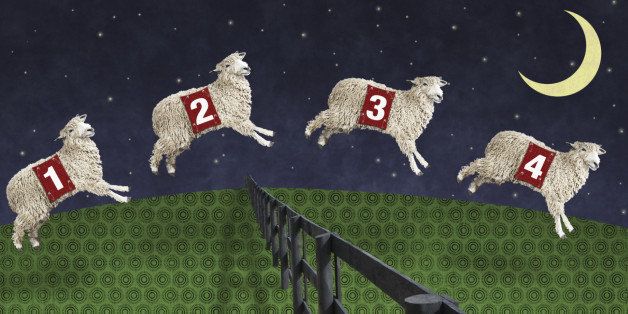
Have you ever closed your eyes and imagined a sheep jumping over a fence? Most of us can do this easily, even from childhood. But some people can’t. For them, all they see is darkness, no sheep jumping at all.
These people have a rare condition called “aphantasia,” a term coined by Dr. Adam Zeman, a cognitive neurologist at the University of Exeter in the UK. The word comes from the Greek root phantasia, meaning “imagination.”
Unlike “phantasia,” aphantasia is defined as the inability to summon any mental images from memory, whether it’s a loved one’s face or a familiar place.
Although mentioned in medical texts as far back as the 19th century, aphantasia was only clearly identified in 2015. Since then, scientific studies on the condition have been rare, mostly relying on patients’ self-reports.
One of the first people with aphantasia to share his experience is Niel Kenmuir. In a BBC interview, he said he realized it as a child. His stepfather once told him to imagine sheep jumping over a fence and count them to fall asleep. But he couldn’t.
“I couldn’t see any sheep jumping over the fence. There was nothing to count,” Kenmuir said.
Sharing a similar experience, a woman named Serena Puang told the New York Times, “When I was in elementary school, I sometimes had trouble sleeping and people told me to count sheep. Even though I’d seen sheep jumping fences in cartoons, when I tried to imagine it, I never saw anything, just blackness. I quietly counted in the dark for years.”
While aphantasia can make counting sheep tricky, it doesn’t seem to affect creativity or imagination much. Most people with aphantasia live normal lives and don’t even realize their experience is different.
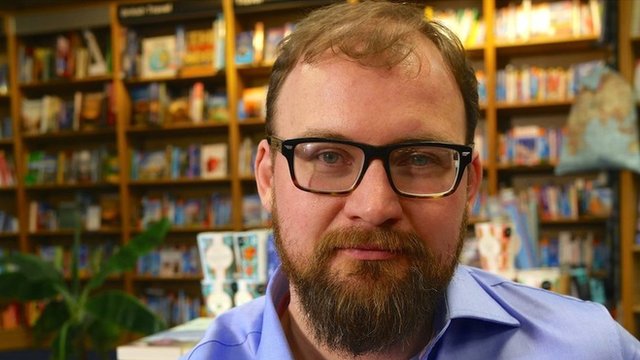
Kenmuir works at a bookstore. He can remember which books are on which shelves without picturing them. When asked by the BBC how he lives with his wife, Kenmuir replied:
“It’s the hardest thing to explain, what goes on in my head when I think about things. When I think about my fiancée, no image appears, but I’m sure I’m thinking about her. I know today she’s wearing her hair up, her hair is brown. I’m not describing a picture I see in my head, I’m just recalling features about her.”
On the other hand, Kenmuir’s wife is very understanding. She simply says, “You’re so weird.”
Serena Puang had some trouble when she started learning Chinese. “My friend Shayley found it easy. I asked her how she remembered the characters, and she said she just ‘visualized the characters,'” Puang said.
To overcome this, she talked about her aphantasia with her professor, who wrote the characters on the board and explained their differences. Since then, her Chinese studies went smoothly.
***
Interestingly, some people with aphantasia still have vivid dreams. They can describe and recognize faces or places. Aphantasia means they can’t retrieve images from memory, but their language-based imagination and spatial memory remain intact.
Psychologist Wilma Bainbridge from the University of Chicago explains this may be because people with aphantasia encode memories entirely in words, not images. For example, when Kenmuir thinks of his wife, he encodes her as words like “brown hair,” “blue eyes,” “tall,” or “today,” “hair up”.
These words replace the images most people imagine. Kenmuir recognizes his wife perfectly but can never picture her face in his mind.
“Their verbal expression and other coping strategies can actually help people with aphantasia avoid false memories,” Bainbridge says. In some cases, their memory might even be better than average, since most people tend to create false images in their memories.
Think about a time you remembered a room with an object, like a guitar, that was never actually there.
The unique way people with aphantasia recall memories is attracting more neuroscience researchers. “These individuals have a unique mental experience, and they can provide crucial insights into the nature of imagery, memory, and cognition in the human brain,” a group of authors wrote in the journal Cortex.
They clearly show that memory can be completely separate from vision. People with aphantasia might experience something similar to those born blind. They can describe and navigate a room even though they can’t ‘see’ it in their mind.
“When I close my eyes, all I see are faint blue dots and darkness,” Puang said. “For 19 years, I thought everyone else saw the same thing.”

