

Imagine a city bench that not only gives you a place to sit and rest but also helps you breathe a little easier? That’s the idea behind Green City Solution, a German green urban startup installing tall bio-air-filter benches over 4.2 meters high in major cities across Asia and Europe.
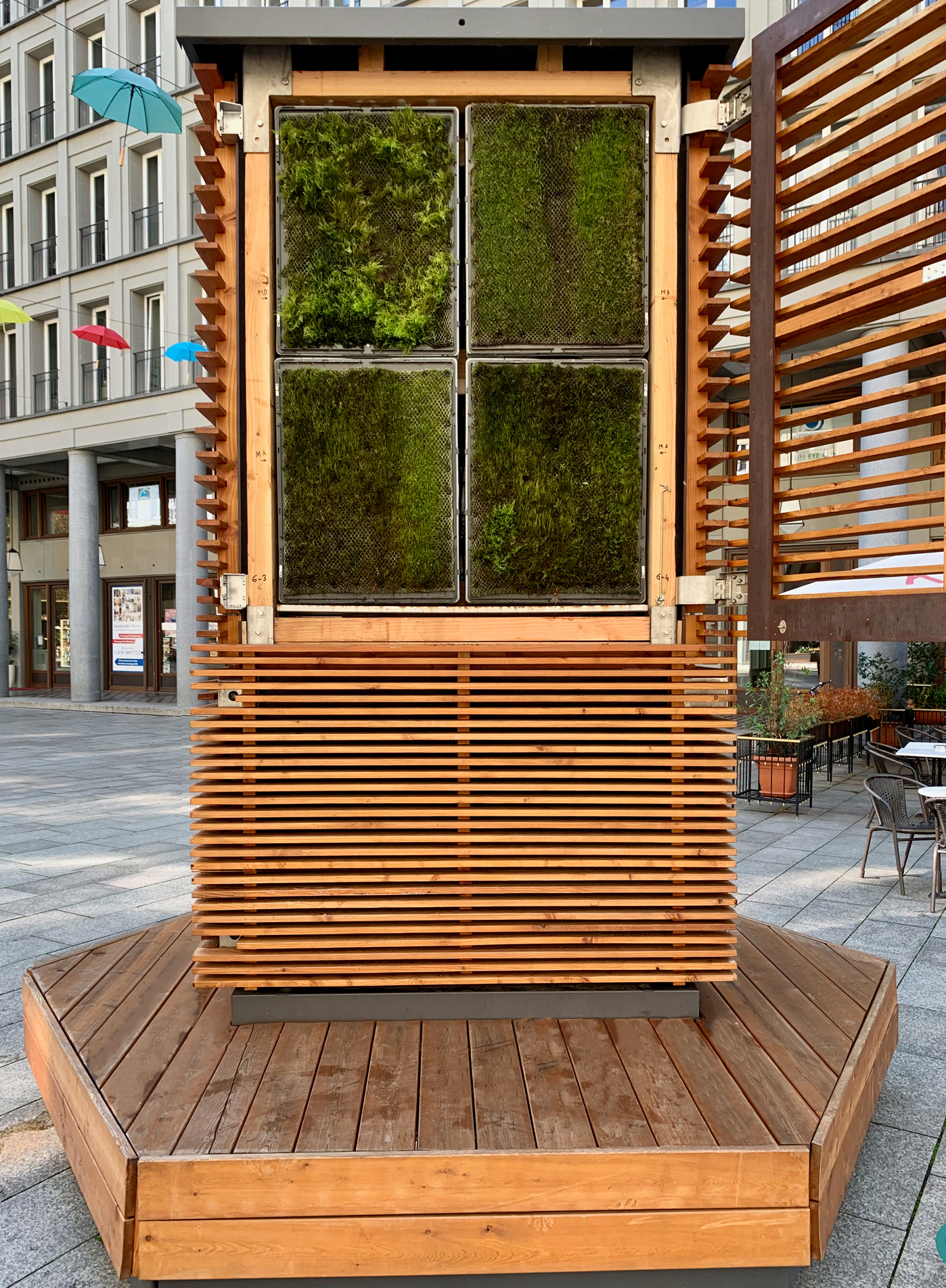
These filters don’t rely on expensive industrial HEPA filters but still remove up to 82% of fine dust from the air. The secret? Moss mats acting as natural, energy-free dust filters powered only by water, soil, and sunlight.
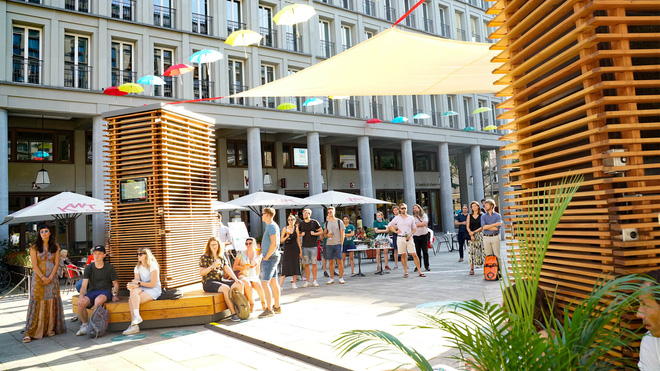
These massive air purifiers are called CityTree. They were invented by Peter Sänger, a 29-year-old gardener from Dresden, Germany. After traveling through European cities, he became fascinated by tackling urban air pollution.
“Cities are the living spaces of the future and will bring many benefits to humanity. Unfortunately, the air inside cities is often far from clean,” Sänger said.
According to the World Health Organization, air pollution kills about 7 million people worldwide each year. In places where air quality exceeds WHO limits, fine dust particles can penetrate deep into lungs and cardiovascular systems, increasing risks from stroke to heart disease and lung cancer.
Today, 91% of the global population lives in such polluted areas.
Bringing Nature Into Cities
With a background in gardening, crop cultivation, and business management from Dresden University, Sänger spent years researching agricultural products that reduce air pollution.
“I realized air pollution solutions only work if we combine them with nature,” Sänger explained. Humans can create industrial HEPA filters from steel sheets thinned to hair-like fibers, but the process is time-consuming, energy-intensive, and costly, producing CO2 emissions.
Nature, after all, offers the best air filters. Moss has millions of years of experience cleaning Earth’s air,” he said. That inspired him to develop a moss-based product for polluted cities.
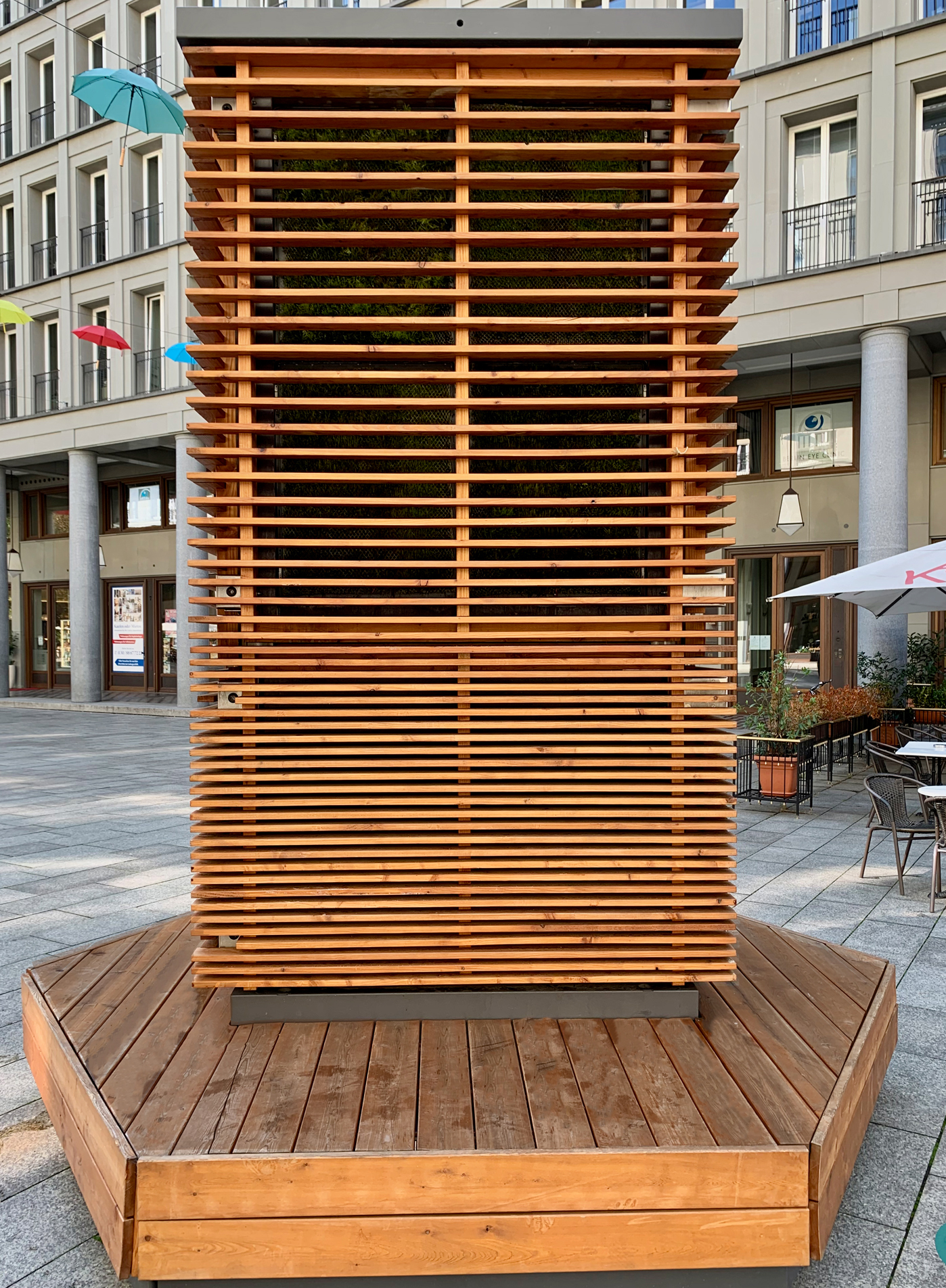
Things took off when Sänger met Liang Wu, a student running a workshop on urban design and environmental issues. “We shared a desire to develop an economical and ecological solution,” he said.
In 2014, before graduating, the two gathered experts in gardening, computer science, architecture, and mechanical engineering to found Green City Solution.
The company now has 35 employees working to answer a simple but tough question: How can we effectively and beautifully bring nature into cities to positively impact air quality on a large scale?
A Breathable Urban Oasis
As you might have seen, Sänger and Wu’s answer is CityTree systems, capable of cleaning the air breathed by 7,000 people every hour. It’s more than just a bench or a moss-covered tower, it’s a decorative structure combined with modern IoT technology.
Inside each CityTree tower is a fully automated irrigation system controlled by sensors to provide optimal moisture for the moss. The IoT software continuously reports on performance, air quality, and surrounding environmental data.
Green City Solution says CityTree can improve air quality by 53% within a 1-meter radius, making the area around it feel incredibly fresh. Fine dust passing through the moss leaves can be trapped up to 82%.
The moist moss surface attracts dust particles through static electricity, with negatively charged moss pulling in positively charged dust, similar to HEPA filters. Of the dust captured, 50% becomes food for the moss, 25% is broken down by bacteria, and 25% settles with the moss and can be removed.
Additionally, CityTree towers cool the air by up to 4 degrees Celsius through water evaporation and the presence of vegetation. Sänger admits this can’t replace city-wide trees for cooling but provides a comfortable oasis where people can breathe, relax, and linger.
“Think of a bus stop on a busy street, a street café, a train station, an inner-city schoolyard, or even a company campus,” he said. Sänger has already deployed CityTree in many such urban spots across Europe and Asia, including London, Paris, Amsterdam, Berlin, Hong Kong, and Cork, Ireland.
An Ambitious Plan
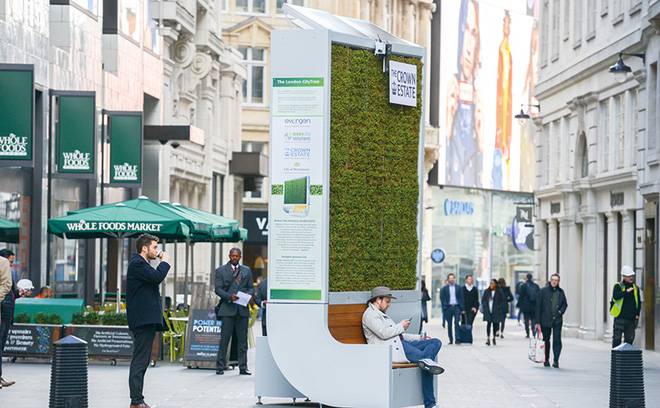
For Sänger and his team at Green City Solution, CityTree towers are just the beginning. The company is testing WallBreeze, a modular moss wall that can be installed on building exteriors. Using similar technology and filtration systems as CityTree, WallBreeze offers higher air filtering efficiency over a wider area.
They also plan to develop a slimmer CityTree version that doubles as a digital billboard for urban spaces.
Overall, Sänger says Green City Solution aims to install up to 1 million square meters of moss by 2030, integrating this natural air filter into every possible city space. This could clean air for 500 million people and remove up to 80,000 tons of CO2.
Source: Business Insider

