

By now, nearly 10 vaccines have been developed to prevent COVID-19. But just like the flu, we still don’t have a specific cure for SARS-CoV-2.
“Not everyone can get vaccinated or respond well to vaccines. Their effectiveness can also drop as immunity fades or new variants appear. That’s why developing antiviral drugs remains a crucial mission,” explains Mark Denison, a virologist at Vanderbilt University.
So, how far have scientists come in creating COVID-19 treatments? What strategies are they using to fight SARS-CoV-2 once it’s inside the patient’s body to save lives?
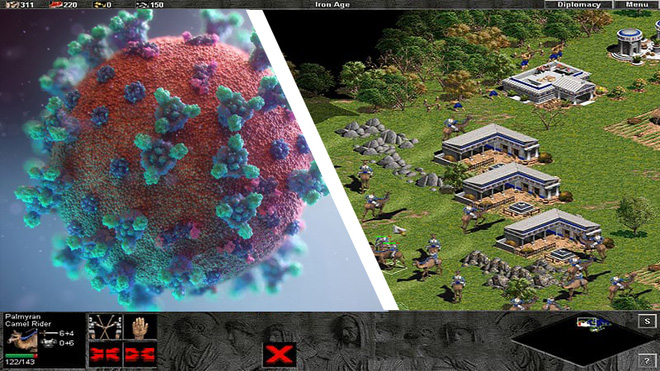
Let’s explore these questions through a fun lens inspired by the game Age of Empires:
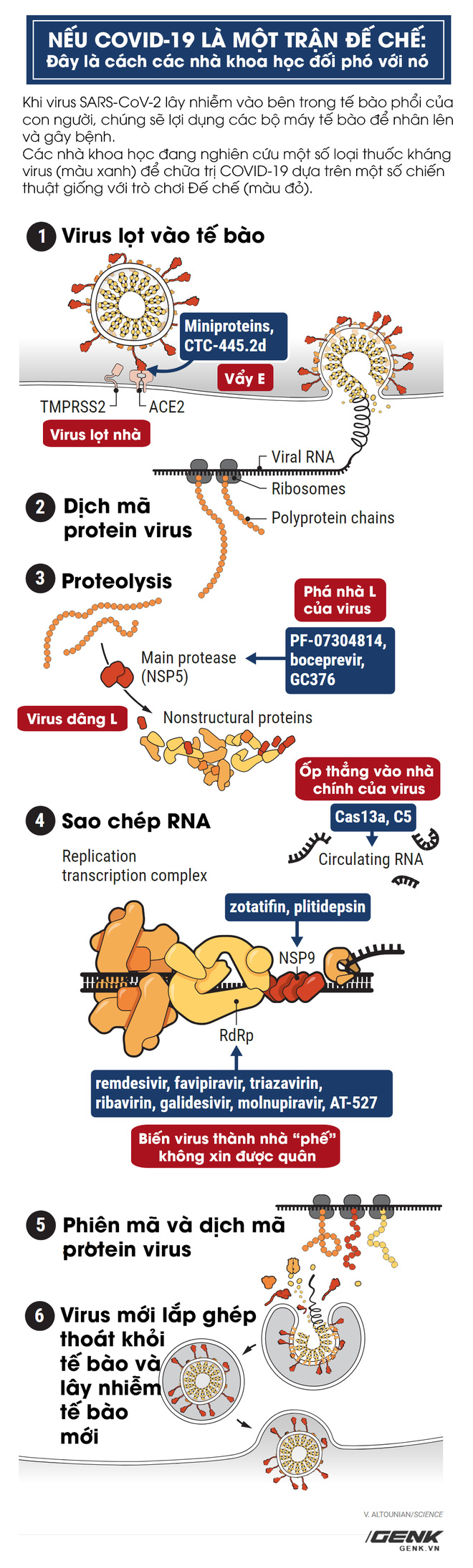
1. Mini Proteins and CTC-445.2d: “Use the E key” to block the virus from entering cells
We know SARS-CoV-2 causes coughing and breathing trouble because it sneaks into human lung cells. Think of it like a scout or swordsman trying to break into the enemy’s base in Age of Empires.
The strategy here is simple: “Use the E key” and defend your lung cells tightly.
To do this, scientists studied how the virus invades cells. It turns out to be a lock-and-key mechanism:
Human respiratory cells have receptors called ACE2 that act like locks. SARS-CoV-2 has spike proteins shaped like keys that fit into ACE2, opening the door for the virus to enter.
To block this, David Baker, a biologist at the University of Washington, designed mini proteins that wrap around the virus’s spike protein. Imagine it like chewing gum stuck on the virus’s key, so it can’t fit into the lock on human cells anymore.
These mini proteins have been shown to stop SARS-CoV-2 from infecting human cells in lab tests. Baker says they could become ideal drugs because they’re much more stable than typical COVID-19 treatments like antibodies, which need cold storage.
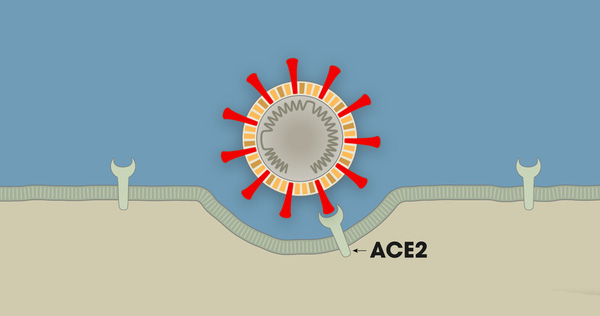
Similarly, Neoleukin Therapeutics, a US pharmaceutical company, is creating mini proteins called CTC-445.2d. Researchers describe these as decoys for the virus’s spike protein.
In Age of Empires terms, CTC-445.2d acts just like “using the E key“. These molecules block the spike protein’s path. The more CTC-445.2d around the cell, the better the defense, like repeatedly “using E” to guard your base.
CTC-445.2d has been tested as a nasal spray in mice with promising results. Treated mice had lower risk of severe COVID-19 and higher survival rates.
2. PF-07304814, Boceprevir, and GC376: Stopping the virus from “building a barracks”
Once SARS-CoV-2 gets inside your cells, it builds a replication factory. A virus only causes serious damage if it multiplies into tens of thousands. To do this, it needs to assemble a replication machine inside the host cell.
In Age of Empires, imagine this replication machine as the enemy’s barracks popping up inside your base.
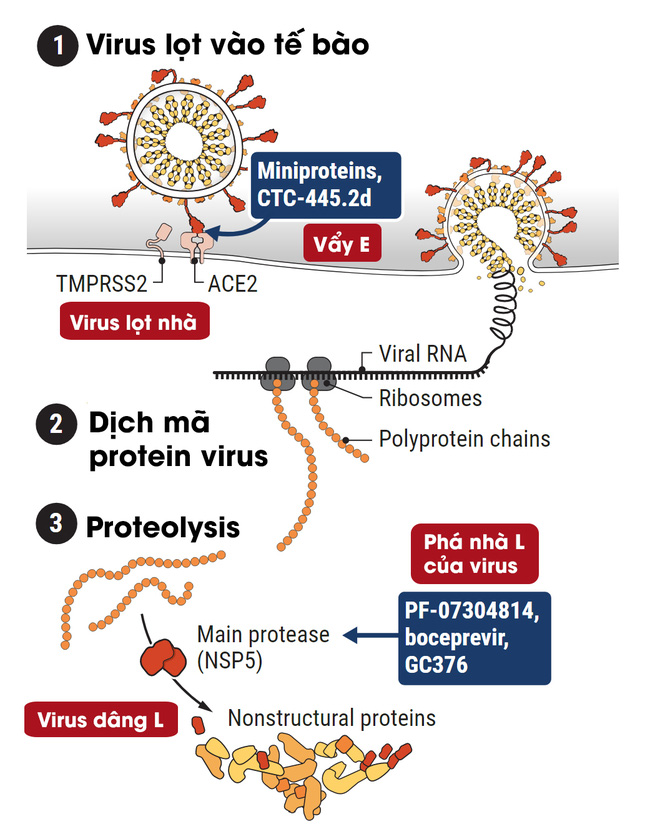
The virus injects its RNA into the cell’s DNA and hijacks ribosomes, the cell’s protein factories. These ribosomes produce long polyprotein chains for the virus, like Lego sets fresh off the assembly line.
The virus then uses an enzyme called “main protease” to cut these Lego chains into pieces needed to build new viruses.
Pfizer researchers targeted this weak spot with a compound called PF-07304814, which blocks the virus’s main protease NSP5. This compound was originally developed during the 2003 SARS outbreak but was shelved when that epidemic ended quickly.
Tests in mice showed PF-07304814 significantly reduced virus levels. Pfizer began clinical trials last September using intravenous injections, though recruiting volunteers has been slow, so results might come late 2021.
In China, researchers are testing similar drugs, boceprevir and GC376, to slow viral replication. Boceprevir treats hepatitis C, while GC376 targets a coronavirus infecting cats. Mice treated with GC376 survived doses of SARS-CoV-2 that would otherwise be fatal.
In August 2020, US scientists published in Science Translational Medicine about a GC376-like compound that boosted survival in mice with MERS and showed strong antiviral effects against SARS-CoV-2 in cells.
3. Remdesivir: Turning the virus into a “useless barracks” that can’t recruit
Now, if the virus has built its barracks inside your base, it means its protease enzyme has cut the polyprotein chains. Fifteen Lego pieces combine to form the replication-transcription complex (RTC), the “barracks” that copies viral RNA to make new viruses.
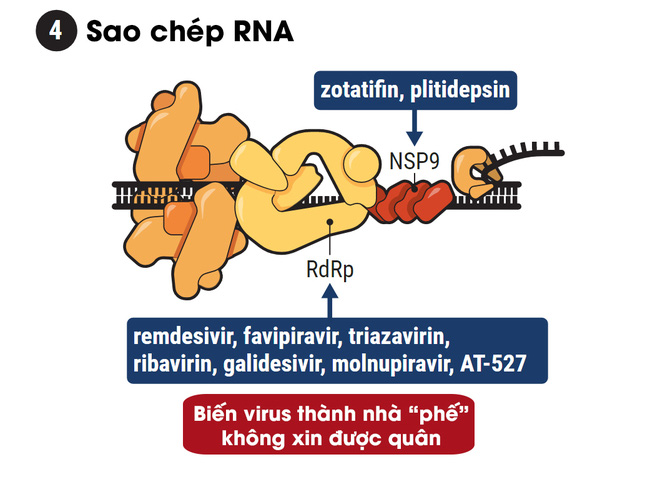
At the heart of this machine are NSP9, an enzyme that binds viral RNA, and RNA-dependent RNA polymerase (RdRp), which copies the RNA. Think of this like a photocopier.
If you can break this photocopier by attacking NSP9 or RdRp, even if the virus has a foothold, it can’t replicate or recruit reinforcements. It becomes a “useless barracks.”
Scientists have tested compounds like zotatifin and plitidepsin targeting NSP9. Plitidepsin is already in phase 2 clinical trials by Spanish pharma PharmaMar.
RdRp is a popular target with dozens of drugs aiming at it, including remdesivir, favipiravir, triazavirin, ribavirin, galidesivir, molnupiravir, and AT-527.
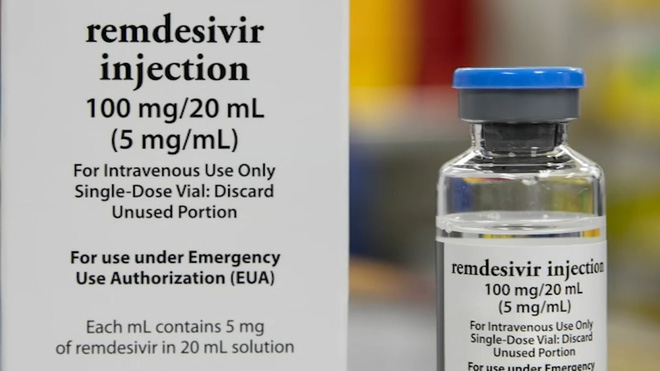
Remdesivir works by mimicking the nucleotide adenosine (A) to confuse RdRp. When the virus tries to copy its RNA, RdRp inserts remdesivir instead of A, breaking the RNA structure.
Other nucleotide mimics include favipiravir and triazavirin (originally for flu), ribavirin and AT-527 (for hepatitis C), and galidesivir (blocking Ebola, Zika, yellow fever).
Researchers are especially optimistic about molnupiravir, another nucleoside mimic that can be taken as a pill. It mimics cytidine (C), causing errors during copying and lethal mutations that kill SARS-CoV-2.
Molnupiravir is in phase 2/3 trials run by Merck and Ridgeback Biotherapeutics. In March, scientists reported it lowered viral loads in COVID-19 patients and was well tolerated without serious side effects.
4. RNA-targeting drugs: “Attack the enemy’s main base” directly
While most drugs target viral proteins or enzymes, some scientists wondered why not go straight for the virus’s control center: its RNA genome.
This is like launching a direct strike on the enemy’s main base in Age of Empires. Destroy the RNA, and the virus loses.
In February, Emmeline Blanchard, a biomedical engineer at Georgia Tech, and colleagues reported discovering Cas13a, an enzyme wrapped in a polymer that can seek out and cut SARS-CoV-2 RNA.
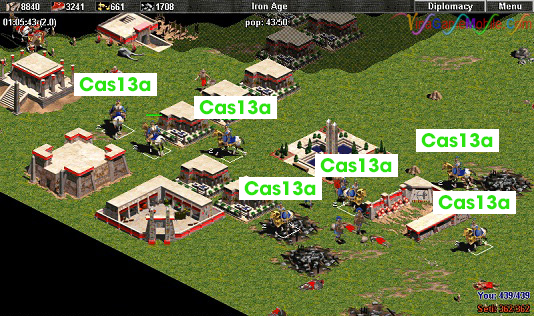
Cas13a acts like elite swordsmen targeting the most protected regions of viral RNA that code for RdRp and nucleocapsid proteins. In mice infected with SARS-CoV-2, inhaling Cas13a reduced COVID-19 symptoms.
Also, in September 2020, Matthew Disney and colleagues at Scripps Research reported a compound called C5 that targets and destroys a short segment of SARS-CoV-2 RNA.
5. Host-targeting drugs: “Abandon your base to control the map”
Now imagine the virus has taken over your cell, built its barracks, and recruited a full “turn” of soldiers. Scientists can still fight back with an Age of Empires tactic: abandon your base and raid the map.
Since SARS-CoV-2 relies on host cell proteins to reproduce, disrupting those proteins offers another treatment path. The catch? This targets your own cells.
The upside is the virus can’t develop resistance because the target isn’t viral. The downside is you might sacrifice some of your own proteins.
1910 Genetics, a biotech startup in Massachusetts, used AI to screen over 14 billion compounds to find drugs targeting host proteins TMPRSS2 and furin.
Last month, the US National Institutes of Health announced phase 2/3 trials for camostat mesilate, a TMPRSS2 inhibitor.
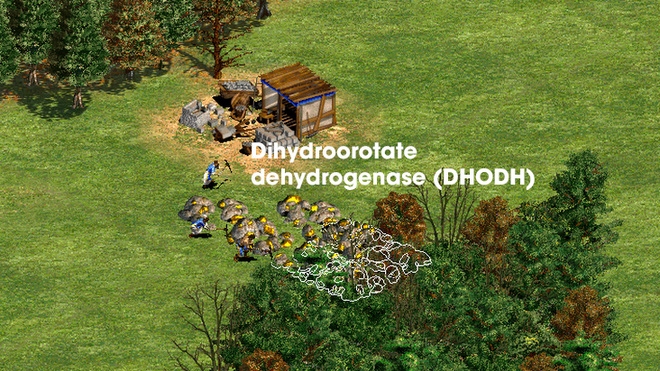
In Age of Empires, abandoning your base lets you control all remaining resources on the map. Scientists found a host protein called dihydroorotate dehydrogenase (DHODH) acts like the “gold mines” on the map.
Viruses hijack DHODH to get resources for RNA synthesis and rapid replication. Blocking DHODH not only stops virus growth but may also help fight cancer.
Biotech companies PTC Therapeutics and Immunic Therapeutics are testing DHODH inhibitors. Clinical trials with hundreds of patients show these drugs are safe.
An August study by PTC Therapeutics showed their drug PTC299, originally designed to stop cell growth in acute myeloid leukemia, also strongly inhibits SARS-CoV-2 replication.
Immunic Therapeutics has promising results with IMU-838, an oral drug for inflammatory and autoimmune diseases. Last month, they reported that hospitalized severe COVID-19 patients treated with IMU-838 had reduced risk of needing ventilators.
Combining strategies for the win
Ultimately, beating COVID-19 might be like winning an Age of Empires match. Scientists don’t expect a single strategy to knock out the virus instantly.
“We really need a whole arsenal,” says Lillian Chiang, CEO of Evrys Bio, which researches antiviral drugs targeting host proteins. This means all strategies should be skillfully combined.
Francis Collins, director of the US NIH, agrees another promising approach is mixing multiple drugs to overwhelm the virus with problems.
But of course, saying it is easier than doing it. Michael Sofia, chief scientist at Canadian antiviral company Arbutus Biopharma, says: “This will take time and money. Recent estimates put the cost of bringing a new drug to market between $985 million and $2.8 billion.”
Before COVID-19, antiviral drug development was slow, taking at least a decade. Steps like animal testing, molecule refinement to avoid side effects, and human clinical trials can’t be skipped.
However, unlike past pandemics that ended quickly and forced companies to abandon drug development, COVID-19 might become a long-lasting illness like the flu.
Developing a drug against it could help companies recoup investments. Some, like Pfizer, even pledge to approach COVID-19 treatments on a non-profit basis.
So we can be hopeful that an effective antiviral drug for SARS-CoV-2 will emerge. Even if the pandemic eases thanks to vaccines, such a drug could be crucial in the future.
“We will face another coronavirus someday,” says Andrew Mesecar, a structural biologist at Purdue University. “We don’t know what it will look like.” But the antiviral drugs developed now might help then.
Source: Science

