

There are basically two types of eternal life. The first is individual immortality. But over millions of years of evolution on Earth, this has never happened. Instead, life has evolved and developed through generations. How long a life form can exist depends on its genetic material passing on through offspring.
According to natural laws, individual life cannot last forever. If a life form existed without evolving, its survival would be pointless and would actually block evolution.

The second type of immortality comes when humans reach a certain advanced level. This is eternal life without needing a biological body. Human experience and intelligence could be preserved and accumulated forever without relying on genetic inheritance from generation to generation.
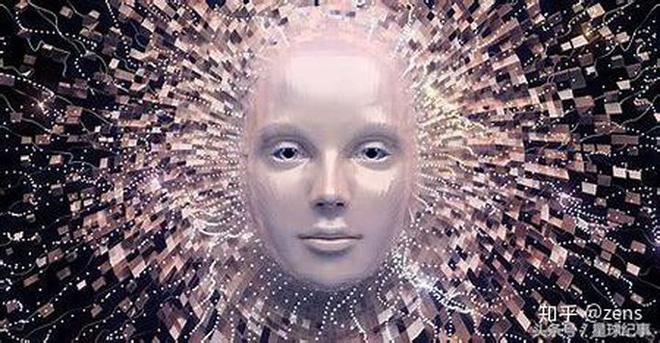
Humanity has gathered vast knowledge and discovered deep insights across many fields. However, technology and knowledge have not always developed hand in hand. Individual intelligence and potential have struggled to keep up with the explosion of knowledge and the complexity of the world.
But through neuroscience, machine learning, artificial intelligence, and other technologies, we can store, accumulate, and manage human experience and knowledge forever. This represents a kind of immortality, not of individual lives, but of all human experience combined.
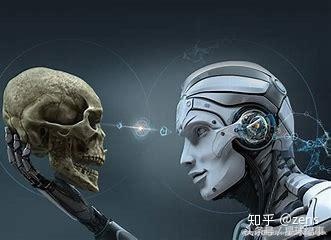
If an individual’s memories and consciousness could be extracted like data, and their living awareness could exist electronically, then personal immortality might be realized virtually.
Scientists have started researching consciousness uploading. Early experiments began with simple animals, like transferring memories from one sea snail to another.

There’s evidence that at least some memories are stored in genetic code. Experiments show that certain memories are actually encoded in molecules responsible for biological inheritance.
If we lived in a world like The Matrix, learning new things could be as simple as uploading data directly into the brain.
In a Los Angeles lab, researchers transferred the memory of a trained sea snail into the brain of an untrained one. In other words, scientists found a way to erase memories from one animal and implant them into another, so the second animal remembers what only the first one knew.
This groundbreaking experiment was done by injecting ribonucleic acid (RNA), a molecule known as the “cell messenger,” which plays key roles like encoding proteins.
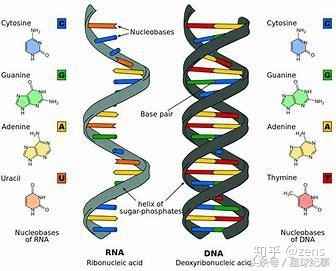
Biologists used a sea snail species called Aplysia. The snails in the experiment had their tails electrically stimulated, allowing them to send simple signals through their nervous system.
These sea snails were repeatedly shocked, which strengthened their defensive withdrawal reflex, a protective response to potential harm.
Later, when scientists lightly tapped these snails, those previously shocked showed a defensive curl lasting about 50 seconds on average. Snails that weren’t shocked only curled for about 1 second. This simple behavior is based on memory.
Next, researchers extracted RNA from the nervous systems of the shocked snails and injected it into snails that hadn’t been shocked. Remarkably, the snails receiving RNA from shocked ones behaved as if they had been shocked themselves, showing a withdrawal lasting about 40 seconds on average.

Scientists at the University of California, Los Angeles proved they could successfully transfer memory from one sea snail to another via RNA. Surprisingly, the recipient snails acted like they had personally experienced the memory.
Experts believe this breakthrough could help us better understand neuroscience and memory. RNA research might also aid in treating traumatic memories and even help recovery from memory loss.
However, these are just early experiments. Whether humans can truly achieve eternal life remains speculative with no solid evidence so far.

