

Here’s a simple but cool experiment for you: Take a pen, hold it at arm’s length in front of your eyes, and start shaking it. Do you see it blur? If you don’t have a pen, try the same with your hand, spread your fingers and shake.
Keep that pen or your hand handy, because we’ll do another experiment with it later in this article.
Now, the pen definitely blurs when you shake it, and so does your hand. This shows that our eyes can’t process fast-moving images perfectly. The FPS (frames per second) of the reality we perceive is limited.
But why is that?

Brain Delay in Processing Visual Information
To explain this, we need to understand how the brain processes vision. Remember some 8th-grade biology? Your eyes have cone and rod cells, similar to the sensors in a camera.
These cells are at the back of your eye, where they receive light emitted or reflected from everything around you. They convert light waves and frequencies into electrical signals. Each light receptor connects to a nerve ending that sends signals to the visual cortex for analysis.
Your brain then combines these signals to recreate the outside world inside your mind. This process is both objective and personalized.
For example, you and a friend sitting next to each other both see a parked car. You both know it’s a car, but you might say it looks nice while your friend disagrees.
The key point is, if the car is still, you see it clearly. But if it moves, it might not be as clear. That’s because the brain processes visual signals with a slight delay.
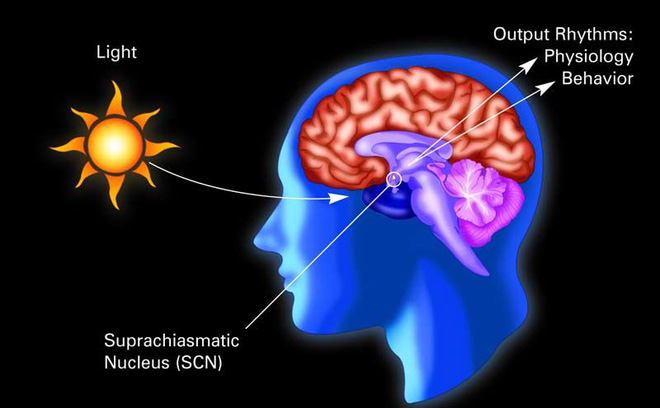
In 2014, scientists at MIT ran an experiment to measure this delay.
Volunteers sat in front of a screen where sequences of 6-12 images flashed at different speeds. Results showed volunteers could recognize images in about 13 milliseconds, or 0.013 seconds. That’s roughly 1 divided by 0.013, which equals 75 frames per second.
This brain processing delay limits the reality we perceive to about 75 FPS. That’s higher than many small animals like goldfish or cats, but lower than birds of prey like eagles, which can see up to 140 FPS.
The Eye’s Amazing Optical Image Stabilization
Now, back to the first experiment. Still holding your pen or hand? Great. Hold it in front of you, focus on it, then shake your head up and down and side to side. Do you see the pen or hand blur?
A little, but not much! You can still clearly see the object you’re focusing on. That’s because inside your head is an incredible stabilization system called the vestibulo-ocular reflex, or VOR.
VOR stabilizes the image on your retina, much like a camera’s optical image stabilization.
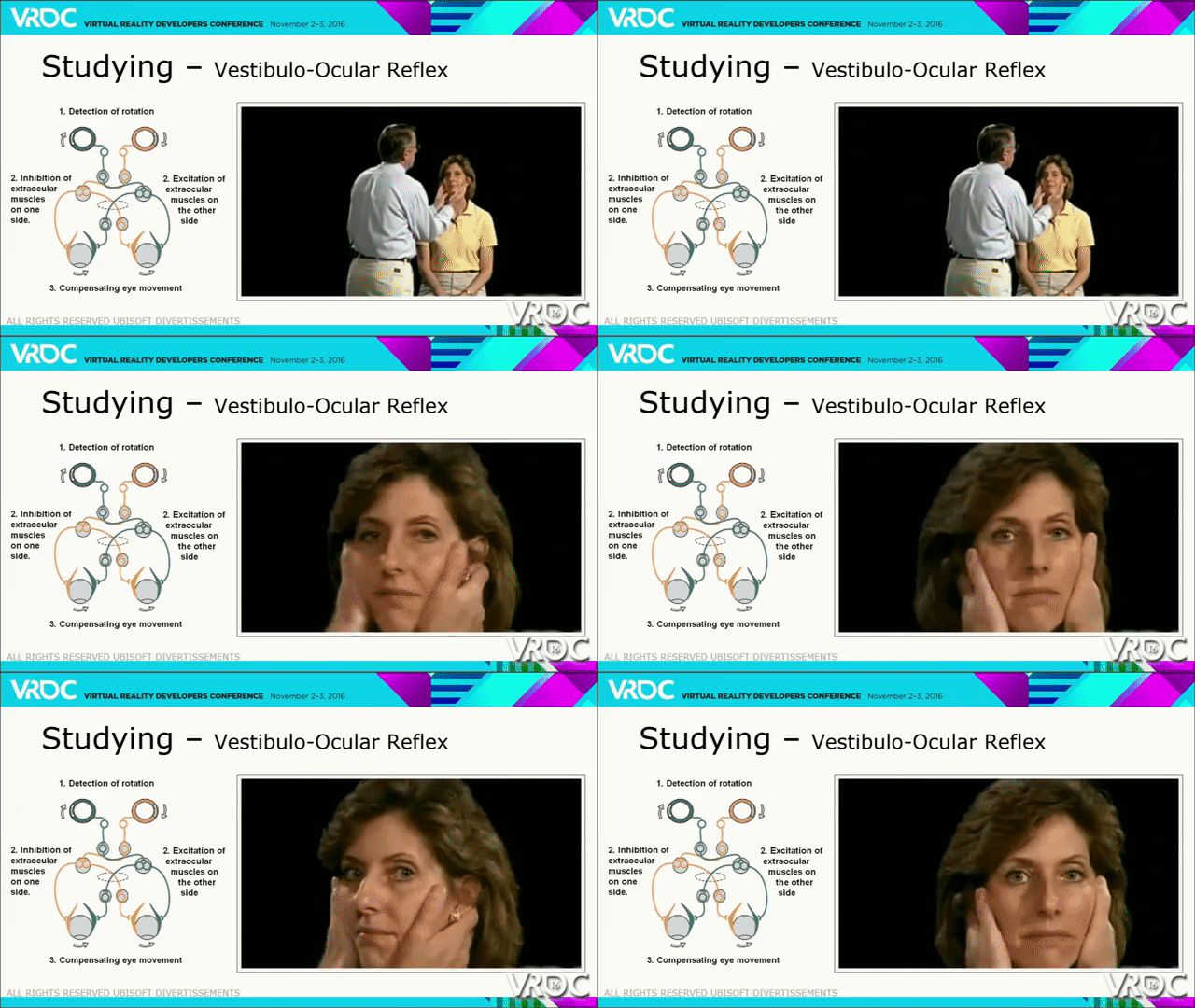
Inside your inner ear is a tiny structure called the vestibular system, about 3 by 5 millimeters, but it plays a huge role.
It senses all the movements your body makes, helping you keep balance when walking, bending, or turning. People with vestibular disorders often feel dizzy, unsteady, and prone to falling.
This system connects to your eyes via nerves, helping you lock focus on objects. When you shake your head left, the vestibular system senses it and signals your eyes to move right, stabilizing the image on your retina so you still see clearly.
This reflex is crucial. Without it, you couldn’t walk down stairs because every step would blur your vision. You also wouldn’t see road signs clearly while driving since vehicles naturally vibrate.
The Resolution of the Human Eye
In 2005, Dr. Roger Clark, a scientist and photographer, estimated the human eye’s resolution at about 576 megapixels. You can check out his detailed calculations here. But keep in mind this is only for the central part of your vision, called the fovea.
Outside this focused area, your eyes blur the view to save energy and prevent your brain from overload. The resolution of your peripheral vision is only about 5 to 15 megapixels.
These are some fascinating parallels between your eyes, cameras, and digital screens. Take good care of your eyes! Unlike cameras, your eyes need moisture. Remember to blink at least 15 to 20 times per minute when looking at computer or phone screens.
Compiled by

