

A massive rocket core is currently orbiting Earth out of control and could crash back down in the next few days.
This roughly 21-ton object is the core stage of China’s Long March 5B rocket. On April 29, China launched the first module of a new space station it’s building. Instead of falling into a designated spot in the ocean, which is typical for discarded rocket parts, the core stage of the Long March 5B is orbiting the planet uncontrollably.
Andrew Jones, who covers China’s space program, told SpaceNews that the rocket core is likely to re-enter Earth’s atmosphere in the coming days.
“By today’s standards, it’s unacceptable to let it come back uncontrolled,” said Jonathan McDowell, an astronomer who tracks objects orbiting Earth. “Since 1990, nothing heavier than 10 tons has been intentionally left in orbit to re-enter uncontrolled.”
This rocket section is about 30 meters long and nearly 5 meters wide, according to Jones. When it falls out of orbit, it might burn up in Earth’s atmosphere, but large debris could survive. Since most of our planet is ocean, that’s the most likely place for debris to land. Still, it could pose a threat to populated areas.
“It’s always hard to estimate the mass and number of surviving fragments without knowing the object’s design, but a reasonable rule of thumb is about 20 to 40 percent of the original dry mass,” said Holger Krag, head of the Space Safety Program at the European Space Agency.
Jones explained the rocket’s orbit takes it “a bit further north than New York, Madrid, and Beijing, and further south than Chile and Wellington, New Zealand.” So it could come down anywhere within that range.
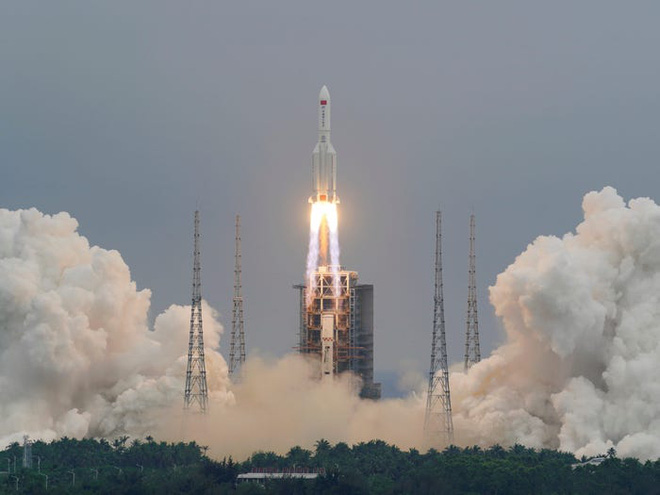
China previously launched the Long March 5B in May 2020 to test it by putting a spacecraft prototype into orbit. That rocket’s core stage also re-entered Earth’s atmosphere uncontrolled about six days after launch. It came down over the Atlantic Ocean, according to the US Space Force’s 18th Space Control Squadron, but local reports said debris landed in Ivory Coast.
Jim Bridenstine, NASA administrator at the time, called that event “really dangerous.” The rocket’s path took it over Los Angeles and New York City just before it broke apart.
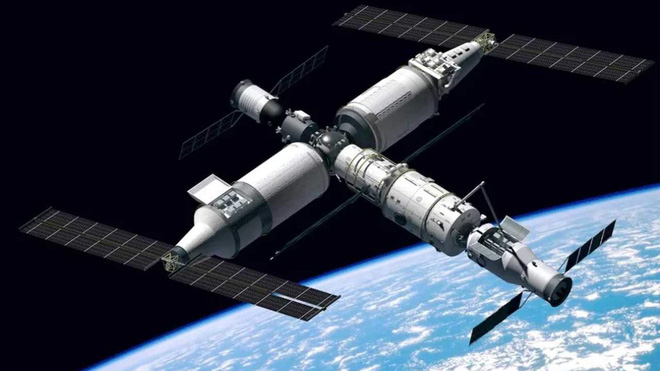
According to Andrew Jones, the Long March 5B is specially designed to launch space station modules. China plans to complete its new space station with 11 launches by the end of 2022. It’s still unclear how the Chinese government plans to handle rocket cores during those upcoming launches.
“The Long March 5B core is seven times larger than the second stage of the Falcon 9 rocket,” McDowell said.
In the past, a pressure vessel from a SpaceX Falcon 9 rocket landed on a farm in Washington state, leaving a 10-centimeter-deep dent in the ground. No one was hurt, according to local officials.
An early prototype of the space station China is building also fell back to Earth uncontrolled in 2018. It landed in the South Pacific Ocean, far from any people.
Source: BI

