

17 Million Views and Thousands of Harsh Comments
Recently, content about health care, bone therapy, and sciatica treatment has been popping up more and more on social media platforms. But not every piece of content gets a positive response from viewers.
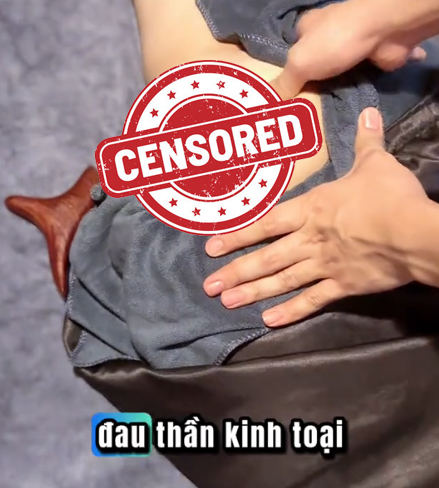
A short video showing a male technician performing acupressure and therapeutic massage on a 25-year-old female client suffering from sciatica due to prolonged sitting at work quickly went viral online. In a short time, the video racked up an impressive nearly 17 million views and over 16,000 comments.
However, alongside the massive traffic came a wave of fierce public criticism. The clip focuses on the technician applying pressure to the woman’s hip and buttock area. Although sensitive areas were covered with a towel, the posture, close-up camera angles, and the client’s moans of “Ah ah… it hurts so much” created an overall impression that many found extremely inappropriate.

Online Doubts: Genuine Therapy or a Disguised Service?
In the comments, most viewers expressed discomfort and anger. Many argued the video seemed designed to provoke suggestive thoughts just to boost engagement. Several questioned why the client had to remove most of her clothing during treatment, or why the clinic didn’t assign a female staff member to treat female clients. Some even suspected this was a disguised service and called for a boycott of such content.



The Owner Responds
Facing mounting tension and suspicion, the original poster, who also owns the massage clinic, spoke out. They explained the video’s goal was to showcase real therapy methods and help customers understand common treatment processes. The owner emphasized the clinic operates transparently, professionally, and follows proper procedures. Adjusting clothing and covering treated areas with towels is standard to help technicians accurately locate pressure points and apply effective treatment.
Still, the way the content was created led to heavy criticism. Despite the owner’s efforts to clarify and post explanatory videos, many online users remained unconvinced. Many felt that regardless of the original intent to be transparent or educational, the choice of close-up shots on sensitive areas, the use of sound effects to spark curiosity, and clickbait titles turned the video into something lacking in tact.
This 17-million-view massage video serves as a costly lesson for beauty and health service providers creating content. Viral views and social media buzz can be a double-edged sword. Transparency doesn’t mean exposing everything raw online. To earn lasting trust, businesses need to respect cultural boundaries instead of risking their reputation for fake engagement fueled by controversy.

