

Users and developers of the world’s most popular blockchain have long debated its carbon emissions since its launch. Now, new breakthroughs promise to slash Ethereum’s energy use dramatically within a year, or possibly even sooner.
Both Ethereum and its rival Bitcoin run on a system called proof-of-work, which requires a global network of computers running nonstop. For years, Ethereum developers have worked to transition the blockchain to a new system called proof-of-stake. This approach secures the network in a completely different way while eliminating carbon emissions.
This upgrade, delayed by complex technical issues, didn’t arrive in time to save the crypto world from massive volatility after Elon Musk announced Tesla would stop accepting Bitcoin payments due to its high energy consumption. Bitcoin’s network currently uses more energy annually than countries like Pakistan or the UAE, according to the Cambridge Bitcoin Electricity Consumption Index. However, this data doesn’t reflect Ethereum’s energy use.
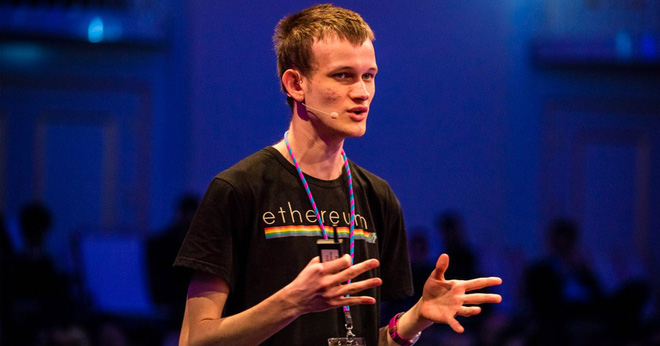
“Switching to proof-of-stake became urgent for us because of the growth of crypto overall and Ethereum in particular over the past year,” said Vitalik Buterin, Ethereum’s creator, in an interview. He hopes to complete the transition by the end of this year, while others expect it to start in early 2022. This timeline is about a year earlier than estimates from last December.
“I’m definitely excited that one of blockchain’s biggest problems will be solved once proof-of-stake is finalized,” Buterin added. He has encouraged developers to explore this shift since Ethereum launched in 2015. “It’s amazing.”
This change is expected to boost the price of Ether, Ethereum’s native cryptocurrency, as environmentally conscious investors take note of its significantly lower carbon footprint. Most criticism of proof-of-work comes from younger investors (millennials) and those focused on environmental, social, and governance (ESG) standards.
“It’s hard to ignore that ESG trends are becoming very important,” said Wilson Withiam, a blockchain protocol analyst at Messari. “If you’re looking at Ether as an investment, it’s not surrounded by the same criticisms.”
Early Bitcoin investor Pantera Capital agrees. “Ethereum has a large, fast-growing decentralized finance ecosystem,” founder Dan Morehead wrote to investors on May 10. “Combining these factors, we believe Ethereum will continue gaining market share comparable to Bitcoin.”
The Ethereum upgrade is a massive project. Developers have created, tested, and deployed a new security solution while maintaining the existing blockchain. When ready, they will merge the current chain into the new proof-of-stake architecture. This transition will also significantly speed up transaction processing, allowing Ethereum to better compete with payment giants like Visa and Mastercard.
Proof-of-work requires capital investment to buy and maintain computer hardware and pay for electricity, which miners use to process transactions. The first miner to validate a block of Bitcoin or Ethereum transactions receives free Bitcoin or Ether as a reward.
This system has faced criticism for years, most recently from Elon Musk, who called its energy consumption “insane.”
With proof-of-stake, Ether replaces hardware and electricity as the capital cost. Users must “stake” at least 32 Ether on the new network. The more Ether staked, the higher the chance to be chosen to process the next transaction block, earning a smaller free Ether reward similar to proof-of-work.
So far, over 4.6 million Ether have been staked on the so-called beacon chain, worth about $11.5 billion at the current price of $2,503 per ETH. Once proof-of-stake goes live, the only energy cost will come from servers hosting Ethereum nodes, similar to any cloud computing company.
“No one talks about Netflix’s environmental impact because it just runs on servers,” said Tim Beiko, Ethereum Foundation’s development coordinator, who oversees funding and protocol development.
Danny Ryan, a researcher at the foundation, said Ethereum’s proof-of-work consumes 45,000 gigawatt-hours annually. With proof-of-stake, “you could validate a blockchain using a regular laptop,” he said. “My estimate is energy use will drop to just one ten-thousandth of the current Ethereum network.”
One breakthrough came from developers creating “rollups,” which allow Ethereum contracts to execute off the main chain. This reduces pressure on the main network and means fewer changes are needed.
The next step involves “sharding,” splitting the network into 64 geographic zones called shards. Transactions within a shard sync with the main network, which links all shards, making the overall network much faster. However, sharding is complex and raises security questions, slowing the transition.
Once rollups handle transactions, shards only need to store data, Beiko explained. Previously, sharding had to be fully operational before Ethereum could switch to proof-of-stake, but that’s no longer necessary.
“Sharding went from very complex to manageable,” Beiko said. “It’s no longer a roadblock on the roadmap.”
Rollups were limited by how much data they could link to the blockchain, Buterin said. This was a problem until developers realized shards could store data.
“If you can put data on-chain, which shards allow, scalability increases dramatically,” Buterin said.
Beiko noted that proof-of-stake has made significant progress, shown by a recent test where Ethereum’s current blockchain transactions successfully merged into the proof-of-stake system.
“I’m much more confident than a month ago,” he said. “There are still tough challenges, but the foundational architecture is in place and promising.”
Source: Bloomberg

