

The Israeli government teamed up with a defense contractor to create a new material that hides soldiers from infrared sensors, making them much harder to detect.
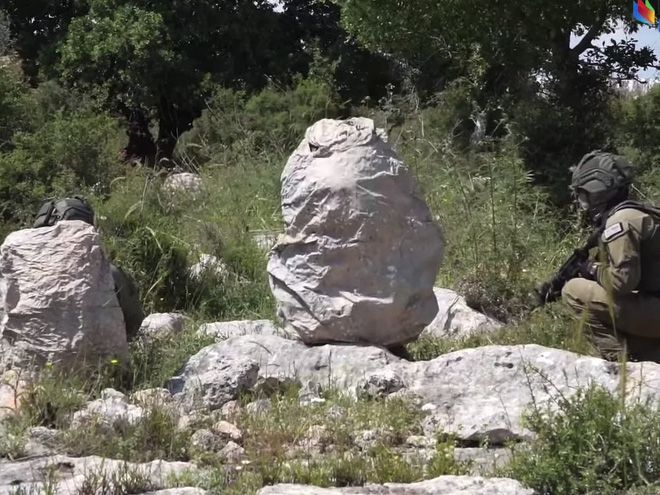
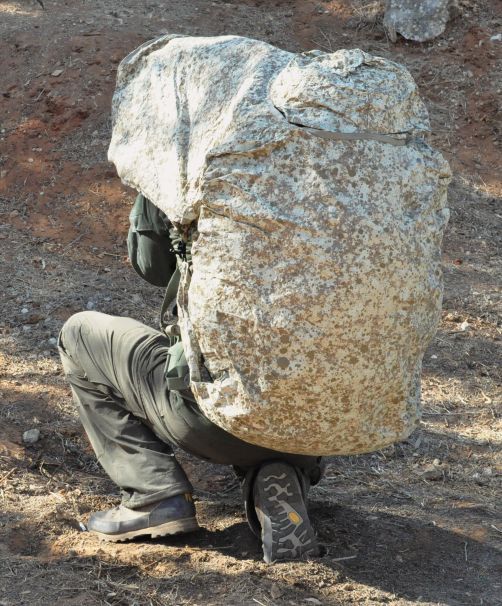
Polaris Defense’s Kit 300 is a thermal camouflage system that combines metal, fibers, and polymers to mask a soldier’s body heat, according to Business Insider.
Thermal imaging works by capturing infrared radiation, or heat, emitted by objects. If something gives off heat, a thermal camera will display it in different colors based on temperature.
For example, a warm-blooded human appears as a heat-shaped figure, with detail depending on the sensor’s sensitivity. Tanks show up as tank-shaped objects, and if the engine is running, it appears as a hot spot.
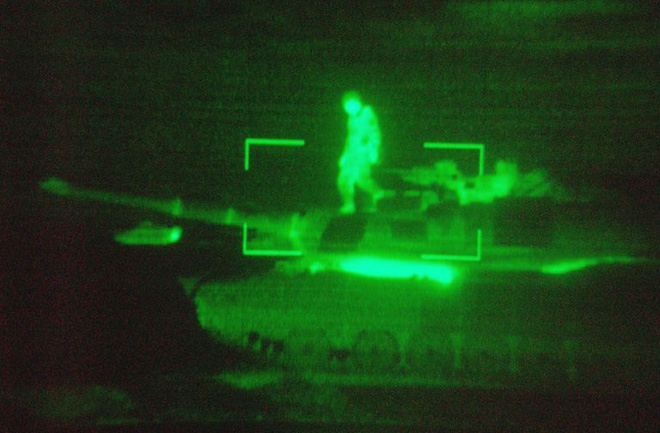
Thermal cameras are used in modern night vision gear. Unlike older night vision tech that needs some light, thermal cameras don’t require any ambient light. They just detect heat.
This means thermal cameras can spot people, armored vehicles, and even aircraft on moonless nights without infrared spotlights. They can also see through smoke, making them useful in daylight too. During the Cold War, American tanks could easily detect and engage enemy tanks moving through smoke.
But this technology isn’t perfect. Objects that don’t emit heat don’t show up on thermal cameras at all. Kit 300 is designed to eliminate the heat signature on a soldier’s body, effectively making them “invisible” to thermal cameras.
The materials in Kit 300 act as insulation, preventing a soldier’s body heat from escaping through the outer layer.
But Kit 300 doesn’t stop there. A soldier could stand in a barren field invisible to thermal cameras but still visible to the naked eye. That’s why the system also uses classic colors and camouflage patterns designed to blend the wearer into the surrounding terrain, making them harder to spot visually.
Source: Popular Mechanics

