

You might not know this, but your PC actually contains gold inside. Electronics are one of the biggest consumers of gold. So if they use so much, how much gold does your PC really have? Could you get rich by extracting it? Let’s find out together.
PC Components That Contain Gold
Almost every computer and electronic device contains precious metals, including gold. It usually appears on the PCB (printed circuit board), the CPU, and some other parts. Some electronics even have quite a bit of gold inside. Here are some typical PC parts that contain gold:
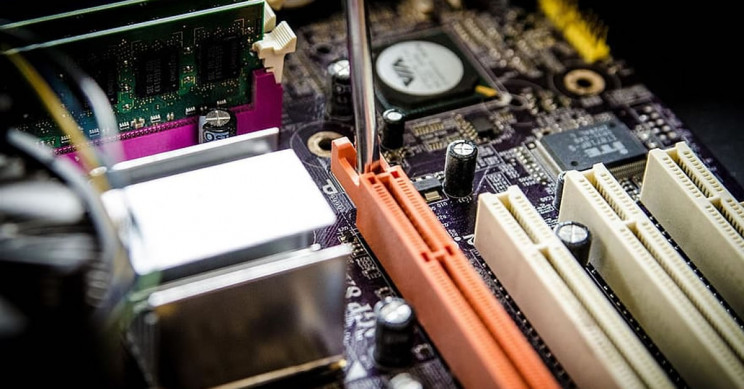
Motherboard and Circuit Boards: These usually hold the most gold in a PC. The edges of most components on the board have gold-plated contact pins and connectors. You’ll also see a thin layer of gold on the motherboard surface.
CPU: CPUs typically have hundreds of gold-plated pins around the edges and underneath.
RAM: The pins are often gold-plated, which is easy to spot. There’s also usually a thin gold layer on the PCB surface.
Of course, besides gold, these parts also contain other metals like silver, platinum, palladium, copper, nickel, aluminum, tin, zinc, and more. But here, we’re focusing just on gold.
Why Gold Is Used So Much in PC Components
You might wonder why something so valuable as gold is used in electronics. The reason is that gold has some really special and useful properties that beat other metals. Solid-state electronics use very low voltage and current, so their contact points are vulnerable to corrosion and tarnishing.
Gold is a top choice because it conducts electricity very well, can carry tiny currents, and resists corrosion. That’s why contacts, relays, and connectors are often made of or plated with gold, making them more durable and ensuring stable signals.
So How Much Gold Is Actually in Your PC?
By now, you might be wondering if extracting gold and other precious metals from your CPU and components could make you rich. The short answer is no.
Some articles say an old PC might contain gold worth up to 9 USD, but that doesn’t account for extraction costs. Other sources estimate a modern PC holds about 0.2 grams of gold (around 12 USD), while laptops usually have about half that amount.
The amount of gold varies by component. For example, older CPUs like the Intel Pentium Pro ceramic version had up to 0.43 grams of gold, the gold-capped Intel Pentium had 0.48 grams, and surprisingly, the plastic Intel Pentium Pro had as much as 0.55 grams.
Older CPUs Have More Gold Than Newer Ones
Chips made after 1998 usually have very little gold because they no longer use solid gold wire bonding or gold caps like before. Today’s CPUs, especially Intel and upcoming AMD Ryzen Zen 4, don’t have gold pins but only thin gold-plated contact points to connect with the motherboard socket. Some laptop and smartphone CPUs don’t even have contact points, they use solder bumps to permanently attach to the board.
Extracting Gold from PC Parts Is More Trouble Than It’s Worth
In short, although your PC contains gold, the amount is very small and the extraction process is complicated. Processing just a few chips often costs more than the gold you get back. Selling the whole CPU or components is usually more profitable.
More specifically, refining gold and other precious metals like silver, platinum, and palladium from CPUs and electronics only makes sense if you have professional equipment and a large supply of parts. Plus, refining gold is dangerous because it involves toxic chemicals like mercury, nitric acid, and hydrochloric acid. So it’s best left to experts.
Hopefully, this info helped you discover something new about tech. If you have any thoughts or additions, feel free to share them in the comments below. Thanks for reading!
Source: GVN360

