

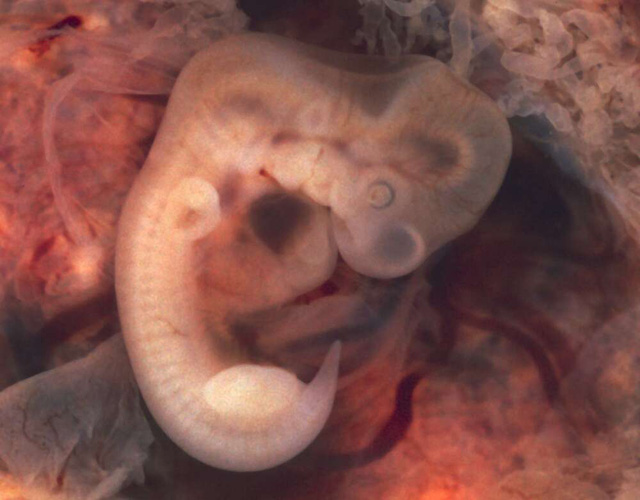
Did you know that all of us once had tails while in the womb? Specifically, between the 4th and 8th week of pregnancy, a human embryo develops a tail near the tailbone, a leftover genetic trait from our ancestors.
But between weeks 6 and 12, white blood cells break down this tail by absorbing the cells, because evolution decided humans no longer need tails.
However, if for some reason nature forgets this step, the fetus continues developing past week 12 and keeps its tail. The baby is then born with a fully intact tail that can even grow longer as they get older.
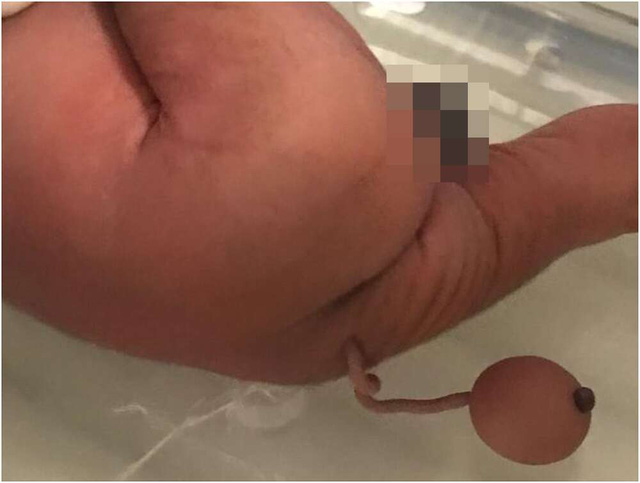
Recently, doctors in Brazil reported such a case in the journal Surgery Case Reports. A newborn baby boy was born with a 12 cm tail on his left buttock. At the tip of the tail was a round lump of flesh, making it look just like the tail of the cartoon character Doraemon.
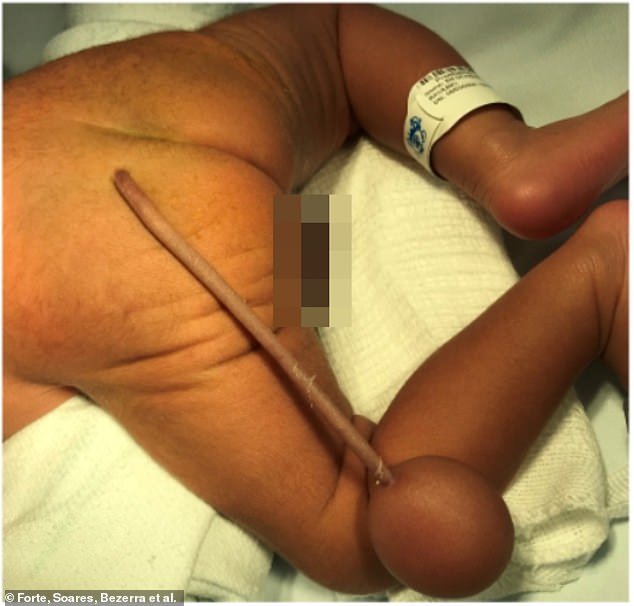
“Human tails are classified as true tails or pseudo-tails. True tails represent the remaining embryonic tail tissue… made up of fat, connective tissue, blood vessels, muscle, and nerve fibers,” said doctors at Albert Sabin Children’s Hospital in Brazil.
Pseudo-tails are abnormal protrusions near the tailbone, often caused by spinal defects like spina bifida. Pseudo-tails are more common, while only about 40 cases of true human tails have been documented in modern medical literature.
In some parts of the world, babies born with tails face stigma and rejection. But in places like India, tails are seen as blessings or gifts from the gods.
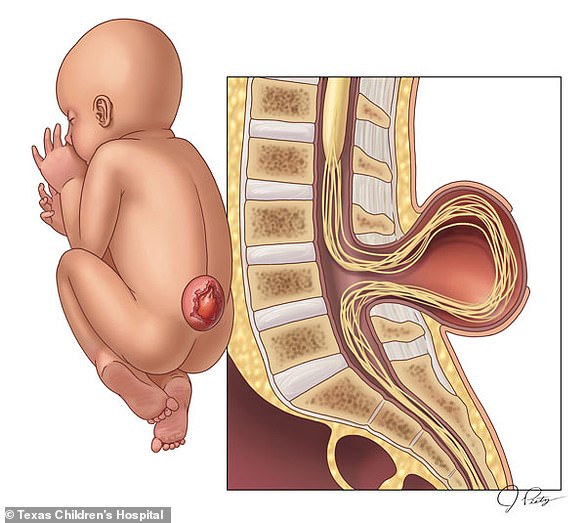
Back to the Brazilian baby, doctors confirmed his tail was a true tail. Ultrasound showed no nerve connections to the spine. The tail had no bones or cartilage, just a core of fat, muscle, connective tissue, and nerves with large blood vessels.
The 12 cm tail ended with a 4 cm spherical lump. This ball-like tip was identified as fibrous tissue containing collagen. Despite its size, the tail went undetected in all eight prenatal checkups, including ultrasounds.
The mother said she was healthy during pregnancy except for a urinary tract infection treated with antibiotics. However, she smoked about 10 cigarettes a day throughout her pregnancy.
While smoking didn’t directly cause the tail, it may have contributed to the baby being born prematurely at 35 weeks.
Aside from the unusual tail and some jaundice, doctors said the baby was healthy. They evaluated the tail and advised the mother to have it removed.
Growing up with a tail like this is usually inconvenient. There’s no evidence it provides any function. People who kept their tails reported pain, discomfort, and difficulty.
The tail made it hard to wear pants or sit normally because pressure caused pain. Some kept their tails until age 17 but eventually had to remove them due to unbearable discomfort.
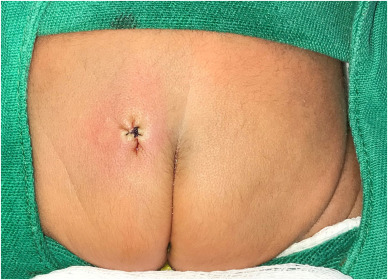
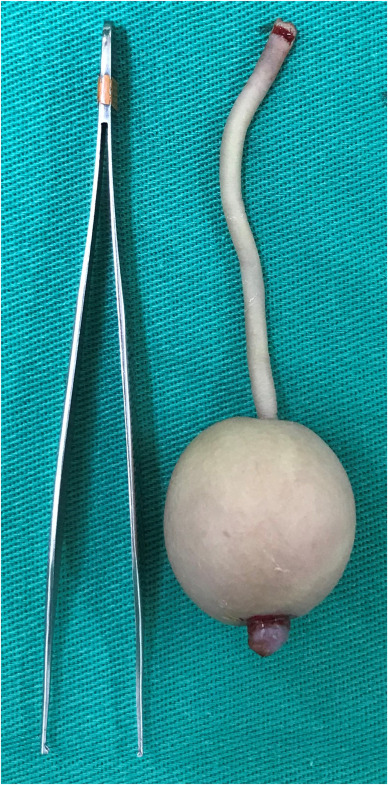
Doctors at Albert Sabin Children’s Hospital reported that after the tail removal surgery, the baby had no complications and remained healthy. They published this case to help other doctors understand rare true tail cases and to raise awareness about pseudo-tails, which should be screened and detected early during pregnancy.
“Because skin and the central nervous system share a common ectoderm origin, pediatricians or pediatric surgeons must investigate potential spinal dysfunction in patients suspected of having lesions, as these might be the only visible abnormalities and can be diagnosed early,” the research team wrote.
Source: Sciencedirect

