

The Yiliang Museum in China houses many valuable artifacts. But few expected that among its vast collection, a perfectly preserved dinosaur embryo was hidden inside a 70-million-year-old fossilized egg.
Named Baby Yingliang, this carnivorous dinosaur from the Oviraptor genus might be the missing link connecting dinosaurs and birds. Baby dinosaur bones are extremely fragile and rarely survive long enough to fossilize, making this discovery truly one of a kind.
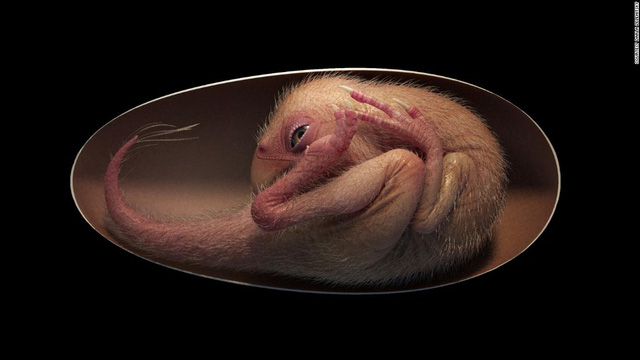
“This is an amazing specimen… I’ve worked with dinosaur eggs for 25 years and have never seen anything like it,” said Zelenitsky, co-author of the new study. “Until now, we knew very little about what happens inside dinosaur eggs before hatching, since so few embryos have been preserved, especially ones that keep the life posture inside the egg intact.”
The dinosaur egg measures about 17 centimeters long, and scientists estimate that the baby dinosaur inside would have been around 27 centimeters long including its tail. They believe if it had reached adulthood, Baby Yingliang would have grown to 2 to 3 meters in length.
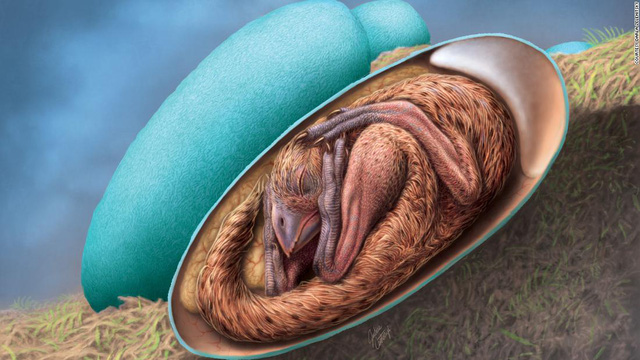
A team of scientists from China, the UK, and Canada studied Baby Yingliang’s posture and compared it to other known dinosaur embryos. They concluded that before hatching, dinosaurs shifted into new positions just like modern birds twist and break out of their eggshells.
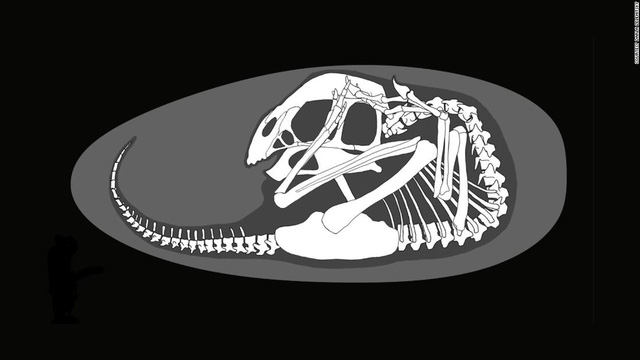
“Most non-flying dinosaur embryos are incomplete because their bones separate from the joints,” said Waisum Ma, lead author of the study. “We were surprised to find this embryo so well preserved inside the egg, lying in a posture very similar to birds. This posture has never been seen in any other non-flying dinosaur embryos.”
Modern birds are direct descendants of a two-legged dinosaur group called theropods, which includes famous creatures like Tyrannosaurus rex and pack-hunting velociraptors. According to researcher Zelenitsky, modern birds also inherited the behavior of sitting on their eggs to incubate them, just as their ancestors did millions of years ago.
This historic fossil was found in Jiangxi Province and purchased in 2000 by Liang Liu, director of the Yingliang Group, a stone manufacturing company. After sitting unnoticed in storage for 10 years, the fossil was rediscovered during the setup of the Yingliang Stone Nature History Museum, where staff cataloged the collection and uncovered this precious egg.
Source: CNN

