

Throughout history, people have tried to create bigger and better weapons, hoping that bigger size would mean more power. Some of these attempts worked, but most ended up with weapons that looked strange and didn’t perform well.
Today, we’re talking about the Punt gun, a type of hunting gun that’s huge in size (in Vietnam, smaller versions are known as “hoa cải” guns).
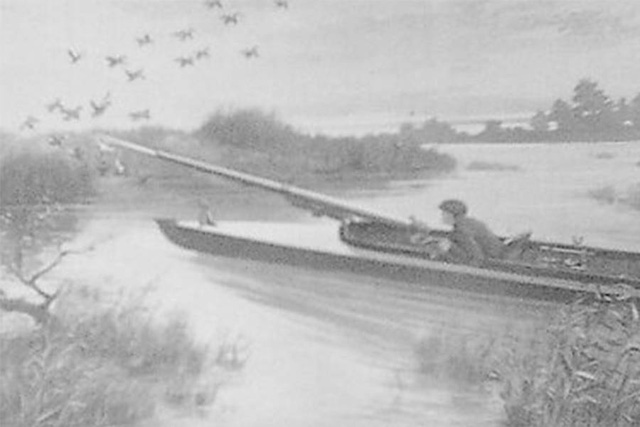
Back in the early 1800s, when duck hunting guns were invented, hunting ducks was extremely popular. At the same time, demand for meat and feathers (used in women’s hat making) was rising. To make hunting easier, hunters looked for ways to kill more ducks at once. That’s how the Punt gun came about.
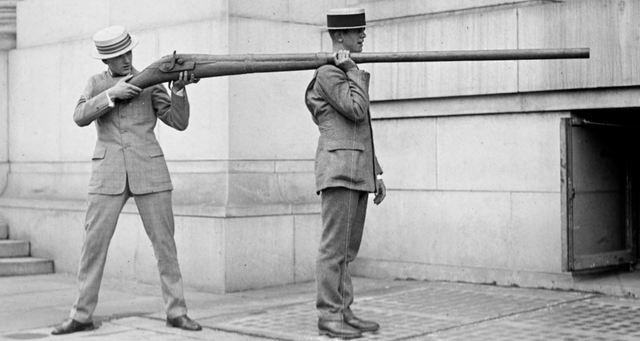
These custom-built guns were over 8 feet (2.4 meters) long and about 2 inches (5 cm) in diameter. Some were even as long as 4 meters and weighed around 50 kilograms. These massive guns could fire over half a kilogram of shot in one blast, killing more than 50 ducks and waterfowl at once.
The guns looked like giant versions of regular “hoa cải” guns but had a single barrel instead of double barrels. There were double-barrel versions too, but they didn’t pack as much punch and weren’t as popular.
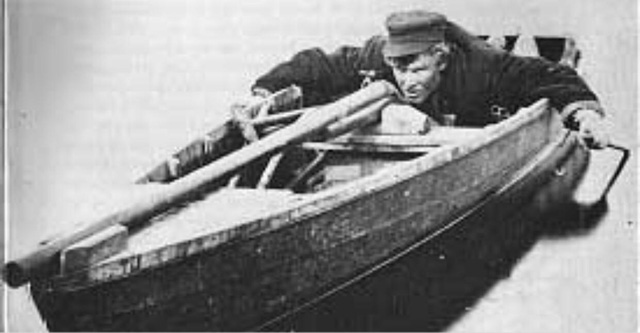
Even though these giant guns were super effective, they were way too heavy for one hunter to handle easily. So hunters developed long, narrow boats that could support the gun’s weight and size. These boats only had room for one gun and one hunter. Since the gun was fixed to the boat, the entire boat had to turn to aim. The guns were so powerful that firing one would push the boat backward several meters.
Soon, hunters came up with a new method to maximize their catch.
They worked in groups of 8 to 10 boats, surrounding flocks of waterfowl. Coordinating their shots, they would fire simultaneously. In less than a minute, a small group of hunters could wipe out an entire flock, sometimes up to 500 birds at once.
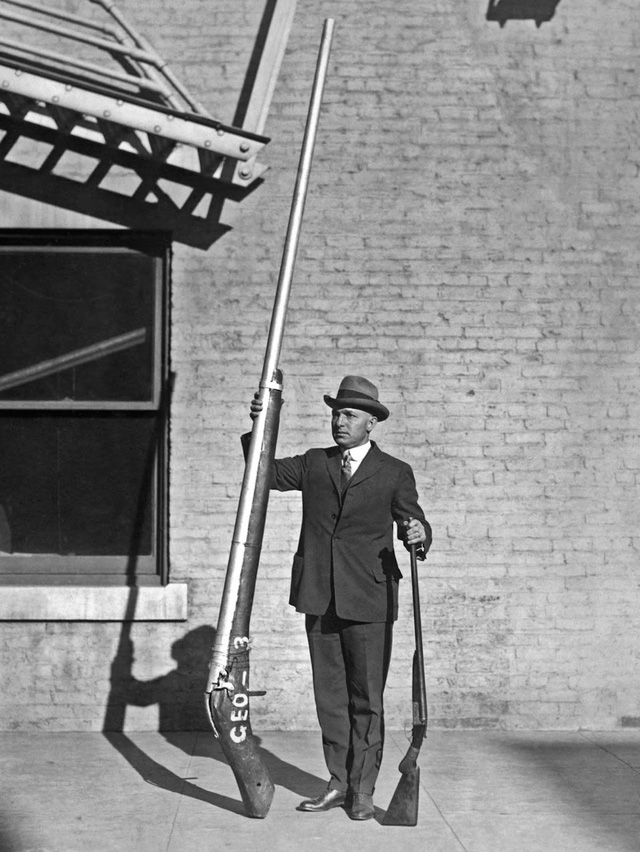
But the fate of these giant guns didn’t last long. The weapons industry didn’t support their bulky design, and the environmental damage they caused was severe. Not long after Punt guns appeared, duck and waterfowl populations in the U.S. plummeted.
Their efficiency led to a massive decline in waterfowl numbers, prompting the U.S. government to pass laws banning the hunting, sale, and interstate transport of Punt guns. Between 1900 and 1918, federal laws outlawed the sale and use of Punt guns and the specialized boats that carried them.
Today, Punt guns are extremely rare, with fewer than 100 still in use worldwide. In the U.S., they mainly exist as collector’s items or museum pieces.
In the U.K., they’re still used but very sparingly. Less than 50 guns remain, and strict laws limit how often they can be fired, reduce barrel size, and restrict ammunition. Their use is mostly ceremonial, like royal welcomes rather than hunting.
In 1897, for her Diamond Jubilee, Queen Victoria requested a Punt gun salute. Since then, Punt guns have been part of major royal ceremonies in the U.K. At Queen Elizabeth II’s Diamond Jubilee in 2012, a Punt gun fired a 21-shot salute to celebrate.

