

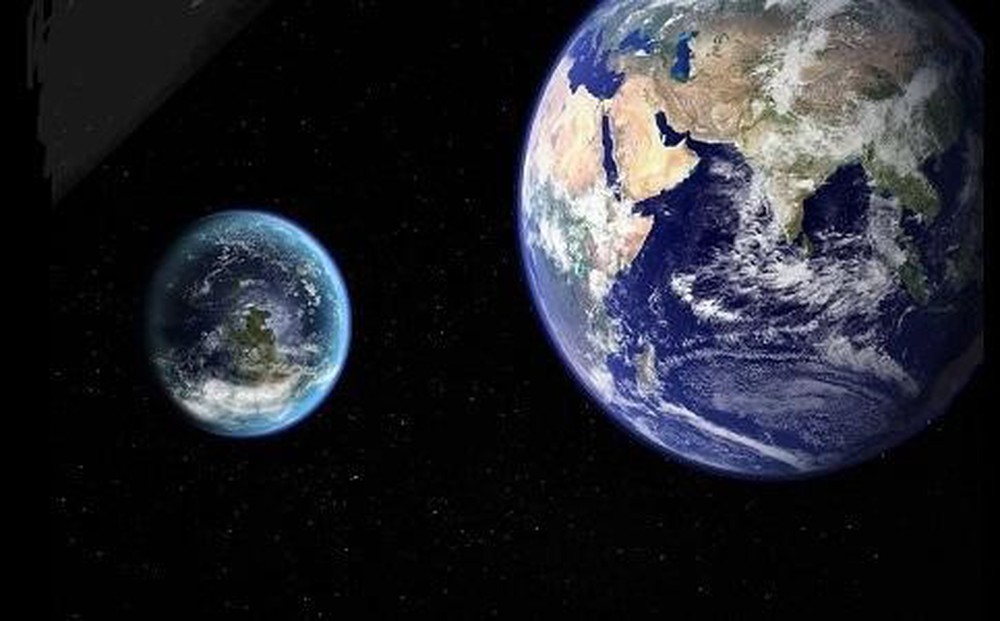
The Search for Another Earth
The Kepler space telescope made some fascinating discoveries in astronomy. Launched in 2009, it observed 13 million stars before it stopped working in 2018.
During that time, Kepler found over 2,600 planets orbiting other stars. Some were unlike anything in our solar system, forcing astronomers to add new categories to classify planets.
Kepler also found one or two planets in the so-called habitable zone of their stars, though these stars were red dwarfs, different from our sun.
This habitable zone is exciting because it’s where conditions might allow liquid water to exist, a key ingredient for life.
But despite all this, Kepler ultimately failed to find a true Earth 2.0, a planet just like Earth orbiting a sun-like star. Nearly a decade of observation didn’t reveal one.
Part of the challenge was that sun-like stars are more variable than expected, requiring longer observation times. Plus, in 2013, two of Kepler’s four reaction wheels broke, making long-term observations impossible. So astronomers still haven’t found another Earth out there.
Scanning the Sky
That could change soon thanks to China’s upcoming Earth 2.0 mission, set to launch in 2026. This mission will scan the sky for Earth-like planets around sun-like stars, using instruments designed to handle the star variability that stumped Kepler.
The team includes about 300 scientists and engineers from over 40 organizations, mostly in China. This week, they shared detailed plans for the mission on arXiv.
One challenge for any space telescope is covering a wide field of view while keeping costs and spacecraft weight down. The Chinese team solved this by not relying on a single large, heavy, and expensive telescope.
Instead, the spacecraft will carry six smaller 30cm telescopes that will observe the same patch of sky as Kepler did (Kepler’s mirror was 1.4m). These telescopes will watch for tiny dips in star brightness caused when a planet passes in front.
The spacecraft will also carry a seventh telescope designed to detect microlensing events, where a star’s gravity temporarily magnifies light from a more distant star behind it.
By tracking brightness changes, astronomers can tell if a star has planets orbiting it. This seventh telescope might also spot free-floating planets, shedding light on these mysterious lonely objects.
Massive Data Volume
The Earth 2.0 spacecraft will be sent to the Lagrange point L2, a stable spot in space where Earth and Moon’s gravity balance out, keeping it away from Earth’s interference.
L2 is a popular spot for space telescopes, home to past and current missions like Herschel and James Webb. Earth 2.0 will stay at L2 for four years, sending back about 169 GB of data daily.
This huge data flow boosts the chances of exciting discoveries. “Simulations show this survey could find about 20,000 new planets, including roughly 4,900 Earth-sized ones,” the team said. That means the mission could discover 10 to 20 Earth 2.0s by 2030.
Finding the first true Earth 2.0 would be a historic moment in astronomy. It would spark huge interest in these planets’ nature, their atmospheres, and whether they can hold water.
Next would come the search for biosignatures hinting at life, like methane and oxygen molecules, or light absorption patterns from photosynthesis. Even further ahead would be looking for tech signs of civilizations, such as industrial pollutants like chlorofluorocarbons (CFCs) or narrowband radio transmissions.
Of course, Earth 2.0 isn’t the only mission that could find another Earth. ESA’s Plato mission, also launching in 2026, has a shot too. But Earth 2.0 might have the edge.
This sets up a race between nations to find another Earth and kick off a new era of studying potentially habitable planets.

