

According to The Guardian on August 18, researchers have discovered the mechanism behind mosquitoes’ uncanny ability to track humans.
Humans emit a unique blend of body odors, heat, and CO2. This combination varies from person to person and is what mosquitoes use to find their next meal.
While most animals have specific neurons to detect individual smells, mosquitoes can recognize odors through several different pathways.
Meg Younger, assistant professor of biology at Boston University and a lead author of the study published in the journal Cell, said, “We found that the way mosquitoes encode smells is really different from other species.”
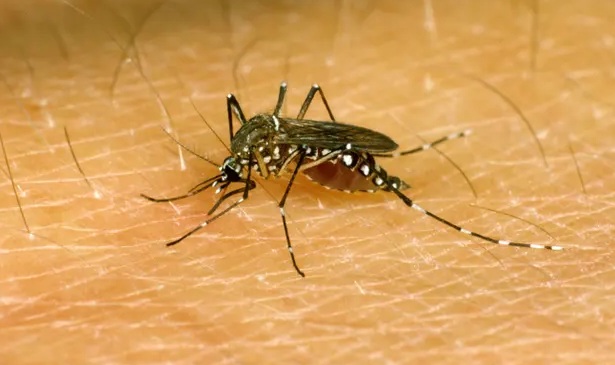
Researchers at Rockefeller University in New York were puzzled when mosquitoes could still find humans to bite even after scientists removed all the human odor-detecting protein genes from the mosquitoes.
The team then examined the mosquito’s antenna receptors. These receptors bind to chemicals floating in the environment and send signals to the brain through neurons.
Younger explained, “We expected mosquitoes to follow the main rule of olfactory response, where each neuron has only one receptor type. Instead, we found that different receptors can respond to various smells within the same neuron.”
This means losing one or more receptors doesn’t affect a mosquito’s ability to smell. Researchers believe this backup system evolved as a survival mechanism.
Younger added, “Aedes aegypti mosquitoes specialize in biting humans, likely because humans live near fresh water where mosquitoes lay eggs. Basically, we are the perfect meal, so mosquitoes are highly motivated to find us.”
Finally, the researchers said understanding how mosquito brains process human odors could help disrupt biting behavior and reduce the spread of mosquito-borne diseases like malaria, dengue, and yellow fever.
Younger said, “The main strategy to control mosquitoes is to lure them into traps and remove them from biting populations. If we can use this knowledge to understand how human smells are represented in mosquito antennae and brains, we could develop blends more attractive than humans. We could also create repellents targeting the receptors and neurons mosquitoes use to detect human scents.”
Dr. Marta Andres Miguel from University College London said, “This is a remarkable discovery not only from a basic biology perspective but also for disease control. It opens new paths to develop tools to control mosquitoes, either by attracting them to traps or repelling them to prevent bites.”

