

On the evening of September 12, the Vietnam Fatherland Front publicly released a list of organizations and individuals who donated to support people affected by Storm No. 3 and flooding through bank transfer apps.
This move aims to ensure transparency, allowing everyone to track donations. The Central Relief Campaign Committee has also posted detailed lists of donors and amounts transferred from September 1 to September 10, 2024.
However, the published bank statements revealed that many celebrities and groups who posted receipts showing donations of hundreds of millions or even billions of VND actually donated only a small fraction of those amounts. This may have been done simply to “show off” or even to “embezzle” funds from the group.
Specifically, content creator Viet Anh Pi Po shared a screenshot of a 20 million VND donation to storm victims on the morning of September 10. After the Vietnam Fatherland Front released the official statement, netizens discovered the actual amount was just 1 million VND. He later posted an apology.
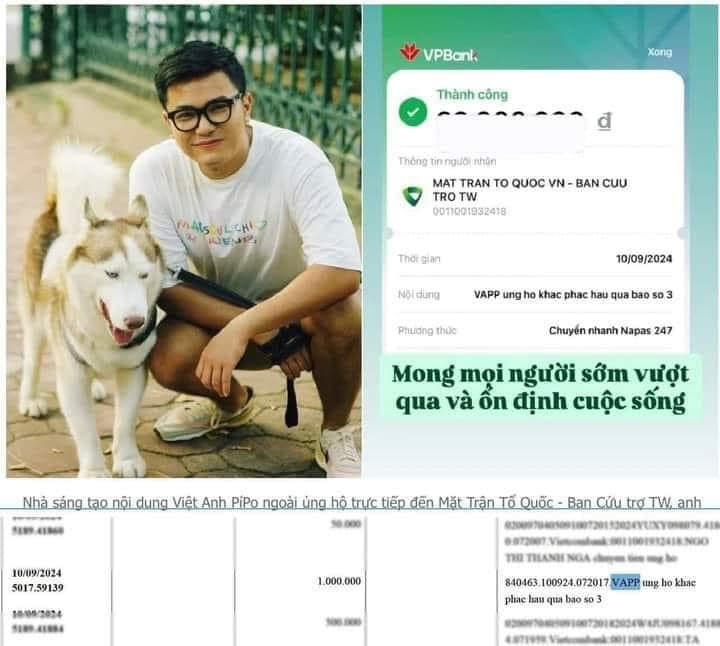
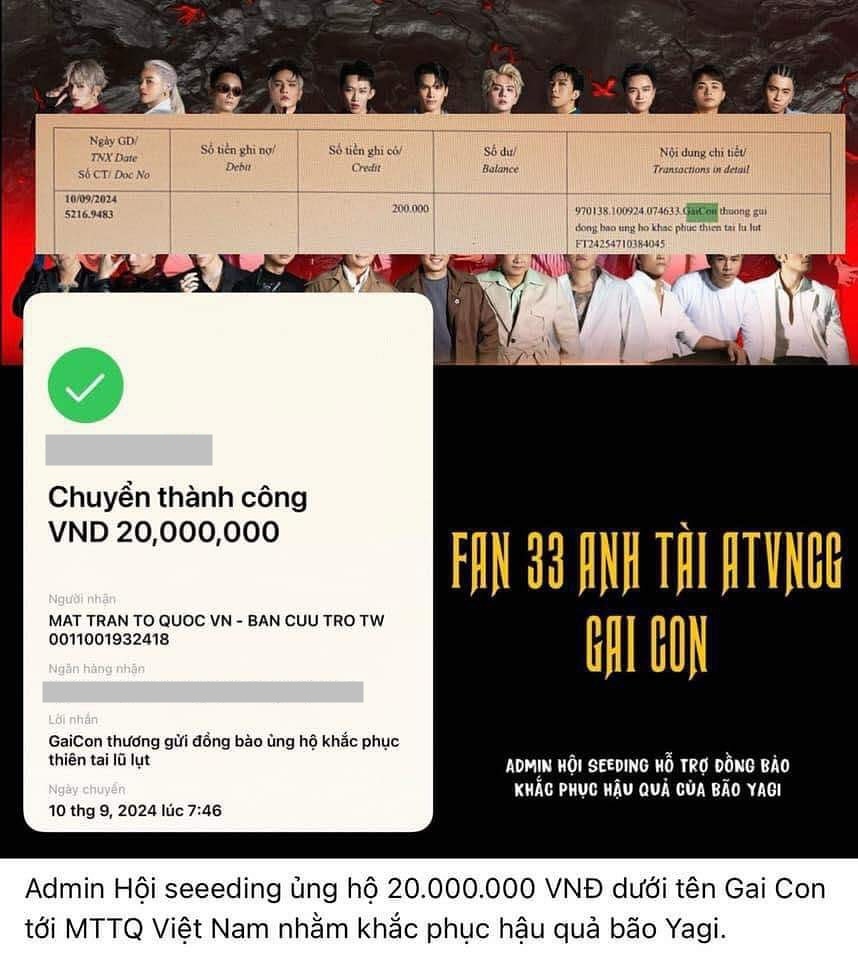
Additionally, some individuals representing groups donated very small amounts, sometimes only a few thousand or tens of thousands of VND, raising suspicions of fraud for personal gain or accidental underpayment due to mistakes.
Editing transfer receipts can lead to fines or criminal charges
Speaking to us, Dr. Lawyer Dang Van Cuong (Chinh Phap Law Office, Hanoi Bar Association) said that the generosity toward flood victims depends on each person’s circumstances, and no one should criticize donations based on size. But using software to alter transfer receipts to inflate donation amounts is not only unethical but also illegal.
According to the lawyer, supporting disaster victims is a cherished Vietnamese tradition. Individual contributions vary based on personal conditions.
“No one should think that donating more means having a bigger heart. How much someone donates depends on their situation. No one encourages giving beyond their means, and sincere donors don’t believe that giving more makes their heart bigger,” Cuong explained.

The lawyer also emphasized that recently some cases involved small donations but manipulated receipts by adding zeros to inflate the amount.
“This is a serious violation of social ethics, making it harder for authorities to track and distribute funds properly. It can cause mistrust between donors and those managing donations, leading to negative public opinion. This behavior is highly blameworthy and condemnable.
Altering donation receipts is not only a serious breach of social ethics but also illegal. It involves forging documents and spreading false information.
Depending on the severity and consequences, those who edit transfer receipts may face administrative fines or criminal prosecution,” Cuong stressed.
Cuong added that if investigations find that fake donation receipts posted online disrupt relief efforts, cause difficulties for recipients, or damage public trust, the offenders could be criminally charged under Article 331 of the Penal Code for abusing democratic freedoms.
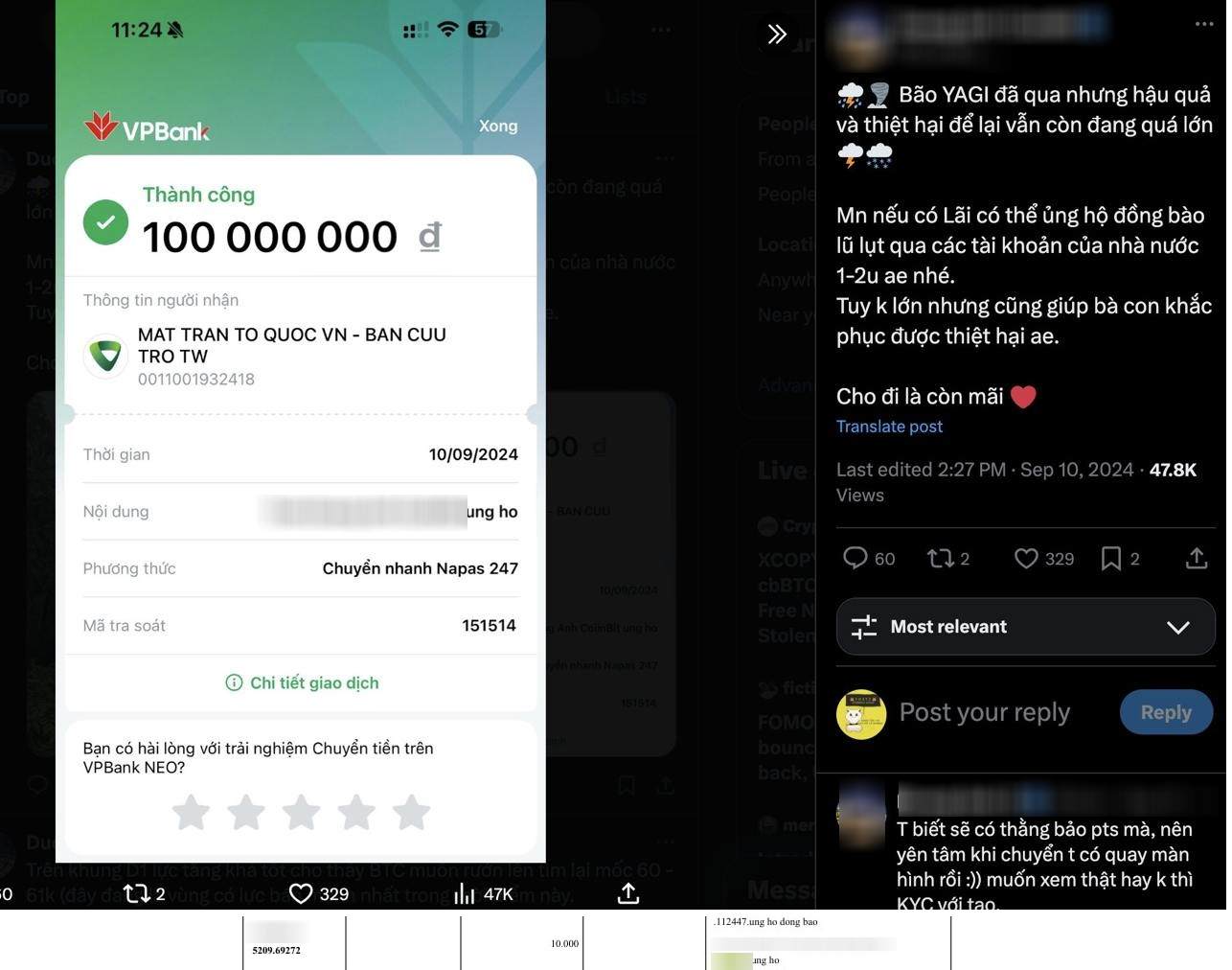
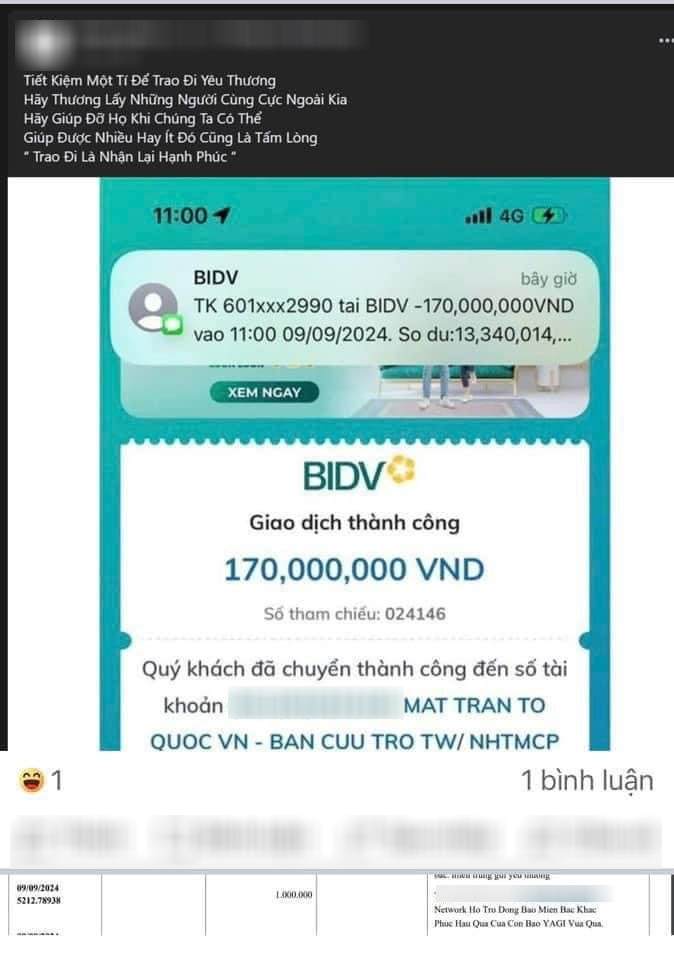
If the fake receipt is posted publicly but doesn’t cause serious harm or threaten social order, the person spreading false donation information will face administrative fines under Article 101 of Decree 15/2020/NĐ-CP, ranging from 10 to 20 million VND for organizations and 5 to 10 million VND for individuals.
Fines of 10,000,000 to 20,000,000 VND apply for abusing social networks to share false, distorted, defamatory, or insulting information damaging the reputation of agencies, organizations, or individuals.
“The Vietnam Fatherland Front’s public release of donation account details and amounts is necessary to ensure transparency and complies with Government Decree 93/2021 on fundraising and using voluntary contributions. Therefore, besides calling for donations, authorities should also educate the public about legal regulations on charity activities, especially Decree 93/2021. All organizations and individuals involved in charity must follow the law and social ethics,” Cuong concluded.

